By Lauren Holland
Updated November 2026
Shopping for a ctek car battery charger usually means sorting through a lineup that covers everything from a small seasonal maintainer to a high-output unit for cold climates. This guide narrows the field to six models and explains how each one fits a specific need. The selection looked at manufacturer specifications, the brand’s long-standing reputation for fully automatic multi-stage charging, the amperage and voltage ratings each model lists, and the patterns owners commonly report about ease of use, durability, and how well each unit handles deeply discharged or cold batteries. No products were tested for this article; the comparisons rely on published specs and owner feedback.
Our top picks at a glance
- 1
 TOP CHOICEBest overallCTEK 40-206 MXS 5.0View on Amazon
- 2
 TOP CHOICEBest for newer chargers with updated designCTEK 40-658 NXT 5View on Amazon
- 3
 TOP CHOICEBest for mixed battery chemistryCTEK CT5, 12V Automotive Battery ChargerView on Amazon
- 4
 Best budget pick for storageCTEK 56-865 US 0.8 Fully Automatic Battery ChargerView on Amazon
- 5
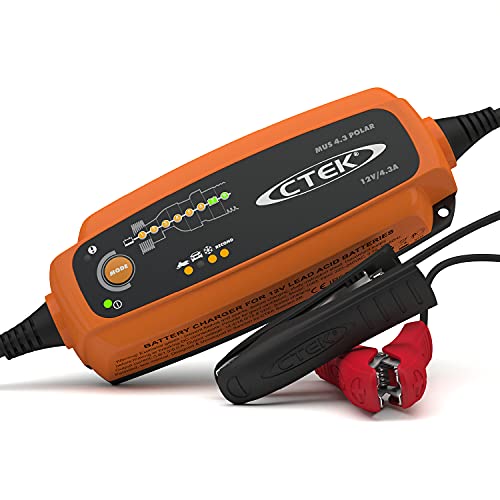 Best for cold climatesCTEK 56-958 MUS 4.3 PolarView on Amazon
- 6
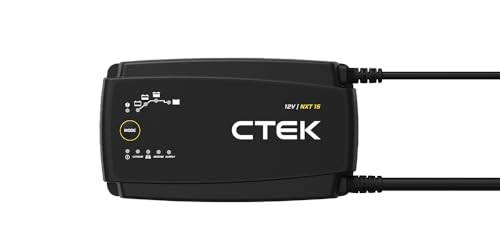 Best for heavy-duty and large batteriesCTEK 40-727 NXT 15View on Amazon
Our Top Picks
| Product | Best for | Key feature |
|---|---|---|
| CTEK 40-206 MXS 5.0 | General-purpose car and light truck batteries | Fully automatic 4.3 amp charging and maintenance |
| CTEK 40-658 NXT 5 | Owners who want a current-generation maintainer | Fully automatic 4.3 amp charging for 12V batteries |
| CTEK CT5 | Lead-acid and lithium (LiFePO4) batteries on powersports or cars | Supports lead-acid and lithium chemistries |
| CTEK 56-865 US 0.8 | Small batteries in seasonal storage | Low-output trickle charging for months of connection |
| CTEK 56-958 MUS 4.3 Polar | Cold-weather garages and outdoor storage | Extreme climate 8-step charging |
| CTEK 40-727 NXT 15 | Large or deeply discharged 12V batteries | 15 amp output for faster recharging |
CTEK 40-206 MXS 5.0
CTEK – 40-206 MXS 5.0 Fully Automatic 4.3 amp Battery Charger and Maintainer 12V
Best for: General-purpose maintenance of standard car and light truck batteries
This is the model most people picture when they search for a ctek car battery charger. It suits drivers who leave a vehicle parked for long stretches or want to keep a battery topped up between drives without monitoring it.
Key specs
- 12V output
- 4.3 amp charging current
- Fully automatic, multi-step charging with maintenance mode
Pros
- Fully automatic operation requires no manual settings
- Maintenance mode protects the battery from overcharging when left connected
- Well-established brand with broad owner familiarity
Cons
- 4.3 amps is slow for fully recharging a badly discharged battery
- Not designed for lithium-only applications
Bottom line: A strong first choice for most car owners who want a reliable, hands-off maintainer for a standard 12V battery.
View on AmazonCTEK 40-658 NXT 5
CTEK 40-658 NXT 5 Fully Automatic 4.3 amp Battery Charger and Maintainer 12V
Best for: Owners who want a newer-generation fully automatic maintainer
The NXT line is the brand’s more recent naming for its compact fully automatic chargers. It fits drivers who want the same 12V maintenance approach as the classic MXS line in a current model.
Key specs
- 12V output
- 4.3 amp charging current
- Fully automatic multi-step charging
Pros
- Current-generation model within the same familiar workflow
- Fully automatic with no settings to adjust
- Suitable for routine maintenance of standard car batteries
Cons
- Same 4.3 amp output means slow recovery from deep discharge
- Owners with very large batteries may prefer a higher-output model
Bottom line: Pick this if you want the newer NXT design for everyday maintenance of a 12V car battery.
View on AmazonCTEK CT5, 12V Automotive Battery Charger
CTEK CT5, 12V Automotive Battery Charger for Auto, Motorcycle, ATV, Snowmobile – Battery Trickle Charger and Battery Maintainer – Charges Lead-Acid and Lithium Ion (12V LiFePO4) Batteries
Best for: Mixed fleets of cars, motorcycles, ATVs, and snowmobiles with lead-acid or lithium packs
The CT5 is aimed at owners who maintain more than one type of vehicle or battery chemistry. Its listing states compatibility with lead-acid and 12V LiFePO4 lithium batteries, which is less common in maintainers at this level.
Key specs
- 12V automotive and powersports use
- Charges lead-acid and 12V LiFePO4 lithium batteries
- Battery trickle charger and maintainer function
Pros
- Supports both lead-acid and lithium chemistries
- Covers cars, motorcycles, ATVs, and snowmobiles in one unit
- Useful for seasonal vehicles that sit idle for months
Cons
- Versatility can mean less specialization than a dedicated car charger
- Owners with only standard car batteries may not need the extra range
Bottom line: Best for someone maintaining mixed batteries or a mix of vehicles who wants one charger for all of them.
View on AmazonCTEK 56-865 US 0.8 Fully Automatic Battery Charger
CTEK (56-865) US 0.8 12 Volt Fully Automatic 6 Step Battery Charger,Black | Smart trickle charger for small, low capacity batteries – for seasonal storage – leave connected for months at a time
Best for: Small, low-capacity batteries in long-term seasonal storage
This model is intended as a smart trickle charger for small batteries. It suits motorcycles, lawn equipment, and similar small-capacity packs, or cars parked for an entire season where output needs to stay very low.
Key specs
- 12V output
- 0.8 amp charging current
- Fully automatic 6-step charging
Pros
- Very low output is safe for leaving connected for months
- Fully automatic with no monitoring required
- Compact and well suited to small batteries
Cons
- Too slow for recharging a full-size car battery in a reasonable time
- Not intended for daily use on large batteries
Bottom line: A budget-friendly choice for storing small batteries over winter, not for regular car battery recovery.
View on AmazonCTEK 56-958 MUS 4.3 Polar
CTEK 56-958 MUS 4.3 Polar 12 Volt | Fully Automatic Extreme Climate 8 Step Battery Charger
Best for: Cars and equipment stored in cold garages or outdoors
The Polar line is designed for extreme climate use. Owners in regions with harsh winters often choose it because its charging profile is intended to work when temperatures drop well below freezing.
Key specs
- 12V output
- 4.3 amp charging current
- Fully automatic 8-step charging for extreme temperatures
Pros
- Designed for cold-weather charging and maintenance
- Eight-step profile handles a wider range of battery conditions
- Fully automatic operation
Cons
- Costs more than general-purpose maintainers, which may not be justified in mild climates
- Same 4.3 amp output as the standard models for recovery speed
Bottom line: Worth choosing if your batteries spend winter in freezing conditions and you want a unit built for that environment.
View on AmazonCTEK 40-727 NXT 15
CTEK 40-727 NXT 15, High-Performance 15A Battery Charger Designed to Handle Any Type of 12V Battery
Best for: Large or deeply discharged 12V batteries that need faster recovery
The NXT 15 is the highest-output model in this list. It suits trucks, larger vehicles, and owners who need to bring down a flat battery faster than a 4 amp maintainer allows.
Key specs
- 12V output
- 15 amp charging current
- Designed for a wide range of 12V battery types
Pros
- Much faster recharging than 4 to 5 amp units
- Handles larger battery capacities
- Suitable as a more capable everyday charger
Cons
- Larger and heavier than compact maintainers
- Overkill if you only need to keep a small battery topped up
Bottom line: The right pick when you need to recover a large or heavily discharged 12V battery quickly.
View on AmazonBuying Guide
Charging current (amps)
Amperage determines how quickly the charger replenishes a battery. Maintainers in the 0.8 to 5 amp range keep a battery healthy over time but recover slowly from a deep discharge. For a flat battery that needs a full recharge in a day or two, a 10 to 15 amp model is more practical. Manufacturers specify the output for each model, so compare the listed value rather than assuming.
Good picks for this: CTEK 40-727 NXT 15, CTEK 40-206 MXS 5.0
Battery chemistry compatibility
Most car batteries are lead-acid, but lithium iron phosphate (LiFePO4) packs are increasingly common. Not every charger supports both. Check whether the listing names your battery type before you buy, because lithium packs often require a charging profile that a standard lead-acid program does not provide.
Good picks for this: CTEK CT5, CTEK 40-658 NXT 5
Battery size and capacity
A small motorcycle or lawn tractor battery needs far less current than a full-size car or truck battery. Overshooting with a high-output charger on a small battery can cause overheating or damage, while undershooting with a trickle charger on a large battery leaves it chronically undercharged. Match the charger to the battery’s amp-hour rating.
Good picks for this: CTEK 56-865 US 0.8, CTEK 40-727 NXT 15
Operating temperature and climate
Cold temperatures reduce battery capacity and change how a battery accepts charge. Owners in freezing regions often prefer chargers designed for extreme climates, which adjust their charging curve for low temperatures. If your garage stays above freezing, a standard model is usually sufficient.
Good picks for this: CTEK 56-958 MUS 4.3 Polar, CTEK 40-206 MXS 5.0
Automatic operation and charging stages
Fully automatic chargers move through several stages, such as desulfation, bulk charge, absorption, and float or maintenance. Multi-stage programs reduce the risk of overcharging and sulfation. Check how many steps a model uses and whether it switches to a maintenance mode automatically, since this determines whether it is safe to leave connected for long periods.
Good picks for this: CTEK 40-206 MXS 5.0, CTEK 56-958 MUS 4.3 Polar
Use case: storage versus recovery
Think about how you plan to use the charger. For storing a vehicle over a season, a low-output maintainer that can stay connected for months is the usual choice. For recovering a battery after a headlight was left on, a higher-output unit that finishes the job faster makes more sense. Many owners end up using one maintainer for storage and a faster charger for emergencies.
Good picks for this: CTEK 56-865 US 0.8, CTEK 40-727 NXT 15
Build, cables, and durability
Look at the clamp quality, cable length, and enclosure. Weatherproof housings matter if the charger will live in an unheated garage or outdoors. Owners often report that well-made clamps and reliable connections make the biggest difference in day-to-day use, so check that the cable reaches your battery terminals without strain.
Good picks for this: CTEK 56-958 MUS 4.3 Polar, CTEK CT5
FAQ
What is the difference between a battery charger and a battery maintainer?
A charger is designed to bring a discharged battery back to full capacity, usually at higher amperage. A maintainer, often called a trickle charger, uses a much lower current to offset self-discharge and keep a battery at full charge over long periods. Many fully automatic units do both, switching modes as the battery reaches full charge.
Can I leave a ctek car battery charger connected all the time?
Fully automatic models with a maintenance or float mode are designed to remain connected for extended periods. Low-output units like the 0.8 amp model are specifically intended for long-term storage. Always confirm the manufacturer’s guidance for your specific model before leaving any charger connected for months.
How long does it take to charge a car battery?
Charging time depends on battery capacity, its state of charge, and charger output. A 4 to 5 amp charger may take many hours or more to fully recharge a deeply discharged battery, while a 15 amp model finishes the job considerably faster. Manufacturers typically provide estimates in their manuals.
Are these chargers safe for lithium batteries?
Some models, such as the CT5, list support for 12V LiFePO4 lithium batteries. Others are built for lead-acid chemistry only. Check the listing for supported battery types before connecting a lithium pack. If you are unsure, consult the battery manufacturer or a qualified automotive technician.
Do I need to disconnect the battery from the car before charging?
Many owners charge batteries while they remain installed, but disconnecting the negative terminal first reduces the risk of short circuits and protects sensitive electronics. Follow your vehicle manual. Always connect the clamps in the order the charger’s instructions specify and keep sparks and open flames away from the battery.
Why is my charger showing an error or not starting?
Common causes include poor clamp contact, a battery voltage that is too low for the charger to detect, or a damaged cable. Clean the terminals, check connections, and confirm the battery is within the charger’s detection range. If the problem continues, consult the manufacturer or a professional.
Conclusion
For most car owners, the CTEK 40-206 MXS 5.0 is the most practical starting point, with the NXT 5 offering a newer design in a similar role. Owners maintaining mixed batteries or several vehicles will get more out of the CT5. For long-term storage of small batteries, the 56-865 US 0.8 keeps output low enough to stay connected for months. Cold-climate owners should look at the Polar model, and anyone who needs to recover a large or heavily discharged battery quickly should consider the NXT 15. Matching amperage, battery chemistry, and climate to your situation matters more than any single feature.
Sources
- General guidance on battery storage, energy use, and vehicle efficiency (energy.gov)
- Consumer safety information on battery chargers and electrical product hazards (cpsc.gov)
- Fire safety guidance for storing and charging batteries (nfpa.org)
Related reading
- XS Car Battery Charger: 5 Best Picks for Every Need (2026)
- Vintage Car Battery Charger: 7 Best Picks for Every Need
- Vehicle Jump Starters Portable Car Battery Charger: How to Choose and Use One
- Used Car Battery Charger: 7 Best Picks for Every Need (2026)
- Solar Powered Car Battery Trickle Charger: 8 Best Picks for Every Need (2026)
- Solar Powered Car Battery Charger 12V: 7 Best Picks for Every Need (2026)
About Lauren Holland
Lauren Holland is part of our editorial team and reviews and edits our car care & garage supplies guides, checking product details against manufacturer specifications and owner feedback.