By Lauren Holland
Updated November 2026
A car battery quick charger brings a dead or weak 12V battery back to usable charge faster than a standard trickle charger, which can take a full day or longer. The right unit depends on your battery chemistry, how much amperage you need, and whether you want automatic protections like overcharge shutoff. The picks below were chosen from manufacturer specifications, brand reputation and common owner feedback patterns. We did not run bench tests on these units. You may also like Best Car Battery Manufacturer in the World: Which Brands Lead and Why.
Our top picks at a glance
- 1
 TOP CHOICEBest overallNOCO GENIUS5 5A 6/12V Smart Battery Charger, Trickle Charger & MaintainerView on Amazon
- 2
 TOP CHOICEBest for higher-amp chargingE-FAST Battery Charger 0-20A 12/24V Lifepo4 Lead Acid Automatic Smart Car Battery ChargerView on Amazon
- 3
 TOP CHOICEBest for winter storageTowerTop 2/10/25 Amp 12V Smart Car Battery Charger with Engine StartView on Amazon
- 4
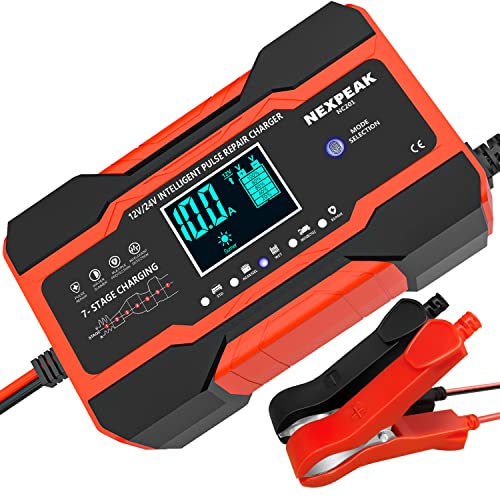 Best for quick recovery10A Car Battery Charger Automotive Trickle Charger NC201View on Amazon
- 5
 Best for budget maintenanceE-FAST 25A Smart Car Battery Charger, 12V/24V Automatic Battery MaintainerView on Amazon
- 6
 Best for small batteries and powersportsSchumacher Electric 1.5A Car Battery Charger & Maintainer, 6V/12V – SC1355View on Amazon
Our Top Picks
Quick Comparison
| Product | Best for | Key feature |
|---|---|---|
| NOCO GENIUS5 | Overall use | Overcharge protection, desulfator |
| E-FAST Battery Charger 0-20A | Higher-amp charging | Adjustable 0-20A output |
| TowerTop 2/10/25 Amp | Winter storage | Engine start, winter mode |
| 10A Car Battery Charger NC201 | Quick recovery | 7-stage charging, pulse repair |
| E-FAST 25A Smart Charger | Budget maintenance | 200s booster mode |
| Schumacher Electric SC1355 | Small batteries | 1.5A smart trickle charge |
NOCO GENIUS5 5A 6/12V Smart Battery Charger, Trickle Charger & Maintainer
NOCO GENIUS5 5A 6/12V Smart Battery Charger, Trickle Charger & Maintainer | Overcharge Protection, Desulfator, Temperature Compensation, Force Mode, For Lead-Acid (Wet, Gel, AGM) & Lithium (LiFePO4)
Best for: Overall use across lead-acid and lithium batteries
This suits owners who want one charger for a car, motorcycle or seasonal vehicle and prefer automatic protections over manual settings.
Pros
- Overcharge protection and temperature compensation
- Supports wet, gel, AGM and LiFePO4 batteries
Cons
- 5A output is slower than higher-amp units for a deeply discharged battery
E-FAST Battery Charger 0-20A 12/24V Lifepo4 Lead Acid Automatic Smart Car Battery Charger
Battery Charger 0-20A 12/24V Lifepo4 Lead Acid Automatic Smart Car Battery Charger, Trickle & Pulse Repair, Automobile Battery Maintainer for Car Truck Motorcycle Lawn Mower Boat
Best for: Higher-amp charging for larger batteries and 24V systems
Best for owners with trucks, boats or lawn equipment who need more amperage and a wider range of battery types.
Pros
- Adjustable output up to 20A
- Handles 12V and 24V systems
Cons
- Higher output calls for careful cable connection and a clear work area
TowerTop 2/10/25 Amp 12V Smart Car Battery Charger with Engine Start
TowerTop 2/10/25 Amp 12V Smart Car Battery Charger, Fully Automatic Battery Maintainer with Engine Start, Auto Desulfator, Battery Repair, Winter Mode, for AGM, STD, Gel, Deep Cycle Batteries
Best for: Winter storage and cold-weather recovery
A good match for drivers in cold climates who store a vehicle for weeks and want a unit that can restore a weak battery before starting.
Pros
- Selectable 2, 10 and 25 amp settings
- Winter mode and auto desulfator
Cons
- Multiple modes take some time to learn
10A Car Battery Charger Automotive Trickle Charger NC201
10A Car Battery Charger Automotive Trickle Charger 12V 24V Maintainer NC201 | 7-Stage Safety Charging w/ Multi-Protections, Quick Charge, Large Screen, Pulse Repair Extend Battery Life, Temp Compensat
Best for: Quick recovery of a moderately discharged battery
Suited to daily drivers who want a noticeably faster charge than a 2A maintainer without stepping up to a bench-sized unit.
Pros
- 7-stage charging with multiple protections
- Large screen shows charge status
Cons
- Manufacturer specifications suggest it is less suited to very small batteries
E-FAST 25A Smart Car Battery Charger, 12V/24V Automatic Battery Maintainer
E-FAST 25A Smart Car Battery Charger, 12V/24V Automatic Automotive Battery Maintainer & Desulfator with 200s Booster Mode – Adjustable Amp Trickle Charger for Lead-Acid, AGM, Gel, LiFePO4
Best for: Budget maintenance with a fast booster option
A practical choice for owners who want a booster function for jump-start situations and a maintainer for long storage periods.
Pros
- 200-second booster mode for quick starts
- Works with lead-acid, AGM, gel and LiFePO4
Cons
- Booster mode should not be left running for long periods
Schumacher Electric 1.5A Car Battery Charger & Maintainer, 6V/12V – SC1355
Schumacher Electric 1.5A Car Battery Charger & Maintainer, 6V/12V – SC1355 | Restores Batteries, Smart Trickle Charge, Automatic – Auto Restart – Power Sport, Motorcycle, and Car Batteries
Best for: Small batteries, motorcycles and powersports vehicles
Best for owners of smaller batteries who want a gentle, automatic charger and a well-known brand name behind it.
Pros
- Automatic restart after power interruption
- Suitable for 6V and 12V batteries
Cons
- The 1.5A output is slow for a large, deeply discharged car battery
Buying Guide
Battery Chemistry Compatibility
Before you buy, confirm that the charger supports your battery type. Most car batteries are lead-acid, but many newer vehicles use AGM or gel batteries, and some use lithium iron phosphate (LiFePO4). A charger built for one chemistry may charge another incorrectly, so check the supported list on the box or product page.
Amperage and Charging Speed
Higher amp ratings generally mean faster charging, but a higher rating is not always better for a small battery. Chargers with adjustable output let you choose a lower setting for maintenance and a higher setting when you need a quicker recharge. Match the amperage to the battery size and how fast you need it ready.
Voltage Support
Standard passenger cars use 12V systems, while some trucks, boats and equipment use 24V. Make sure the charger lists the voltage your battery requires. Many units support both 6V and 12V or 12V and 24V, which is useful if you own more than one type of vehicle or powered equipment.
Safety Features
Look for overcharge protection, reverse polarity protection, short-circuit protection and spark-proof connections. Temperature compensation adjusts charging for hot or cold conditions, which helps extend battery life. Automatic shutoff and float or maintenance modes are helpful if the charger will stay connected for long periods.
Extra Functions
Some chargers include desulfation or pulse repair modes intended to recover weak batteries, engine start boost for jump-starting, or a winter mode for cold weather. These features add convenience, but they are most valuable when you actually plan to use them. Choose a model whose extras match your real needs rather than paying for functions you will never use.
FAQ
Can a car battery quick charger damage my battery?
A quality smart charger with overcharge protection is designed to avoid damage by adjusting output as the battery fills. Problems usually come from using a basic charger with no regulation, or from setting a high amperage on a small battery. Following the manufacturer’s instructions for your battery type greatly reduces the risk.
How long does a quick charger take to charge a car battery?
Charging time depends on the battery’s capacity, how discharged it is, and the charger’s amp output. A higher-amp charger will generally finish sooner than a low-amp trickle charger. Check the charger’s guidance for your battery size to estimate timing.
Can I leave a smart charger connected all the time?
Many smart chargers have maintenance or float modes designed for long-term connection, which keep the battery topped off without overcharging. This makes them useful for vehicles that sit unused for weeks or months. Still, confirm that your specific model is rated for continuous connection before leaving it plugged in.
Do I need a charger for a lithium battery?
Lithium iron phosphate batteries require a charger with a compatible charging profile, since using a lead-acid setting can cause problems. Some chargers list LiFePO4 as a selectable mode, while others only support lead-acid types. Always verify compatibility before connecting a lithium battery.
What is the difference between a charger and a maintainer?
A charger is designed to restore charge relatively quickly, while a maintainer keeps a fully charged battery at optimal levels over time. Many units combine both functions and switch modes automatically. If you only need to keep a stored vehicle ready, a maintainer may be sufficient.
Conclusion
If you want a dependable all-around charger for regular cars and trucks, the top-rated overall option or the 12V/24V models with adjustable amperage are good starting points. Owners of motorcycles, lawn equipment or small batteries may prefer a lower-amp unit that avoids overcharging.
For larger vehicles, boats or 24V systems, choose a higher-output charger with broad chemistry support and strong protections. Match the charger to your battery type, voltage and typical charging needs, and you will get the most value from your purchase.
Related reading
- iPhone Car Battery Charger: Will It Drain Your Battery? (2026)
- XS Car Battery Charger: 5 Best Picks for Every Need (2026)
- Will a Car Charger Drain Your Battery? What Really Happens (2026)
- Will Phone Charger Kill Car Battery? Short Answer and Safe Habits
- Why Won't My Car Battery Charger O'Reilly Work? 6 Causes and Fixes
- Which LiFePO4 Car Battery Charger Should You Use? Steps and Tips
About Lauren Holland
Lauren Holland is part of our editorial team and reviews and edits our car care & garage supplies guides, checking product details against manufacturer specifications and owner feedback.