As an Amazon Associate I earn from qualifying purchases. This page may contain affiliate links.
If you are shopping for a car battery charger at AutoZone, you are probably trying to keep a battery topped up, revive one that has gone flat, or avoid paying for a tow after a few weeks in the garage. AutoZone stocks a range of chargers, from basic trickle units to multi-mode models that handle standard lead-acid batteries and sometimes AGM. This review looks at what those chargers generally offer, how to read their specifications, and which buyers get the most value from them. It is a research-based review built from manufacturer specifications and common owner feedback, not hands-on testing. Because AutoZone’s catalog changes, confirm the exact model and its listed specs on the shelf or the product page before you buy.
Product Overview
A car battery charger at AutoZone typically falls into one of three groups. The first is the basic manual charger, which delivers a fixed output and needs you to watch the charge time yourself. The second is the automatic or smart charger, which adjusts its output as the battery fills and switches to a float or maintenance mode when it is full. The third is the multi-stage or microprocessor charger, which runs through bulk, absorption and float phases and often includes a repair or desulfation mode for batteries that have sat discharged for a long time.
Most chargers sold in this category are designed for 12-volt automotive batteries, including flooded lead-acid, and many also list AGM and gel compatibility. Some include a 6-volt setting for older vehicles, motorcycles or lawn equipment. Check the label before buying, because using the wrong voltage or chemistry setting can shorten battery life or cause damage.
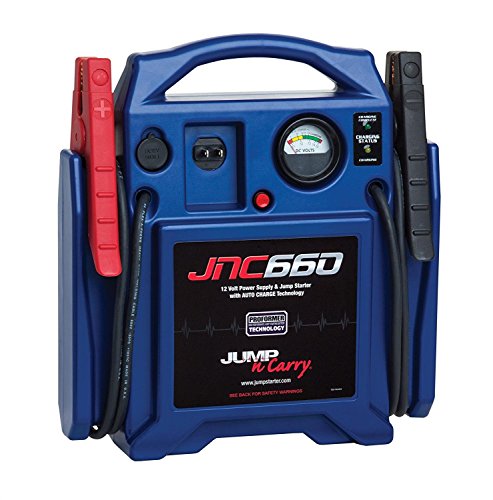
Chargers in this category are meant for home garages, driveways and small workshops. They are not a replacement for a jump starter in an emergency, since a charger needs AC power from a wall outlet to work. If you want a portable solution for the road, a jump starter is the better tool. A charger is what you use to keep a battery healthy between drives.
Key Features & Specifications
The table below lists specifications that manufacturers of this charger type commonly publish. Exact values vary by model, so use them as a checklist and verify the numbers printed on the specific unit you are considering.
| Feature | What to Look For | Why It Matters |
|---|---|---|
| Battery voltage | 12V (most cars); 6V setting on some models | Mismatched voltage can damage the battery or charger |
| Output current (amps) | Often 2A for maintenance; 6A to 10A for faster charging | Higher amps charge faster but generate more heat and suit larger batteries |
| Battery chemistry | Flooded lead-acid, AGM, gel | AGM and gel batteries need a charge profile designed for them |
| Charging modes | Trickle, automatic, float or maintenance, repair/desulfation | Determines whether the unit can safely leave connected long term |
| Battery capacity range | Listed in amp-hours (Ah) | Helps match amperage to the battery size |
| Protection features | Reverse polarity, short circuit, overcharge and spark protection | Reduces risk of damage or injury when connecting clamps |
| Power input | Standard AC household outlet | Confirms the unit works with a standard garage outlet |
| Indicator display | LED status lights or LCD readout | Shows charge stage and completion without guesswork |
| Clamp and cable length | Heavy-gauge clamps; cables long enough to reach the battery | Short or thin cables limit placement and can overheat |
Pay close attention to amperage. A low-amp unit rated around 2A is well suited to keeping a battery full over winter, but it will take many hours to recover a deeply discharged battery. A 6A to 10A unit recovers a battery faster, though you should not leave a high-output charger connected unattended for days unless it has automatic shutoff and float mode.
Pros & Cons
Pros
- Easy to find and buy in person at AutoZone stores, which helps if you need a unit the same day.
- Automatic and smart models reduce the risk of overcharging compared with a basic manual charger.
- Many units include maintenance or float modes suited to seasonal vehicles and stored cars.
- Multi-chemistry models can handle standard, AGM and gel batteries, depending on the model.
- Protection circuits for reverse polarity and short circuits are common on current designs.
- Clear indicator lights make it easy to tell when charging is complete.
Cons
- Basic chargers without automatic shutoff require attention, since overcharging can damage a battery.
- Low-amp models take a long time to recover a deeply discharged battery.
- Store stock and specific models vary, so the exact unit may differ from what you read about.
- Chargers need a power outlet and cannot help you start a car far from one.
- Some owners report that cheaper clamps and thin cables feel flimsy over time.
- Repair or desulfation modes are sometimes overpromised; they rarely restore a badly damaged battery.
Performance Analysis
Charger performance comes down to how well the output matches the battery’s needs at each stage. A good automatic charger starts with a bulk phase, delivering its full rated current until the battery reaches roughly 80 percent capacity. It then moves into an absorption phase with a steadily declining current, and finally switches to float or maintenance at a lower voltage to hold the battery at full charge without overheating it. Manufacturers generally specify that a fully charged 12-volt flooded battery sits near 12.6 to 12.8 volts at rest, and a float voltage around 13.2 to 13.8 volts is typical for maintenance modes, though exact figures depend on chemistry and model.
Charge time is the number owners ask about most. As a rough rule, divide the battery’s amp-hour rating by the charger’s output to estimate hours to a full charge, then add time for the absorption phase. A 50 Ah battery on a 2A charger may need well over 24 hours from a low state, while the same battery on a 10A charger may take roughly six to eight hours. These are estimates; actual times vary with battery condition, temperature and state of charge.
Owner feedback for this category tends to cluster around a few themes. Automatic shutoff and float mode are praised when they work as described. Complaints usually involve chargers that get warm during long sessions, clamps that loosen or corrode, and batteries that will not hold a charge after the charger has finished, which often points to the battery itself rather than the charger. A charger can restore capacity to a healthy battery that has been neglected, but it cannot fix a cell that has failed or a battery that is past its service life.
Ventilation matters. Lead-acid batteries release hydrogen during charging, so work in a space with airflow, keep sparks and open flames away, and connect clamps in the correct order: positive first, then negative to a bare metal ground point away from the battery. Read the manufacturer’s manual before connecting, and if the battery is swollen, cracked or leaking, do not charge it.
Who Should Buy This Product?
A car battery charger from AutoZone suits several types of buyers. Owners of seasonal or stored vehicles benefit most from a float or maintenance charger, since it keeps the battery ready without manual monitoring. Drivers who make mostly short trips, which often do not fully recharge the battery, will also find a maintainer useful for preventing sulfation. Motorcycle, boat and lawn tractor owners who need a 6V or 12V option can use a multi-voltage unit across several vehicles.
A charger is a poor choice if you need emergency starting power on the road. It is also less suited to someone who wants a hands-off solution for a badly neglected battery, since a deeply discharged battery may take a long time to recover and may not recover fully. If you have a battery that keeps dying even when fully charged, the problem may be a parasitic drain or a failing alternator, and a charger will only mask it. Check the battery and charging system first.
Before buying, confirm the battery type in your vehicle. Many newer cars use AGM batteries, and charging an AGM battery with a flooded-only profile can shorten its life. Look for a charger that lists AGM compatibility or a selectable chemistry setting.
Buying Guide
Start with the battery you own. Check the group size and amp-hour rating printed on the label, and confirm whether it is flooded, AGM or gel. Then choose amperage based on how fast you need to charge. For regular maintenance, a 2A to 4A maintainer is usually enough. For recovery of a flat battery, a 6A to 10A charger with automatic mode saves time.
Look for these features when comparing models:
- Automatic shutoff and float or maintenance mode, so the unit can stay connected safely.
- Reverse polarity and spark protection, which guard against the most common connection mistakes.
- Chemistry selection for AGM and gel if your vehicle uses them.
- Clamps with a firm grip and insulated housings, and cables long enough to reach the battery from a convenient outlet.
- A clear display or indicator lights that show charge stage and completion.
- A warranty and a manufacturer you can contact for support.
If AutoZone’s selection does not fit your needs, several well-known alternatives are worth comparing. The NOCO Genius series is widely recognized for multi-stage automatic charging and includes units for different amp ratings. The CTEK MXS 5.0 is a popular smart charger with a reputation for thorough charge profiles and temperature compensation. The Schumacher SC1281 is a common choice for those wanting a multi-amp unit with a boost mode for jump starting in a pinch. Compare current listings for each: View on Amazon, View on Amazon, View on Amazon.
For more context on the difference between maintainers and general chargers, see Car Battery Maintainers, Trickle Chargers and Smart Chargers and Best Car Battery Maintainers and Trickle Chargers. If you are weighing a portable solution instead, 8 Best Car Battery Jump Starters of 2026: Expert Picks for Every Need covers the alternatives. If your battery keeps going flat, Car Battery Keeps Dying? Common Causes and What to Check walks through the likely causes.
FAQ
Can I leave a car battery charger connected all the time?
Only if it is an automatic or maintenance charger with float mode and overcharge protection. Basic manual chargers can overcharge and damage a battery if left unattended. Check the manual before leaving any unit connected for extended periods.
How long does it take to charge a dead car battery?
It depends on the battery’s amp-hour rating, the charger’s output, and how discharged the battery is. A low-amp charger may take a day or more, while a higher-amp unit can recover a battery in several hours. Estimates are only a guide.
Can a car battery charger fix a bad battery?
A charger can restore a battery that is undercharged or sulfated, but it cannot repair a failed cell or a battery at the end of its life. If a fully charged battery will not hold voltage, replacement is usually the answer.
Do I need a special charger for an AGM battery?
Often yes. AGM batteries require a charging profile designed for them, typically with a specific absorption voltage. Choose a charger that lists AGM compatibility or a selectable chemistry setting.
Is it safe to charge a battery in the garage?
Generally yes, if the area is well ventilated and free of sparks or open flames. Lead-acid batteries release hydrogen during charging, so avoid enclosed spaces and connect clamps in the correct order.
Can I use a car battery charger for a motorcycle or lawn tractor?
Many chargers include 6V or 12V settings that work for motorcycles and small equipment. Confirm the battery voltage and chemistry match the charger’s settings before connecting.
What is the difference between a battery charger and a jump starter?
A charger uses household AC power to slowly refill a battery. A jump starter is a portable battery pack that delivers a short burst of current to start a vehicle with a dead battery, without needing an outlet.
Final Verdict
A car battery charger from AutoZone is a practical choice for keeping a battery healthy, especially for stored vehicles, short-trip drivers and anyone with multiple 12V batteries to maintain. Look for automatic shutoff, float mode, correct chemistry settings and solid protection features, and match the amperage to how quickly you need results. Verify the exact model’s specifications on the shelf or product page before buying. If you want a specific model to compare against, consider this option: View on Amazon.
If you are unsure how to connect a charger safely or suspect a damaged battery, consult a qualified automotive technician.