By Lauren Holland
Updated November 2026
An advance auto tire inflator is a handy way to bring a low tire back up to the correct pressure without a trip to a gas station air pump. This guide explains what to look for when choosing an inflator, how to use one safely, and how to confirm you have reached the right pressure. The steps apply to most portable 12V and cordless units sold at auto parts stores.
Know Your Target Pressure First
Do not inflate to the number printed on the tire sidewall. That figure is the tire’s maximum rated pressure. The correct pressure is listed on the placard inside the driver’s door jamb or in the owner’s manual, usually in PSI. Check it when the tires are cold, meaning the car has been parked for a few hours or has driven less than a mile.
Shopping for one? See our guide: 6 Best Auto Car Battery Chargers of 2026: Our Picks.
Choosing an Inflator for Your Car
Most people will choose between three types. Each has trade-offs in speed, power source and portability, and our guide on Cordless vs 12V Tire Inflators vs Garage Compressors covers them in detail. Consider these factors:
- Power source: A 12V unit plugs into the car’s accessory socket. A cordless unit runs on a battery you must keep charged.
- Auto shut-off: Look for a unit that stops at a preset PSI. This prevents overinflation.
- Hose and connector: A longer hose makes it easier to reach all four wheels without moving the unit.
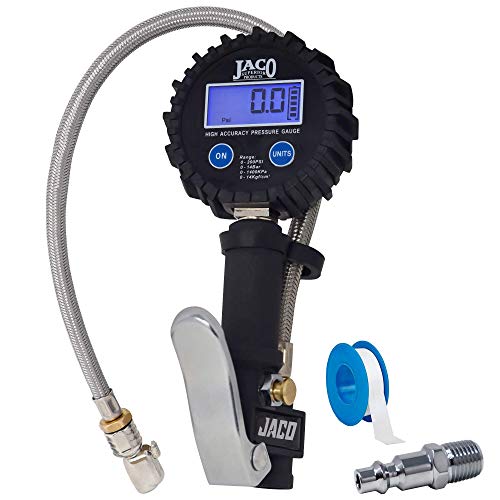
- Built-in gauge: A digital readout is easier to read than a dial, especially in low light.
If you are still deciding, How to Choose a Portable Tire Inflator walks through the selection criteria in more depth.
How to Inflate a Tire Step by Step
- Park on level ground, set the parking brake and turn the engine off.
- Remove the valve stem cap and store it somewhere you will not lose it.
- Set the inflator’s target PSI to the number on your door placard.
- Press the connector firmly onto the valve stem so it seals.
- Run the inflator and watch the built-in gauge. Most units pause or stop when the target is reached.
- Remove the connector quickly and replace the valve cap.
- Check the pressure again with a separate tire pressure gauge, then repeat on the remaining tires.
For a more detailed walkthrough, see How to Inflate Tires With a Portable Inflator. If you are not sure how to read your current pressure, How to Check Tire Pressure the Right Way covers that step.
Verifying Your Results
An inflator’s built-in gauge can drift, so verify with a separate gauge you trust. Compare readings on all four tires. A difference of more than a few PSI between tires on the same axle is worth investigating, since it can point to a slow leak or a damaged valve.
| Situation | What to Do |
|---|---|
| Pressure drops again within a day or two | Inspect for a nail or screw and have the tire checked |
| Tire loses pressure slowly over weeks | Check valve stem and bead seal with soapy water |
| Dashboard TPMS warning stays on after inflating | Recheck pressure and reset the system if your car requires it |
Common Mistakes
- Inflating hot tires, which makes the reading look higher than it will be once they cool.
- Using the sidewall maximum instead of the door placard pressure.
- Forgetting to replace the valve cap, which lets dirt into the valve.
- Trusting an inflator’s gauge without checking it against a second gauge.
- Running a cordless unit on a low battery and stopping partway through.
Recommended Gear
- A portable 12V inflator with auto shut-off lets you set a target and walk away. View on Amazon
- A separate digital tire pressure gauge gives you a second reading to verify the inflator. View on Amazon
FAQ
What PSI should I set my tire inflator to?
Use the pressure listed on the placard inside your driver’s door jamb or in the owner’s manual. Do not use the maximum PSI printed on the tire sidewall.
Can I use a tire inflator on a flat tire with a puncture?
A small puncture may hold air long enough to get you to a shop, but a flat with visible damage needs proper repair. Check with a professional tire shop before driving far on a damaged tire.
How often should I check tire pressure?
Check at least once a month and before long trips, using cold tires. Pressure drops with temperature, so it is worth checking when seasons change.
Conclusion
A good advance auto tire inflator makes it simple to correct low pressure at home or on the road. Set the target from your door placard, inflate on cold tires, and verify with a separate gauge. If pressure keeps dropping, treat it as a sign of a leak rather than a reason to keep adding air.
Related reading
- How to Inflate Tires With a Portable Inflator
- How to Evaluate Tire Inflators, Gauges, Battery Maintainers and Scanners
- How to Choose a Portable Tire Inflator
- Cordless vs 12V Tire Inflators vs Garage Compressors
- Car Battery Charger with Tire Inflator: Setup, Uses and Limits (2026)
Ready to choose one?
About Lauren Holland
Lauren Holland is part of our editorial team and reviews and edits our car care & garage supplies guides, checking product details against manufacturer specifications and owner feedback.