
 By Lauren Holland
Updated November 2026
If you are trying to figure out how long a car battery charger needs to bring a battery back to full, you are asking the right question before you spend money. Charge time depends on the charger’s amperage, the battery’s capacity in amp-hours, how discharged the battery is, and the charging mode the unit uses. This guide compares seven car battery chargers by how quickly they work, which battery types they support, and who each one suits, so you can match a charger to your situation rather than guessing.
Our top picks at a glance
- 1
 TOP CHOICEBest overallSchumacher Electric 1.5A Car Battery Charger & Maintainer, 6V/12V – SC1355View on Amazon
- 2
 TOP CHOICEBest for fast charging of large batteriesPZ.P 15-Amp 12V/24V Smart Battery Charger, Maintainer & Trickle ChargerView on Amazon
- 3
 TOP CHOICEBest for lithium and lead-acid mixed useE-FAST Battery Charger 0-20A 12/24V Lifepo4 Lead Acid Automatic Smart Car Battery ChargerView on Amazon
- 4
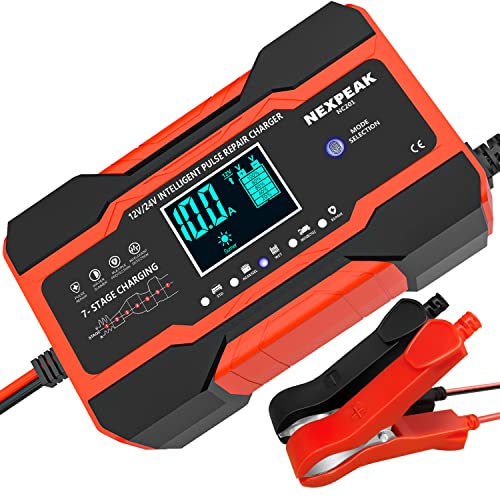 Best for repair and pulse desulfation10A Car Battery Charger Automotive Trickle Charger 12V 24V Maintainer NC201View on Amazon
- 5
 Best for winter storageTowerTop 2/10/25 Amp 12V Smart Car Battery Charger with Engine StartView on Amazon
- 6
 Best for high-current jobsE-FAST 25A Smart Car Battery Charger, 12V/24V Automatic Automotive Battery MaintainerView on Amazon
- 7
 Best budget pickCar Battery Charger 12V 10Amp Fully Automatic Smart Trickle ChargerView on Amazon
How we selected these picks: the list is based on published specifications, brand reputation, and patterns in owner feedback, not on personal testing. We favored chargers with clearly stated amperage, multi-stage charging, support for common 12-volt battery chemistries, and protections against reverse polarity and overcharging.
Our Top Picks
Quick Comparison
| Product | Best for | Key feature |
|---|---|---|
| Schumacher Electric SC1355 | Everyday charging and maintenance | 1.5A smart trickle charge with automatic restart |
| PZ.P 15-Amp 12V/24V Smart Charger | Large or deeply discharged batteries | 15A output with 9-stage charging |
| E-FAST 0-20A Smart Charger | Mixed lead-acid and lithium batteries | Adjustable up to 20A with LiFePO4 mode |
| 10A Car Battery Charger NC201 | Recovering sulfated batteries | Pulse repair and temperature compensation |
| TowerTop 2/10/25 Amp Charger | Winter storage and seasonal vehicles | Selectable amperage and winter mode |
| E-FAST 25A Smart Charger | Fast recovery on large batteries | 25A output with 200-second booster mode |
| Car Battery Charger 12V 10Amp Smart Trickle Charger | Budget-conscious owners | 10A 9-stage charging with LED display |
Schumacher Electric 1.5A Car Battery Charger & Maintainer, 6V/12V – SC1355
Schumacher Electric 1.5A Car Battery Charger & Maintainer, 6V/12V – SC1355 | Restores Batteries, Smart Trickle Charge, Automatic – Auto Restart – Power Sport, Motorcycle, and Car Batteries
Best for: Everyday charging and maintenance
This is a low-amperage unit aimed at owners who keep a battery topped up rather than recover a dead one quickly. It suits motorcycles, cars stored for long periods, and seasonal vehicles.
Key specs
- 1.5-amp charge rate
- 6-volt and 12-volt battery support
- Automatic trickle charge and maintenance mode
- Automatic restart after power interruption
Pros
- Low output reduces the risk of overcharging a battery left connected for days
- Simple operation with few settings to learn
- Owners often mention it is well suited to storage
Cons
- At 1.5 amps, a fully discharged car battery can take many hours or more than a day to reach full
- Not a choice for quick recovery before a trip
Bottom line: Pick this if your main goal is maintaining a battery over time, not recharging a dead one overnight.
View on AmazonPZ.P 15-Amp 12V/24V Smart Battery Charger, Maintainer & Trickle Charger
PZ.P 15-Amp 12V/24V Smart Battery Charger, Maintainer & Trickle Charger for LiFePO4, Lead Acid Batteries – Fully Automatic 9-Stage Charging w/Temp Compensation for Motorcycle Car Truck Lawnmower Boat
Best for: Large or deeply discharged batteries
This higher-output charger fits truck, RV, boat, and lawn equipment owners who need a noticeably shorter charge window. Its 15-amp rating is the main reason it appears near the top for speed.
Key specs
- 15-amp maximum output
- 12-volt and 24-volt operation
- Lead-acid and LiFePO4 battery modes
- Fully automatic 9-stage charging with temperature compensation
Pros
- High amperage shortens recovery time significantly compared with 2-amp units
- Covers both 12V and 24V systems
- Multi-stage control helps protect the battery as it nears full
Cons
- Larger battery chemistries and high current require careful clamp connection
- Overkill for small motorcycle batteries that charge slowly by design
Bottom line: A strong pick for owners who want faster charging on big batteries across several vehicle types.
View on AmazonE-FAST Battery Charger 0-20A 12/24V Lifepo4 Lead Acid Automatic Smart Car Battery Charger
E-FAST Battery Charger 0-20A 12/24V Lifepo4 Lead Acid Automatic Smart Car Battery Charger, Trickle & Pulse Repair, Automobile Battery Maintainer for Car Truck Motorcycle Lawn Mower Boat
Best for: Mixed lead-acid and lithium batteries
Owners with more than one battery chemistry, or who want an adjustable charger that scales with the job, will find this unit useful. It adjusts output to the battery rather than running at one fixed rate.
Key specs
- Adjustable output up to 20 amps
- 12-volt and 24-volt operation
- Lead-acid and LiFePO4 modes
- Trickle and pulse repair functions
Pros
- Adjustable amperage lets you match charge time to urgency
- Supports lithium and lead-acid in one unit
- Pulse repair mode is a common feature owners look for on used batteries
Cons
- Selecting the wrong battery chemistry setting can affect charging behavior, so checking the mode matters
- Full 20-amp output is intended for capable batteries and cables
Bottom line: Choose this if you own lithium and lead-acid batteries and want one charger that adapts to both.
View on Amazon10A Car Battery Charger Automotive Trickle Charger 12V 24V Maintainer NC201
10A Car Battery Charger Automotive Trickle Charger 12V 24V Maintainer NC201 | 7-Stage Safety Charging w/ Multi-Protections, Quick Charge, Large Screen, Pulse Repair Extend Battery Life, Temp Compensat
Best for: Recovering sulfated batteries
This 10-amp unit targets batteries that have lost capacity from sitting discharged. Its pulse repair function is aimed at breaking up sulfate buildup that can slow a charge.
Key specs
- 10-amp maximum output
- 12-volt and 24-volt support
- 7-stage charging with multiple protections
- Pulse repair and temperature compensation
Pros
- Pulse repair mode suits older batteries showing sulfation
- Mid-range amperage balances speed and battery care
- Large display makes status easy to read
Cons
- Pulse repair cannot restore a battery with physical damage or a dead cell
- Recovery from deep discharge still takes many hours at 10 amps
Bottom line: A sensible choice for owners reviving older lead-acid batteries that charge poorly.
View on AmazonTowerTop 2/10/25 Amp 12V Smart Car Battery Charger with Engine Start
TowerTop 2/10/25 Amp 12V Smart Car Battery Charger, Fully Automatic Battery Maintainer with Engine Start, Auto Desulfator, Battery Repair, Winter Mode, for AGM, STD, Gel, Deep Cycle Batteries
Best for: Winter storage and seasonal vehicles
Owners who park a car for months, such as in cold climates, benefit from a charger that can switch between slow maintenance and faster charging. The winter mode is intended for cold-weather charging conditions.
Key specs
- Selectable 2, 10, and 25-amp settings
- 12-volt operation
- Automatic desulfation and battery repair mode
- Winter mode for cold-weather charging
Pros
- Selectable amperage covers both slow maintenance and quicker charges
- Winter mode addresses cold-weather charging
- Works with AGM, standard, gel, and deep-cycle batteries
Cons
- The 25-amp setting should be used only with suitable batteries and connections
- Many settings can take some time to understand on first use
Bottom line: Best for people who need a flexible charger for storage in cold months and occasional faster top-ups.
View on AmazonE-FAST 25A Smart Car Battery Charger, 12V/24V Automatic Automotive Battery Maintainer
E-FAST 25A Smart Car Battery Charger, 12V/24V Automatic Automotive Battery Maintainer & Desulfator with 200s Booster Mode – Adjustable Amp Trickle Charger for Lead-Acid, AGM, Gel, LiFePO4
Best for: Fast recovery on large batteries
This is the highest-output unit in the list and suits owners of large batteries who need the shortest practical charge time. A booster mode is included for stubborn batteries.
Key specs
- 25-amp maximum output
- 12-volt and 24-volt operation
- Adjustable amperage
- 200-second booster mode
Pros
- 25-amp output gives the shortest charge times in this list
- Booster mode is useful for quick starting before a full charge
- Supports lead-acid, AGM, gel, and LiFePO4
Cons
- High current demands heavy-gauge clamps and careful connection
- Not necessary for small batteries and can be more than needed
Bottom line: Pick this when charge speed on large batteries matters most and you can handle high-current equipment safely.
View on AmazonCar Battery Charger 12V 10Amp Fully Automatic Smart Trickle Charger
Car Battery Charger 12V 10Amp Fully Automatic Smart Trickle Charger | 9 Stage Battery Maintainer Desulfator LED Display Temperature Compensation for Car Truck Motorcycle Boat
Best for: Budget-conscious owners
A straightforward 10-amp charger with a clear LED display and automatic stages. It fits owners who want a reasonable charge rate for cars and small trucks without advanced modes.
Key specs
- 10-amp maximum output
- 12-volt operation
- 9-stage fully automatic charging
- LED display and temperature compensation
Pros
- Mid-range output gives a practical charge time for typical car batteries
- LED display shows charging status clearly
- Fully automatic operation requires little attention
Cons
- Fewer advanced modes than premium chargers
- Full recovery of a very low battery still takes several hours
Bottom line: A solid choice for everyday car owners who want automatic charging at a modest outlay of attention and features.
View on AmazonBuying Guide
Charger Amperage and Charge Time
Amperage is the main driver of charge time. A rough estimate is battery amp-hours divided by charger amps, then adjusted upward by about 20 to 30 percent because charging slows near full. A 50 amp-hour battery on a 10-amp charger may need roughly 6 to 8 hours from half discharge. Always treat this as an estimate, since charge acceptance drops as the battery fills.
Good picks for this: PZ.P 15-Amp Smart Battery Charger, 10A Car Battery Charger NC201
Battery Type Compatibility
Check whether the charger supports your battery chemistry. Standard flooded lead-acid, AGM, gel, and LiFePO4 batteries use different voltage profiles. Using a lead-acid mode on lithium can damage the battery or the charger’s protection behavior, so confirm the setting before connecting.
Good picks for this: E-FAST 0-20A Smart Car Battery Charger, TowerTop 2/10/25 Amp Smart Charger
Battery Size and Vehicle Type
Motorcycle batteries and small sealed batteries accept lower currents well, while truck, RV, and marine batteries can handle more. Match the output to the battery’s amp-hour rating rather than using the highest setting by default.
Good picks for this: E-FAST 25A Smart Car Battery Charger, PZ.P 15-Amp Smart Battery Charger
Smart Charging and Automatic Stages
Multi-stage smart chargers adjust voltage and current as the battery fills. This reduces the risk of overcharging and makes long connections safer, especially for maintenance use. Look for a description of stages such as bulk, absorption, and float, or a stated count such as 7 or 9 stages.
Good picks for this: Schumacher Electric SC1355, Car Battery Charger 12V 10Amp Fully Automatic Smart Trickle Charger
Repair and Desulfation Modes
Pulse or desulfation modes are intended to loosen sulfate crystals that build up on plates when a battery sits discharged. Results vary. These modes can help weak but otherwise sound batteries, but they cannot fix internal shorts or physical damage. Set expectations accordingly.
Good picks for this: 10A Car Battery Charger NC201, E-FAST 25A Smart Car Battery Charger
Connection Quality and Safety Features
Look for reverse-polarity protection, spark-resistant clamps, and short-circuit protection. Clamp quality matters more as amperage rises, because thin clamps and cables can overheat. Good ventilation is also important when charging, since batteries can release hydrogen gas.
Good picks for this: PZ.P 15-Amp Smart Battery Charger, TowerTop 2/10/25 Amp Smart Charger
Storage, Seasonal Use and Care
For vehicles parked for long periods, a low-current maintainer prevents slow discharge without overcharging. Disconnect the charger when finished, store cables dry, and keep the battery terminals clean. Cold climates call for chargers with temperature compensation or a winter mode.
Good picks for this: Schumacher Electric SC1355, TowerTop 2/10/25 Amp Smart Charger
FAQ
How long does a car battery take to charge?
It depends on battery size, how discharged it is, and charger output. A common car battery at a 10-amp rate often needs several hours to reach a high state of charge from half-discharged. A very flat battery may take a full day on a low-amp charger. Use amp-hours divided by charger amps as a starting estimate, then add extra time.
Can I charge a car battery overnight?
Overnight charging is common and generally safe with a smart or multi-stage charger that stops or switches to maintenance when full. Avoid leaving very old or damaged batteries unattended on high-amp settings, and make sure the area is ventilated.
Is a higher amp charger always better?
Not always. Higher amps shorten charge time, but they are not necessary for small batteries and can stress older ones. A moderate setting often gives a good balance between speed and battery life. Match the output to your need.
Does a trickle charger fully charge a car battery?
A trickle charger is designed mainly for maintenance and very slow top-ups. It can bring a battery up over a long period, but it is not the best tool for recovering a deeply discharged battery quickly.
Why does my battery take longer to charge than the estimate?
Charging slows as the battery approaches full, and older or sulfated batteries accept charge less efficiently. Cold temperatures also slow chemical reactions. If charging seems unusually slow, check the battery’s age and condition, and consult a qualified technician if you suspect a failed cell.
Is it safe to charge a car battery in the garage?
Charging produces small amounts of hydrogen gas, so work in a ventilated space away from open flames and sparks. Connect clamps correctly with the positive side first, and follow the charger manual. For any concern about battery damage, a professional should inspect it.
Can I use one charger for lithium and lead-acid batteries?
Some chargers have selectable modes for both chemistries. Always confirm the battery type and select the matching setting before connecting. If you are unsure of your battery’s chemistry, check the manufacturer’s documentation.
Conclusion
Charge time depends on amperage, battery capacity, discharge level, and charger mode. For everyday maintenance, the Schumacher Electric SC1355 and the 10-amp budget-oriented unit fit well. For large batteries that need faster recovery, the PZ.P 15-amp and E-FAST 25A chargers are the stronger options. Owners with mixed chemistries should consider the E-FAST 0-20A, while those reviving older batteries may prefer the NC201 with pulse repair. Match the amperage to your battery size and your timeline, and the right charger will follow.
Sources
- Background on battery technology, charging basics and energy storage concepts (energy.gov)
- Consumer safety guidance on charging equipment and battery hazards (cpsc.gov)
- Fire safety recommendations for charging batteries and handling related equipment (nfpa.org)
Related reading
- Smart Charge Car Battery Charger: A Step-by-Step Guide for Beginners
- R C Car Battery Charger Guide: Charge Your RC Packs Safely
- Car Battery Won't Fully Charge on Charger: 7 Causes and Fixes
- Car Battery Charger Trickle Charge: 7 Best Picks for Every Need (2026)
- 6 Best Charge Car Battery Charger Options for Every Need (2026)
About Lauren Holland
Lauren Holland is part of our editorial team and reviews and edits our car care & garage supplies guides, checking product details against manufacturer specifications and owner feedback.







