By Lauren Holland
Updated November 2026
An OBD2 scanner with Bluetooth plugs into the diagnostic port under your dashboard and sends engine data to an app on your phone. In a few minutes you can pull the trouble codes that turned on your check engine light, look at live sensor readings, and decide whether the problem is something you can handle in the driveway. This guide walks through setup, reading codes, and interpreting what you see.
What You Need Before You Start
Most vehicles sold in the United States since 1996 use the standard OBD2 port, a 16-pin connector usually located within about two feet of the steering column, often on the driver’s side below the dash. Before plugging in, confirm three things:
Shopping for one? See our guide: 3 Best OBD2 Scanners for Nissan Rogue Compared (2026).
- Your car has a check engine light or a reason to scan it, such as a drivability complaint.
- Your phone supports Bluetooth and has room for the scanner’s app.
- The ignition is off when you connect the scanner, then turned to the “on” position without starting the engine.
Step-by-Step: Pairing and Reading Codes
- Locate the port and plug in the adapter. Push it in firmly until it seats. Some adapters show a small power light.
- Turn the key to “on,” engine off. The adapter draws power from the car, so the dash should light up.
- Pair in your phone’s Bluetooth settings. Many adapters appear as “OBDII” or “ELM327” followed by a string of numbers. The default PIN is often 1234 or 0000, as listed in the scanner’s manual.
- Open the companion app and connect. Select the scanner, allow the connection, and wait for the app to confirm that it reads the vehicle.
- Run a code read. Look for stored codes (those that set the check engine light) and pending codes (faults the computer has seen once but not yet confirmed).
Reading the Codes Correctly
A code such as P0301 is a starting point, not a diagnosis. The first character tells you the system: P for powertrain, B for body, C for chassis, and U for network communication. The number that follows points to a fault area. P0301 means a misfire on cylinder 1, which could be a spark plug, coil, injector, or a vacuum leak.
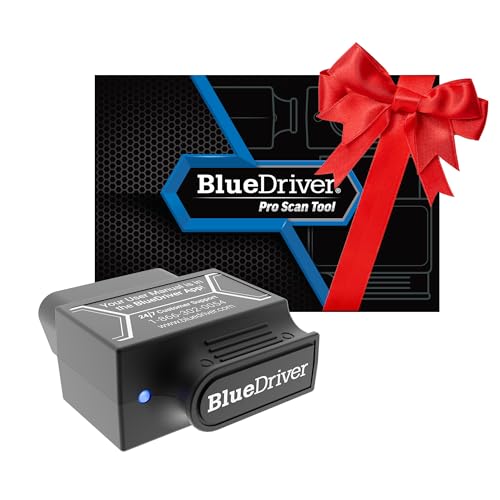
Write down every code, including any freeze-frame data the app shows. Freeze-frame records engine speed, temperature, and load at the moment the fault was set, which helps you judge whether the problem happens cold, at idle, or under acceleration. We also found BlueDriver Bluetooth Professional OBD2 Scanner: Read and Clear Codes in 5 Steps useful on this point.
Deciding What to Do Next
Use the codes to narrow the job, then check whether it fits your skill level.
| Situation | Reasonable DIY step |
|---|---|
| Loose or worn gas cap code (EVAP leak) | Tighten or replace the cap, clear codes, and re-scan after a few drive cycles. |
| Single misfire on one cylinder | Inspect the spark plug and coil for that cylinder. |
| Oxygen sensor or catalytic efficiency code | Check for exhaust leaks and sensor wiring before replacing parts. |
| Airbag (SRS) or ABS warning | Read the code, but have a shop handle repairs on these safety systems. |
If the code points to a safety system or a fault that could affect braking or steering, consult a qualified mechanic before driving far.
Common Mistakes and Tips
- Clearing codes before you have written them down. The fault data disappears with them.
- Assuming a code names the part to replace. Verify with wiring checks and sensor readings first.
- Ignoring pending codes. They often show a problem developing before the light comes on.
- Leaving the adapter plugged in while driving for long periods. Unplug it when you finish to avoid a drain on the battery.
- Using an unverified app that sends data to unknown servers. Stick with apps from established developers.
Recommended Gear
- Standard ELM327-compatible Bluetooth adapter: Pairs with most phone apps and reads generic OBD2 codes on nearly any car sold in the US since 1996. View on Amazon
- Bluetooth OBD2 scanner with live data: Useful when you want to watch sensor readings such as coolant temperature and fuel trims while the engine runs. View on Amazon
FAQ
Will an OBD2 scanner with Bluetooth work on my car?
Most gasoline cars and light trucks sold in the US since 1996 use OBD2, so a Bluetooth adapter will usually connect. Some manufacturers restrict certain manufacturer-specific systems, so check your app’s compatibility list.
Can the adapter drain my battery?
A plugged-in adapter draws a small current, and it can drain the battery if the car sits for weeks. Unplug it when you are not scanning.
Does clearing a code fix the problem?
No. Clearing a code only turns off the light temporarily. If the fault still exists, the code will return, usually within a few drive cycles.
Conclusion
With a Bluetooth adapter and a reliable app, you can read stored and pending codes in minutes, record freeze-frame data, and sort repairs into what you can handle and what needs a shop. Write down every code before you clear anything, and verify each diagnosis before buying parts.
Related reading
- Wireless Bluetooth OBD2 Scanner: How to Pick and Use One at Home
- Scanner Bluetooth ELM327 OBD2: How to Pick and Use One at Home
- Obd2 Bluetooth Scanner App: Read Car Codes on Your Phone in 5 Steps
- OBD2 Scanner Bluetooth Android: Pair and Read Codes in 6 Steps
- OBD2 Bluetooth Diagnostic Scanner: How to Read Codes From Your Phone in 5 Steps
- Fixd Bluetooth Obd2 Scanner: How to Read Codes From Your Phone in 5 Steps
Ready to choose one?
About Lauren Holland
Lauren Holland is part of our editorial team and reviews and edits our car care & garage supplies guides, checking product details against manufacturer specifications and owner feedback.