By Lauren Holland
Updated November 2026
An OBD2 scanner for TPMS lets you read tire pressure sensor data and, on many vehicles, relearn new sensor IDs without a dealer visit. This guide walks through what the scanner can and cannot do, how to run a relearn on a typical car, and what to check when the warning light stays on. Results vary by make and model, so always confirm the procedure in your owner’s manual first.
What an OBD2 Scanner Can Do for Tire Pressure Sensors
The standard OBD2 port reaches the engine and body control modules, but tire pressure monitoring systems (TPMS) use their own protocols. Many aftermarket scanners that advertise TPMS support can read live sensor pressure, temperature and sensor IDs, and some can program replacement sensors or trigger a relearn. Lower-cost scanners often read only the warning light code, so check the supported functions before you buy.
Shopping for one? See our guide: 3 Best OBD2 Scanners for Nissan Rogue Compared (2026).
Two TPMS types exist. Direct systems use a pressure sensor inside each wheel and transmit data by radio. Indirect systems use the wheel speed sensors and ABS module to estimate underinflation. A scanner can relearn an indirect system through a simple button sequence, but direct systems usually need the sensor IDs entered or read.
Step-by-Step: Relearning Direct TPMS Sensors
- Park on level ground, set the parking brake and turn the ignition to the on position without starting the engine.
- Check each tire against the placard inside the driver’s door and inflate to the listed cold pressure.
- Plug the scanner into the OBD2 port under the dash and open the TPMS function. Read the four sensor IDs and confirm each one is reporting pressure.
- If you replaced a sensor, use the scanner’s relearn or program function to write the new ID into the car’s TPMS module, following the on-screen prompts.
- Drive for 10 to 20 minutes at speeds above roughly 20 mph, then confirm the warning light has gone out.
Checking the Warning Light When the Relearn Fails
If the light stays on after a relearn, start with the basics. A slow leak, a low spare, or a sensor that has lost battery can all trigger the warning. Re-check pressures cold, then read each sensor’s live value. A reading of zero or a sensor that never appears usually points to a dead battery inside the sensor or an ID that was not written correctly.
Some vehicles require the relearn to be done in a specific sequence, such as the auto-learn procedure that uses the wheel speed sensors. Others expect the sensors to be on the car before the scanner can detect them. If you are unsure, the owner’s manual or a service manual for your model will list the exact steps.
Common Mistakes
- Relearning before setting tire pressures to the cold placard value.
- Assuming every scanner supports TPMS. Many read only engine codes.
- Replacing sensors without matching the frequency and protocol for your vehicle.
- Skipping the drive cycle after a relearn, so the system never confirms the new data.
- Ignoring a sensor that reads zero pressure, which can mean a dead battery rather than a slow leak.
Recommended Gear
- An OBD2 scanner with a documented TPMS function, such as one from Autel or Launch, is the simplest way to read sensor IDs and run a relearn. Confirm the model lists TPMS support before buying. View on Amazon
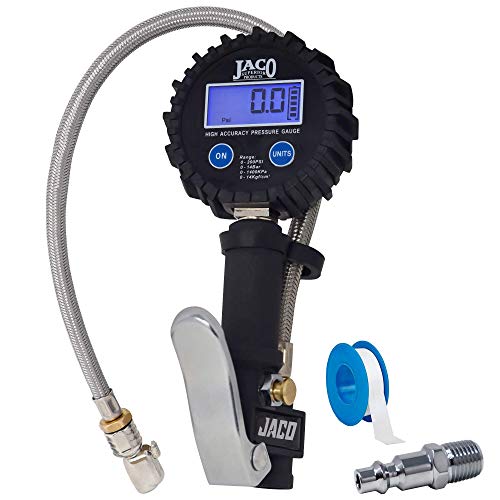
- A digital tire pressure gauge gives you accurate cold readings to set before any relearn, which is the step most often skipped. View on Amazon
- A portable tire inflator lets you bring each tire to placard pressure at home so the sensors report correct values. View on Amazon
For related procedures, see Using an OBD2 Scanner: Read Your Car's Codes in 5 Simple Steps for general code reading, and Wireless Bluetooth OBD2 Scanner: How to Pick and Use One at Home if you want a wireless tool for your phone.
FAQ
Can any OBD2 scanner reset the TPMS light?
No. Many basic scanners cannot access TPMS data at all. Look for a model that explicitly lists TPMS sensor reading or relearn functions. For another angle, check out OBD2 Scanner with Key Programming: Steps to Program a New Key at Home.
Do I need a scanner to relearn indirect TPMS?
Often not. Many indirect systems can be relearned with a button sequence on the dashboard or the steering wheel controls, as described in the owner’s manual. For a deeper look, Obd2 Scanner Live Data: How to Read Sensor Values at Home in 5 Steps covers this in detail.
Why does the TPMS light come on after I change tires?
The new tire mounting can change sensor positions or IDs, and a sensor may need to be relearned. Check pressures first, then run the relearn procedure for your vehicle.
Conclusion
An OBD2 scanner for TPMS makes it practical to read sensor data and relearn new sensors in your own driveway. Set correct cold pressures, confirm each sensor reads properly, and complete the drive cycle before you judge the result. If the light persists or the system needs dealer-level programming, consult a qualified technician.
Related reading
Ready to choose one?
About Lauren Holland
Lauren Holland is part of our editorial team and reviews and edits our car care & garage supplies guides, checking product details against manufacturer specifications and owner feedback.