By Lauren Holland
Updated November 2026
Choosing a towertop 2/10/25 amp 12v smart car battery charger comes down to matching the amp setting, battery chemistry and features like engine start to how you actually use your vehicle. A charger that suits a seasonal project car may be the wrong pick for a daily driver, a boat or a battery that sits in a cold garage all winter. The five models below were compared on published specifications, brand reputation for this product line, and the kinds of feedback owners commonly report about charging behavior, build quality and ease of setup. Amp range, battery types supported, maintenance and recovery modes, winter operation, and the presence of an engine start function were the main criteria.
Our top picks at a glance
- 1
 TOP CHOICEBest overallTowerTop 2/10/25 Amp 12V Smart Car Battery ChargerView on Amazon
- 2
 TOP CHOICEBest for high-capacity powerTowerTop 25A Max Pro Battery ChargerView on Amazon
- 3
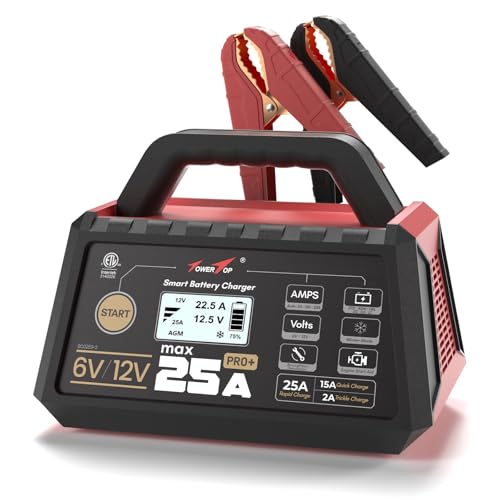 TOP CHOICEBest for lithium and mixed chemistriesTowerTop 25A Pro+ Battery ChargerView on Amazon
- 4
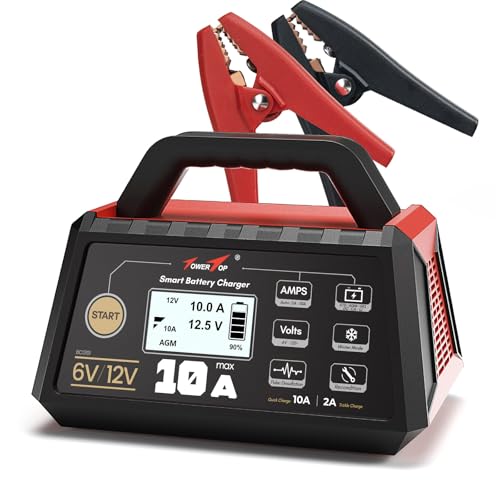 Best for boats and marine batteriesTowerTop Smart Car Battery Charger 10AView on Amazon
- 5
 Best budget pickE-FAST 25A Smart Car Battery ChargerView on Amazon
Our Top Picks
| Product | Best for | Key feature |
|---|---|---|
| TowerTop 2/10/25 Amp 12V Smart Car Battery Charger | Everyday car and truck owners | Selectable 2, 10 and 25 amp settings with engine start |
| TowerTop 25A Max Pro Battery Charger | Larger batteries and faster recovery | High-output 25A charging with recondition mode |
| TowerTop 25A Pro+ Battery Charger | Mixed battery chemistries | 6V/12V support including LiFePO4 |
| TowerTop Smart Car Battery Charger 10A | Boats, marine and deep-cycle batteries | Winter mode and desulfation for deep-cycle use |
| E-FAST 25A Smart Car Battery Charger | Budget-conscious buyers | 12V/24V compatibility with adjustable amp output |
TowerTop 2/10/25 Amp 12V Smart Car Battery Charger
TowerTop 2/10/25 Amp 12V Smart Car Battery Charger, Fully Automatic Battery Maintainer with Engine Start, Auto Desulfator, Battery Repair, Winter Mode, for AGM, STD, Gel, Deep Cycle Batteries
Best for: Everyday car and truck owners who want one charger for routine maintenance and occasional recovery
This is the most general-purpose option in the group. It suits drivers who keep a standard or AGM battery in a passenger vehicle, leave the car unused for weeks, or need a jump-start-level boost before reaching a shop.
Key specs
- 12V system
- Selectable 2A, 10A and 25A charging rates
- Fully automatic smart charging with maintenance mode
- Engine start function
- Compatible with AGM, STD, gel and deep-cycle batteries
Pros
- The three amp settings cover trickle maintenance through faster charging
- Engine start helps when a battery is too weak for a normal jump
- Works across several common lead-acid battery types
Cons
- The 25A setting is best reserved for larger batteries; owners often report using 2A or 10A for routine care
- Like most smart chargers, it needs a few hours to fully cycle a deeply discharged battery
Bottom line: A sensible first charger for a typical car or light truck owner who wants a single unit for maintenance and emergencies.
View on AmazonTowerTop 25A Max Pro Battery Charger
TowerTop 25A Max Pro Battery Charger: 12V Fully Automatic Smart Trickle Charger, Automotive Battery Maintainer with Engine Start, DC Supply, Winter Mode, Recondition,Desulfation, for Lead Acid/Lithium
Best for: Larger batteries and users who need faster recovery from deep discharge
This model targets owners with bigger battery banks or heavier vehicles, including trucks, RVs and equipment, where a low-output maintainer would take too long to bring the battery back.
Key specs
- 12V charging
- 25A maximum output
- Winter mode and desulfation/recondition function
- Engine start function
- Designed for lead-acid and lithium batteries
Pros
- High output shortens recovery time on large batteries
- Recondition and desulfation modes target sulfated lead-acid plates
- Winter mode adjusts charging for cold-weather storage
Cons
- Full 25A output is more than a small battery needs, so the charger runs hotter during fast charging
- Owners with small motorcycle or lawn tractor batteries may find lower amp settings more practical
Bottom line: Best suited to people who regularly recover large or heavily drained batteries and want maximum charging power.
View on AmazonTowerTop 25A Pro+ Battery Charger
TowerTop 25A Pro+ Battery Charger, 6V/12V Car Battery Charger Fully Automatic Smart Battery Maintainer with Engine Start, Auto Desulfator, Battery Repair, for All Lead-Acid, AGM and LiFePO4 Batteries
Best for: Mixed battery chemistries and owners who switch between 6V and 12V systems
The Pro+ is aimed at people with older 6V equipment alongside modern 12V vehicles, or those running LiFePO4 batteries alongside traditional lead-acid units.
Key specs
- 6V and 12V output
- 25A maximum charging current
- Auto desulfator and battery repair function
- Engine start function
- Supports lead-acid, AGM and LiFePO4 batteries
Pros
- Covers both 6V and 12V batteries with one unit
- Lithium support is useful for owners of newer battery types
- Repair function may help recover batteries that have been left discharged
Cons
- Owners should confirm the lithium profile matches their specific battery before connecting
- Repair results vary with battery age and damage, and owners often report that heavily damaged batteries should be replaced rather than repaired
Bottom line: A good choice for mixed fleets or anyone who needs one charger that covers several battery chemistries and voltages.
View on AmazonTowerTop Smart Car Battery Charger 10A
TowerTop Smart Car Battery Charger: 10A Battery Chargers 6V/12V Boat Battery Chargers with Auto Repair, Desulfator, Maintainer, Winter Mode, Suitable for AGM, Lithium (LiFePO4), Deep-Cycle Batteries
Best for: Boats, marine and deep-cycle batteries that sit for long periods
The name points to marine use, and the feature set (winter mode, desulfation, deep-cycle support) suits batteries that spend long stretches uncharged, such as boat batteries stored over the off-season.
Key specs
- 6V and 12V output
- 10A charging current
- Auto repair and desulfator function
- Winter mode
- Suitable for AGM, lithium (LiFePO4) and deep-cycle batteries
Pros
- The 10A rate is gentler on batteries during long charge cycles
- Winter mode is useful for batteries stored in unheated spaces
- Supports 6V and 12V systems, common in marine and utility equipment
Cons
- Slower than 25A models when recovering a large, deeply discharged bank
- Owners with only standard car batteries may not need the deep-cycle focus
Bottom line: The right pick for boat owners and anyone storing deep-cycle batteries over winter.
View on AmazonE-FAST 25A Smart Car Battery Charger
E-FAST 25A Smart Car Battery Charger, 12V/24V Automatic Automotive Battery Maintainer & Desulfator with 200s Booster Mode – Adjustable Amp Trickle Charger for Lead-Acid, AGM, Gel, LiFePO4
Best for: Budget-conscious buyers who want high output and 12V/24V compatibility
This model is a budget pick for owners who want a 25A-class charger without paying for brand-name premium features, including those who work with 24V truck systems.
Key specs
- 12V and 24V compatibility
- 25A maximum output
- Adjustable amp settings
- Automatic desulfator and maintainer modes
- 200-second booster mode
- Supports lead-acid, AGM, gel and LiFePO4
Pros
- 24V support is uncommon at this level and useful for truck owners
- Adjustable amps let users dial down output for smaller batteries
- Booster mode gives a short high-current boost
Cons
- Owners often report that brand support and documentation are less extensive than with established makers
- Build and cable quality may not match premium chargers, so inspect connections closely
Bottom line: A practical value choice for owners who need 12V or 24V charging at high output without a premium price focus.
View on AmazonBuying Guide
Amp Rating and Charging Speed
Amp output determines how quickly a charger replenishes a battery. As a rough guide, a low setting around 2 amps suits maintenance on a battery that is already close to full, while 10 amps handles routine recharging and 25 amps is for larger batteries or faster recovery. Divide battery capacity in amp-hours by charger output to estimate hours, then add time for absorption at the top of the charge. Manufacturers generally advise against charging above the recommended rate for the battery type.
Good picks for this: TowerTop 2/10/25 Amp 12V Smart Car Battery Charger, TowerTop 25A Max Pro Battery Charger
Battery Chemistry Compatibility
Lead-acid, AGM, gel and LiFePO4 batteries use different charging profiles. Check that the charger lists your battery type and that you can select the correct mode. Connecting a lithium battery to a lead-acid profile, or the reverse, can shorten battery life. If you are unsure of your battery’s chemistry, check the label or the vehicle or equipment manual.
Good picks for this: TowerTop 25A Pro+ Battery Charger, TowerTop Smart Car Battery Charger 10A
Voltage Support: 6V, 12V and 24V
Most passenger cars use 12V systems, but older equipment may run 6V and some trucks use 24V. Confirm the voltage on the battery before buying. Chargers that support multiple voltages add flexibility, but always set the correct voltage selection before connecting.
Good picks for this: E-FAST 25A Smart Car Battery Charger, TowerTop 25A Pro+ Battery Charger
Engine Start and Emergency Use
An engine start function allows the charger to deliver a short, higher-current boost to help start a vehicle when the battery is too weak for a normal crank. This is useful in an emergency but should not replace proper charging. Owners often report that repeated boosts on a failing battery signal the need for testing or replacement.
Good picks for this: TowerTop 2/10/25 Amp 12V Smart Car Battery Charger, E-FAST 25A Smart Car Battery Charger
Recovery and Desulfation Modes
Desulfation modes attempt to break down lead sulfate crystals that build up on plates when a battery sits discharged. These modes may help recover moderately sulfated batteries, but results depend on the battery’s age and condition. A battery with physical damage, a shorted cell or a bulging case should be replaced rather than charged.
Good picks for this: TowerTop 25A Max Pro Battery Charger, TowerTop 25A Pro+ Battery Charger
Winter and Seasonal Storage
Batteries lose capacity in cold weather, and a discharged battery can freeze. A winter or storage mode adjusts charging behavior for low temperatures and long idle periods. If a vehicle or boat is stored for the season, a maintainer that holds the battery at full charge is usually more useful than an occasional high-amp charge.
Good picks for this: TowerTop Smart Car Battery Charger 10A, TowerTop 2/10/25 Amp 12V Smart Car Battery Charger
Build Quality, Cables and Safety Features
Look for clamps with solid insulation, cables of adequate gauge for the rated current, and protection against reverse polarity, short circuits and overheating. Owners frequently mention that clamp quality and cable length affect day-to-day convenience. Always work in a ventilated area, keep sparks and open flames away from batteries, and wear eye protection.
Good picks for this: E-FAST 25A Smart Car Battery Charger, TowerTop 2/10/25 Amp 12V Smart Car Battery Charger
FAQ
What amp setting should I use for a car battery?
For routine maintenance on a battery that is nearly full, a low setting such as 2 amps is typical. For a discharged standard car battery, a 10-amp setting charges faster while staying within normal limits. Reserve the highest setting for large batteries or when time matters, and check the battery manufacturer’s recommended charge rate.
Can I leave a smart charger connected all the time?
Smart chargers are designed to switch to maintenance mode once a battery is full, so many owners leave them connected during storage. Still, check that the charger is designed for continuous connection and that the battery type matches the selected mode. Consult the manual or a qualified technician if you have doubts.
Does engine start mean I can skip a jump-start cable?
An engine start function can help when a battery is too weak to crank the engine, but it depends on the charger’s output and the vehicle. It is a useful backup, not a guarantee. If the battery repeatedly fails, have it tested by a professional.
Is a 25-amp charger safe for a small battery?
Many 25-amp chargers let you select lower amp settings, which is the safer way to use them on small batteries. Setting the output too high for a small battery can cause overheating. Choose the lowest setting that meets your charging time needs.
Can these chargers handle lithium batteries?
Several of these models list LiFePO4 or lithium support, but lithium batteries need a specific charging profile. Confirm that the charger offers a lithium mode and that it matches your battery’s voltage and recommended charge parameters before connecting.
How long does a full charge take?
Charge time depends on battery capacity, its state of discharge and the amp setting. Divide the battery’s amp-hour rating by the charger output as a starting estimate, then allow extra time for the absorption stage. A deeply discharged battery usually takes longer than one that is only partly drained.
What should I do if the battery does not hold a charge after charging?
A battery that will not hold charge may be sulfated, damaged or near the end of its life. Recovery modes may help in some cases, but if the battery still fails a load test, replacement is usually the safer choice. A qualified technician can confirm the diagnosis.
Conclusion
For most drivers, the TowerTop 2/10/25 Amp 12V Smart Car Battery Charger offers the most flexible combination of amp settings and engine start, making it a sound all-around choice. Owners with larger batteries or who need faster recovery should look at the TowerTop 25A Max Pro. Those with mixed 6V, 12V or lithium batteries will find the TowerTop 25A Pro+ most accommodating, while boat and deep-cycle owners storing batteries over winter may prefer the TowerTop Smart Car Battery Charger 10A. The E-FAST 25A suits buyers who need 24V compatibility at a budget-focused level. Match the amp rating, chemistry and voltage to your battery, and check the manufacturer’s specifications before connecting.
Sources
- Background on lead-acid and battery storage basics and efficient charging practices (energy.gov)
- Consumer safety guidance on charging equipment and battery handling (cpsc.gov)
- Fire safety guidance for charging batteries and handling electrical equipment (nfpa.org)
Related reading
- Smart Car Battery Charger 12V: 5 Best Picks for Every Need (2026)
- Solar Powered Car Battery Charger 12V: 7 Best Picks for Every Need (2026)
- Smart Charge Car Battery Charger: A Step-by-Step Guide for Beginners
- How Many Amps Car Battery Charger Do You Need? A Step-by-Step Guide
- Car Battery Maintainers, Trickle Chargers and Smart Chargers
- Car Battery Charger Smart: 5 Best Picks for Every Need (2026)
- Car Battery Charger How Long: Charging Times by Battery Type and Amp Rate (2026)
About Lauren Holland
Lauren Holland is part of our editorial team and reviews and edits our car care & garage supplies guides, checking product details against manufacturer specifications and owner feedback.