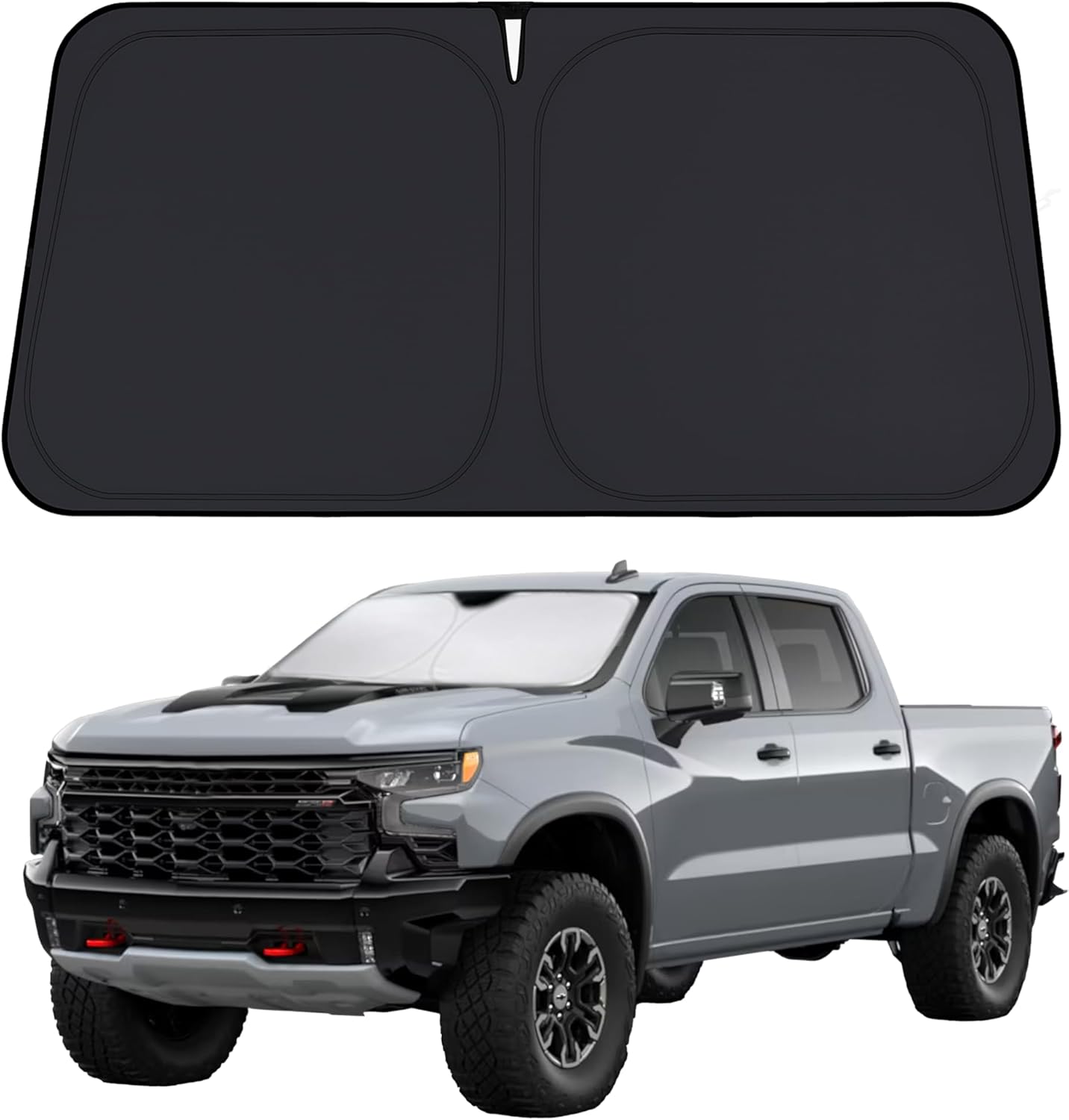
A windshield sunshade is a simple accessory that blocks direct sunlight from entering your car through the front glass. Its main job is to reduce the temperature of the steering wheel, dashboard, and front seats so you do not return to an unbearably hot cabin. Sunshades also protect the dashboard material from UV rays, which can cause fading and cracking over time. This guide covers the main styles, how to get the right size, what these shades can and cannot do, and the safety rules you must follow.
What a Sunshade Can and Cannot Do
Sunshades are effective at reflecting or absorbing solar radiation before it enters the cabin. The most noticeable benefit is a lower surface temperature on the steering wheel, shift knob, and dashboard. You will still feel some heat in the air inside the car, but the difference is significant enough that your air conditioner does not have to work as hard to cool the interior down.
Marketing claims sometimes suggest a sunshade will keep the entire car cool or prevent the cabin from getting hot at all. That is not realistic. On a hot, sunny day the car body itself absorbs heat and radiates it inward, and the glass area is large enough that some heat always gets through. A quality sunshade can reduce peak interior temperature but cannot make a parked car comfortable on a scorching afternoon.
Another common claim is that a sunshade protects electronics and upholstery completely. While the shade does block direct UV rays, indirect light and heat still reach the dashboard and seats. For maximum protection, combine a sunshade with window tint or a dashboard cover. Sunshades are a useful first layer, not a total solution.
Styles of Windshield Sunshades
Four main styles are available, and each has its own trade-offs in convenience, storage, and fit quality.
Accordion Sunshades
These fold up like an accordion into a compact rectangle. They are easy to deploy and store, and they hold their shape when opened so they stay in place without slipping. The accordion design means the shade can be slightly bulky when folded, but it fits well in a door pocket or under a seat. Most accordion shades have a reflective outer layer and a dark inner layer. They offer a good balance of convenience and coverage.
Roll-Up Sunshades
Roll-up shades are made of a flexible material, often with a reflective coating on one side. You unroll them across the windshield and secure them with static cling, suction cups, or by tucking the edges into the door weatherstripping. They store as a cylinder, which takes up a specific slot in your car. The main drawback is that they can be awkward to handle: the material may curl or resist lying flat, and the suction cups can lose grip over time. However, some drivers prefer this style because it takes up less space when stored.
Twist-Fold Sunshades
The twist-fold style uses a flexible, often wire-reinforced disc that twists into a small circle for storage. You unfold it and shape it to the windshield. It is very compact when stored, often fitting in a glove compartment. The trade-off is that the fit is less precise: the shade does not conform to the exact shape of your windshield, so gaps may let sunlight through along the edges. These are a good choice if storage space is very limited, but they do not block as much light as a custom-fit accordion shade.
Umbrella-Style Sunshades
This style opens and closes like an umbrella. You push a button to open it and press a button or pull a collar to close it. It is fast to deploy and compact when folded, fitting into a slender tube. The umbrella mechanism can be a weak point: over time the springs may wear out or the fabric may tear at the pivot point. They cover the windshield reasonably well but tend to have a round or oval shape that leaves the corners of the windshield exposed. They are a good backup or travel option rather than a primary daily shade.
Sizing and Fit
A sunshade that does not fit your windshield is nearly useless. Gaps let sunlight stream in and heat the cabin directly. The shade may also slide off the dashboard or interfere with your rearview mirror. There are two reliable ways to get the correct size: measure your windshield or use the vehicle-specific size chart.
How to Measure Your Windshield
To measure, use a flexible tape measure on the inside of the windshield. Measure the width at the widest point, which is usually near the bottom of the glass, from left to right. Then measure the height from the top of the glass down to the bottom edge where it meets the dashboard. For most vehicles the width is the more critical dimension, because the shade needs to span the entire opening from the A-pillar on the driver side to the A-pillar on the passenger side. The height measurement helps ensure the shade reaches the bottom edge of the glass. Write down both numbers and compare them to the product specifications, allowing a small tolerance for the shade to flex and fit snugly.
Using a Vehicle-Specific Size Chart
Many sunshade manufacturers and retailers provide a list of compatible vehicles. You look up your make, model, and year to find the recommended part number. This method is faster than measuring, but it depends on the accuracy of the database. If you drive a less common model or a variant with a different windshield, the chart may not be correct. Always double-check the listed dimensions against your own measurement if possible.
What to Do If You Are Between Sizes
If your measurement falls between two available sizes, choose the larger one. A slightly oversized shade can be folded at the edges to fit, whereas an undersized shade will leave exposed glass and let in heat. The same principle applies to the height: a shade that is a little tall can sit slightly lower on the dashboard without losing much coverage.
Reflective Versus Insulated Sunshades
The most common sunshade material is a reflective layer, often a metallic film, bonded to a fabric or foam backing. The reflective side goes toward the windshield to bounce sunlight back out. These shades work well for blocking UV rays and reducing direct heat. They are lightweight and fold easily.
Insulated sunshades add a foam or bubble-foil layer between the reflective top and the fabric backing. The extra insulation provides a modest improvement in heat reduction because it slows the transfer of heat from the outside air through the shade to the interior. On a very hot day, the difference between a basic reflective shade and an insulated one is noticeable but not dramatic. Insulated shades are thicker and bulkier when folded, which can make storage more difficult.
For most drivers, a standard reflective shade offers enough heat protection. An insulated shade is worth considering if you park in direct sunlight all day in a hot climate, or if you want the extra barrier for UV protection. Neither type will cool the car below the outside air temperature; they simply reduce the greenhouse effect inside the cabin.
Side Window Shades and Legal Considerations
Side window shades attach to the side windows to block sunlight coming in from the side. They are available as static-cling films, mesh pull-up shades that hook into the window frame, or rigid panels that slide into the window channel. Mesh shades for rear-seat passengers are common for keeping children cool, but they reduce visibility and may be illegal on the front windows in your state.
Many states regulate window tint and window coverings, including removable shades. Laws typically restrict how dark or reflective the material can be on the front side windows and windshield area. Some states prohibit any covering on the windshield except for a strip along the top. For front side windows, the allowable tint level varies. You must check your state’s vehicle code before using a side window shade on the driver or passenger door window. Most states allow shades on rear side windows and the rear window, but the rules differ. Never assume that a product is legal everywhere.
Side window shades that attach with static cling or suction cups can come loose and fall onto the driver or interfere with window operation. Choose ones that fit securely and are designed for your vehicle’s window shape. Avoid any shade that blocks the view of the side mirror or reduces your field of vision.
Storing Your Sunshade
Proper storage extends the life of your sunshade and keeps it ready to use. After removing the shade from the windshield, allow it to cool for a moment if it has been in direct sun. Fold or roll it according to the manufacturer’s instructions. Accordion shades fold neatly into their intended shape; twist-fold shades need to be twisted firmly but not forced. Roll-up shades can be stored in a tube or simply rolled and held with a strap.
Storing the shade in a door pocket, under the front seat, or in the cargo area works well. Avoid leaving it loose on the dashboard or seats where it can slide and distract you while driving. Heat does not damage the shade itself, but repeated folding in the same spot can degrade the material over time. If your shade has suction cups, keep them clean and moisten them slightly before sticking to the windshield to maintain a good seal.
Many sunshades come with a carrying case or sleeve. Use it to protect the shade when it is not in use, especially if you keep it in a compartment with other items that could scratch the reflective coating.
Safety Rules for Sunshade Use
Sunshades are meant for use only when the vehicle is parked. You must remove the windshield sunshade before driving. Even a thin reflective shade can block your view if it slides forward or catches a gust of air. Some drivers try to leave the shade in place by tucking the edges into the door seals, but that is unsafe and can interfere with the window or door operation. Always take it down before you start the engine.
Side window shades used while driving are subject to the same visibility rules as window tint. In many states, having any object hanging from the window or attached to the glass on the front side windows is illegal. Check your local regulations before using side shades while the vehicle is moving.
The most important safety rule: never leave a child or pet unattended in a parked car, even with a sunshade in place. A sunshade reduces heat but does not eliminate it. Cabin temperatures can still rise to dangerous levels on a mild day, and the vehicle’s air conditioning is off. Leaving anyone inside a parked vehicle, even with all windows cracked and a sunshade deployed, is not safe. If you see a child or pet alone in a hot car, call 911 right away.
Top Picks to Compare
If you would rather start from a short list, these are popular options on Amazon for this search. Check each listing’s details, size and current price before you buy.



FAQ
Will a sunshade prevent my dashboard from cracking?
It helps significantly by blocking direct UV light, which is a main cause of dashboard fading and cracking. However, indirect sunlight and heat still reach the dashboard. For long-term protection, combine a sunshade with a dashboard cover or professional window tint.
Can I use a sunshade on a car with a sloping windshield?
Yes, but you need a shade that matches the shape of your glass. Accordion shades with a custom fit for your vehicle are best. A universal or twist-fold shade may leave gaps at the corners. Measure your windshield and look for shades designed for your make and model.
Are insulated sunshades worth the extra cost?
They provide a small additional reduction in heat transfer. If you live in a very hot climate and park in direct sun for long periods, an insulated shade can help. For average use, a standard reflective shade offers nearly the same protection for less money and easier storage.
How long does a sunshade last?
With regular use and proper storage, a quality sunshade can last several years. The reflective coating may fade over time if exposed to extended UV rays. When the material becomes brittle or the seams begin to separate, it is time to replace it.
Choosing the right sunshade comes down to finding a size that fits your windshield well and a style that suits your storage space. For most drivers, an accordion shade with a reflective layer offers the best balance of coverage, convenience, and durability. Always measure or check the vehicle chart before buying, store it away from the cabin when driving, and never count on a sunshade to make a parked car safe for occupants. For more on interior protection, browse our guide to interior accessories and our detailed comparison of car sunshade types. If you spend long hours on the road, also check our advice on seat cushions and lumbar support and our tips on choosing a phone mount that does not interfere with your sunshade.