 By Lauren Holland
Updated November 2026
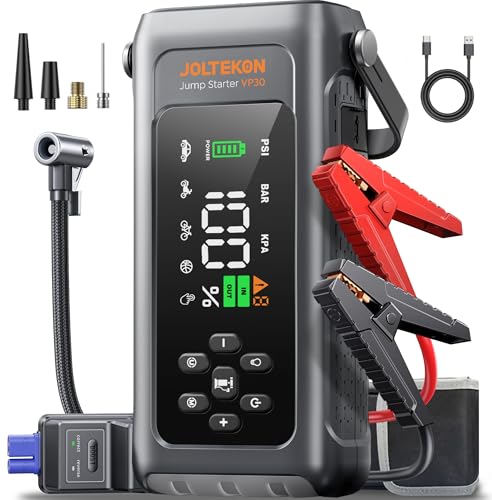
The NOCO Boost Plus GB40 portable car battery jump starter lets you start a vehicle with a dead battery without waiting for another car. This guide walks you through a safe setup, the correct clamp order, and what to check if the engine still won’t turn over. Follow the steps in order and you can get most cars running in a few minutes.
Before You Connect Anything
Start with a quick inspection. A jump starter only helps if the problem is a discharged battery, so confirm that the dome light or headlights are weak or dead before you begin. If you hear a single click or nothing at all, the battery may be too far gone, or the issue may be the starter motor or a bad connection.
Shopping for one? See our guide: 6 Best Portable Jump Starters for Car Battery Picks for Every Need (2026).
Check the battery terminals on the car. Corrosion that looks like white or green crust can block current, so clean it off with a wire brush if you can. Make sure the GB40 is fully charged before you head out. Its indicator lights will show charge level.
Step-by-Step Connection Process
The clamp order matters. Reversing the leads can damage the jump starter or the vehicle’s electronics.
- Turn off the vehicle’s ignition and all accessories.
- Clip the red (positive) clamp to the positive battery terminal, marked with a plus sign.
- Clip the black (negative) clamp to an unpainted metal ground point on the engine block or chassis, away from the battery and fuel lines.
- Confirm both clamps have a firm, direct metal grip with no loose contact.
- Turn on the GB40, then start the engine within about 5 seconds. Most owners report that holding the crank for no more than a few seconds at a time protects both the starter and the unit.
- Once the engine runs, remove the black clamp first, then the red clamp.
What to Do If the Engine Won’t Start
If the first attempt fails, wait about a minute before trying again so the unit can recover. Repeated long cranking drains the GB40 faster and can overheat the starter motor. Recheck the clamp connections, since a loose or corroded connection is the most common reason for failure.
If the engine still won’t turn over after two or three attempts, the battery may be damaged, the alternator may not be charging, or the starter itself may have failed. At that point, a battery test at an auto parts store is a sensible next step.
Common Mistakes
- Connecting the black clamp to the negative battery terminal instead of a grounded metal point, which can create sparks near the battery.
- Cranking the engine for long stretches without pausing, which overheats the starter motor.
- Using the unit with a severely frozen or cracked battery, which can be unsafe.
- Storing the jump starter in a hot car or leaving it discharged for long periods.
- Skipping the clamp order and reversing polarity, which can damage electronics.
Recommended Gear
A set of heavy-duty insulated gloves and safety glasses makes battery work safer, especially when clamps slip or terminals spark. Owners often recommend keeping them in the trunk alongside the jump starter.
A wire terminal cleaner brush helps you remove corrosion so the clamps make solid contact. This small step prevents many failed starts. View on Amazon
A digital multimeter lets you check battery voltage before and after a jump, so you know whether the battery is simply discharged or needs replacing. View on Amazon
FAQ
How long should I wait before trying to start the engine again?
Wait about one minute between attempts so the jump starter and the starter motor can cool and recover. Repeated cranking without pauses drains the unit faster.
Can I use the GB40 on a car with a completely dead battery?
Yes, in most cases. If the battery shows no sign of life and the problem persists after proper clamp connection, the battery may be damaged and need testing or replacement.
Should I charge the jump starter after every use?
Yes. Recharge the unit as soon as practical after a jump so it is ready for the next emergency. Consult your owner’s manual for the manufacturer’s recommended charging schedule.
Conclusion
The NOCO Boost Plus GB40 portable car battery jump starter is straightforward to use once you follow the correct clamp order and keep cranking times short. Inspect the battery terminals, connect in sequence, and wait between attempts if the engine doesn’t start. If the car still won’t run after several tries, have a qualified mechanic check the battery, alternator and starter.
Related reading
- Vehicle Jump Starters Portable Car Battery Charger: How to Choose and Use One
- 6 Best Portable Lithium Car Battery Jump Starters of 2026
- 5 Best Portable Car Battery Jump Starters for Every Need (2026)
- Jump Starter Car Battery Charger: Step-by-Step Guide for Beginners
- Hieha Portable Car Jump Starter: How to Use It Safely in 7 Steps
Ready to choose one?
About Lauren Holland
Lauren Holland is part of our editorial team and reviews and edits our car care & garage supplies guides, checking product details against manufacturer specifications and owner feedback.