
 By Lauren Holland
Updated November 2026
Choosing a car battery charger with trickle charge capability is one of the simplest ways to keep a battery healthy between drives, especially for seasonal vehicles, project cars and anything parked for weeks at a time. This guide covers seven car battery charger trickle charge options that suit different needs. The selection criteria were research-based: manufacturer specifications, brand reputation for lead-acid charging technology, and patterns that owners commonly report in their feedback. We did not run any of these units ourselves, so treat the notes below as a comparison of published specs and common owner experiences rather than personal testing.
Our top picks at a glance
- 1
 TOP CHOICEBest overallSchumacher Electric SC1355 Car Battery Charger & MaintainerView on Amazon
- 2
 TOP CHOICEBest for motorcycles and powersportsBattery Tender Junior 12V, 750mA Charger and MaintainerView on Amazon
- 3
 TOP CHOICEBest for multi-chemistry batteriesNOCO GENIUS2 2A 6/12V Smart Battery Charger, Trickle Charger & MaintainerView on Amazon
- 4
 Best for larger batteriesCar Battery Charger 12V 15A Smart Trickle Charger Fully AutomaticView on Amazon
- 5
 Best budget pickMOTOPOWER MP00205A Automatic Battery Charger, Maintainer, Trickle and DesulfatorView on Amazon
- 6
 Best for a simple float setupBattery Tender Plus 12V 1.25 AMP Car & Motorcycle Battery Charger and MaintainerView on Amazon
- 7
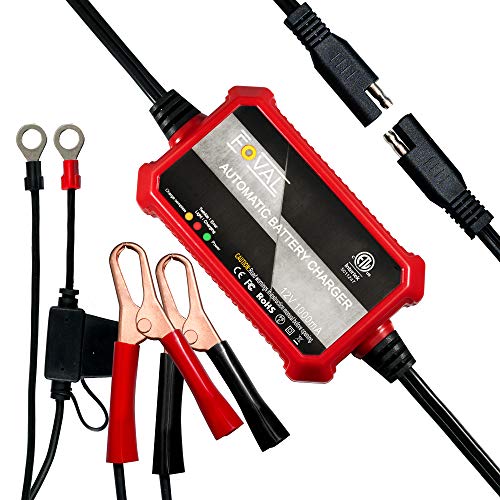 Best for occasional useFoval Automatic Trickle Battery Charger 12V 1000mA Smart Battery ChargerView on Amazon
Our Top Picks
Quick Comparison
| Product | Best for | Key feature |
|---|---|---|
| Schumacher Electric SC1355 Car Battery Charger & Maintainer | Overall maintenance of car and powersport batteries | Smart trickle charge with automatic restart |
| MOTOPOWER MP00205A Automatic Battery Charger | Budget-conscious maintenance | Trickle, maintainer and desulfator modes |
| Foval Automatic Trickle Battery Charger 12V 1000mA | Occasional top-ups | Automatic shutoff at full charge |
| NOCO GENIUS2 Smart Battery Charger | Lead-acid and lithium batteries | Temperature compensation and force mode |
| Battery Tender Plus 12V 1.25 AMP Charger | Long-term float maintenance | Float charge that stays connected safely |
| Car Battery Charger 12V 15A Smart Trickle Charger | Larger batteries and heavier duty use | 15A output with LCD display and 8-layer protection |
| Battery Tender Junior 12V 750mA Charger | Motorcycles, ATVs and small batteries | Compact automatic maintainer |
Schumacher Electric SC1355 Car Battery Charger & Maintainer
Schumacher Electric 1.5A Car Battery Charger & Maintainer, 6V/12V – SC1355 | Restores Batteries, Smart Trickle Charge, Automatic – Auto Restart – Power Sport, Motorcycle, and Car Batteries
Best for: Overall maintenance of car and powersport batteries
This is a good fit for owners who want one charger that handles both 6V and 12V batteries and can sit connected through a storage period. It suits motorcycles, lawn equipment and standard passenger vehicles.
Key specs
- Output: 1.5A charging current
- Voltage: 6V and 12V compatible
- Mode: Smart trickle charge with automatic restart
Pros
- Handles both 6V and 12V batteries
- Automatic restart helps if the battery drops below a set level
- Works across car, motorcycle and power sport batteries
Cons
- The 1.5A output is slow for deeply discharged batteries
- Not intended for lithium battery packs
Bottom line: A strong default choice for most drivers who want reliable trickle maintenance on a standard lead-acid battery.
View on AmazonMOTOPOWER MP00205A Automatic Battery Charger, Maintainer, Trickle and Desulfator
MOTOPOWER MP00205A 12V 800mA Automatic Battery Charger, Maintainer, Trickle and Desulfator
Best for: Budget-conscious maintenance
This unit suits owners who need a basic automatic maintainer for a car or small vehicle that sits idle. Its low output makes it a gentle option for keeping a charged battery topped up.
Key specs
- Output: 800mA at 12V
- Modes: Trickle, maintainer and desulfator
Pros
- Automatic operation with little setup
- Includes a desulfation mode for light sulfation
- Low current is gentle on batteries left connected
Cons
- Too slow for recovering a deeply discharged battery
- Limited for larger batteries or heavy use
Bottom line: A sensible pick if you mainly need maintenance rather than fast recharging.
View on AmazonFoval Automatic Trickle Battery Charger 12V 1000mA Smart Battery Charger
Foval Automatic Trickle Battery Charger 12V 1000mA Smart Battery Charger
Best for: Occasional top-ups
Best suited to drivers who only need to replenish a battery now and then, such as a weekend car or a seasonal vehicle that is plugged in once a month.
Key specs
- Output: 1000mA at 12V
- Mode: Automatic trickle charging
Pros
- Automatic shutoff when the battery is full
- Simple, low-maintenance operation
- Modest output suits gentle charging
Cons
- Slower than higher-amp smart chargers
- Fewer advanced diagnostic features
Bottom line: Fits owners who want a basic automatic charger for light, occasional use.
View on AmazonNOCO GENIUS2 2A 6/12V Smart Battery Charger, Trickle Charger & Maintainer
NOCO GENIUS2 2A 6/12V Smart Battery Charger, Trickle Charger & Maintainer | Overcharge Protection, Desulfator, Temperature Compensation, Force Mode, For Lead-Acid (Wet, Gel, AGM) & Lithium (LiFePO4)
Best for: Lead-acid and lithium batteries
A good choice for owners with a mix of battery types, including wet, gel, AGM and LiFePO4 chemistries, who want one charger that adjusts its profile to each.
Key specs
- Output: 2A charging current
- Voltage: 6V and 12V
- Features: Overcharge protection, desulfator, temperature compensation, force mode
Pros
- Supports both lead-acid and lithium chemistries
- Temperature compensation adjusts charging for conditions
- Force mode can help with batteries that will not register on a normal charge
Cons
- Costs more in feature set than basic maintainers
- Force mode should be used with care on damaged batteries
Bottom line: The most flexible pick here if your garage holds more than one battery type.
View on AmazonBattery Tender Plus 12V 1.25 AMP Car & Motorcycle Battery Charger and Maintainer
Battery Tender Plus 12V 1.25 AMP Car & Motorcycle Battery Charger and Maintainer, Float Charge for Automotive, and ATVs – Smarter Than a Trickle Charger
Best for: Long-term float maintenance
Suits owners who leave a vehicle in storage for months and want a charger that can stay connected without overcharging.
Key specs
- Output: 1.25A at 12V
- Mode: Float charge for automotive and ATV batteries
Pros
- Float charging is designed for long connection periods
- Suitable for cars, motorcycles and ATVs
- Well-known brand in battery maintenance
Cons
- Not designed for quick recharging
- Higher cost than basic trickle units for the same output
Bottom line: A solid long-term storage charger for seasonal and stored vehicles.
View on AmazonCar Battery Charger 12V 15A Smart Trickle Charger Fully Automatic
Car Battery Charger 12V 15A Smart Trickle Charger Fully Automatic | Battery Maintainer with Temperature Compensation LCD Display 8-Layer Protection for Car Truck Motorcycle Lawn Mower Boat
Best for: Larger batteries and heavier duty use
For owners with larger batteries, such as trucks, boats or lawn equipment, who want a higher-output charger with a readable display.
Key specs
- Output: up to 15A at 12V
- Features: LCD display, temperature compensation, multi-layer protection
Pros
- Higher output shortens recharge time
- LCD display shows charging status
- Protection features help guard against common faults
Cons
- High output is unnecessary for small batteries
- Manufacturer specs should be checked closely against your battery size
Bottom line: Best for owners who need faster charging on larger batteries and want status visibility.
View on AmazonBattery Tender Junior 12V, 750mA Charger and Maintainer
Battery Tender Junior 12V, 750mA Charger and Maintainer: Automatic 12V Powersports for Motorcycle, ATVs, and More – Smarter Than a Trickle Charger – 021-0123
Best for: Motorcycles, ATVs and small batteries
A compact unit for small batteries in powersports vehicles, where space and a gentle charge rate both matter.
Key specs
- Output: 750mA at 12V
- Mode: Automatic maintainer
Pros
- Compact and easy to store
- Low output is gentle on small batteries
- Automatic operation after connection
Cons
- Too slow for car batteries that have fully discharged
- Limited to maintenance rather than recovery
Bottom line: A tidy pick for motorcycles and ATVs that mainly need steady maintenance.
View on AmazonBuying Guide
Charging Output and Amperage
Amperage determines how fast a charger moves energy into a battery. Low outputs around 750mA to 1.5A are suited to maintenance and trickle charging, where the goal is to hold a battery at full charge. Higher outputs of 10A or more recover discharged batteries faster but are better matched to large batteries. Match the output to the job rather than choosing the highest number.
Good picks for this: Schumacher Electric SC1355 and Car Battery Charger 12V 15A Smart Trickle Charger
Automatic Shutoff and Float Mode
A good trickle charger should reduce or stop current once the battery reaches full charge. Float mode keeps the battery at a safe voltage without overcharging, which matters when a charger stays connected for weeks. Check that the unit describes automatic shutoff or float behavior before buying.
Good picks for this: Battery Tender Plus 12V 1.25 AMP and Foval Automatic Trickle Battery Charger
Battery Chemistry Compatibility
Most car batteries are lead-acid, including flooded, AGM and gel types. Lithium iron phosphate (LiFePO4) batteries need a charger with a matching profile. Using a lead-acid profile on a lithium pack can cause damage, so confirm compatibility in the manufacturer’s listing.
Good picks for this: NOCO GENIUS2 2A Smart Battery Charger and Schumacher Electric SC1355
Voltage Match: 6V vs 12V
Check the battery voltage printed on the label before buying. Many chargers support both 6V and 12V, but some support only 12V. Connecting a charger set to the wrong voltage can damage the battery and the charger. Confirm the setting before you connect the clamps.
Good picks for this: Schumacher Electric SC1355 and MOTOPOWER MP00205A
Temperature Compensation and Protection Features
Batteries accept charge differently in cold and heat. Temperature compensation adjusts the charge voltage to match conditions, which helps in unheated garages. Look for reverse polarity protection, short-circuit protection and overcharge protection in the spec list, since these guard against common wiring mistakes.
Good picks for this: NOCO GENIUS2 2A Smart Battery Charger and Car Battery Charger 12V 15A Smart Trickle Charger
Use Case: Storage, Seasonal or Daily Vehicles
A vehicle that sits for a season needs a charger that can stay connected for long periods. A daily driver mostly needs help after short trips or cold starts. Storage use favors low-output float chargers, while occasional recovery favors a smart charger with a higher output range.
Good picks for this: Battery Tender Junior 12V 750mA and Battery Tender Plus 12V 1.25 AMP
Build Quality, Clamps and Cable Length
Owners often report that clamp quality and cable length matter more day to day than headline features. Heavy-duty clamps that seat firmly on battery terminals reduce the chance of arcing, and cables long enough to reach the battery without strain make the unit easier to use. Look for a weatherproof rating if the charger will live in a damp garage.
Good picks for this: MOTOPOWER MP00205A and Foval Automatic Trickle Battery Charger
FAQ
Can I leave a trickle charger connected all the time?
Smart or float-mode trickle chargers are designed for long connection periods because they reduce or stop current when the battery is full. Basic chargers without automatic shutoff are not safe to leave connected. Always check the manufacturer’s instructions for your model.
What is the difference between a trickle charger and a smart charger?
A basic trickle charger delivers a constant low current. A smart charger measures battery voltage and adjusts its output through several stages, often ending in float or maintenance mode. Smart chargers are generally safer for long-term connection.
How long does it take to charge a car battery with a trickle charger?
Trickle charging is slow by design, so a deeply discharged battery can take many hours or more than a day at low amperage. Charge time depends on battery capacity, its state of charge and the charger’s output. Manufacturers usually publish approximate times for their units.
Can a trickle charger fix a dead battery?
A trickle charger can restore a battery that has discharged slowly, but it may not recover one that is physically damaged or has been left flat for a long time. If a battery will not hold charge after a full cycle, it may need replacement. For a diagnosis that involves testing and replacement decisions, consult a qualified automotive technician.
Is it safe to charge a battery in the garage?
Lead-acid batteries can release hydrogen gas while charging, so ventilate the area and avoid sparks or open flames nearby. Connect clamps to the correct terminals and make the final connection away from the battery when possible. Follow the charger’s manual for safety steps.
Do I need to disconnect the battery before charging?
Many owners charge with the battery still installed, but the safe practice depends on the vehicle. Some manufacturers recommend disconnecting the negative terminal first to protect sensitive electronics. Check your vehicle’s owner manual before you connect the charger.
What is desulfation mode?
Desulfation mode applies a special pulse pattern intended to break down light lead sulfate crystals that build up on battery plates. It is not a guaranteed fix and works best on batteries that are only mildly sulfated.
Conclusion
For most drivers who want a reliable car battery charger trickle charge option, the Schumacher Electric SC1355 offers a versatile starting point across 6V and 12V batteries. Buyers with mixed battery chemistries should consider the NOCO GENIUS2, while owners of larger batteries may prefer the 15A unit with its display. Motorcycle and ATV owners will find the Battery Tender Junior well matched to small batteries, and those storing a vehicle for months will appreciate the float behavior of the Battery Tender Plus. Match the output and chemistry to your battery, check the voltage, and choose automatic shutoff for any charger that will stay connected.
Sources
- Background on lead-acid battery technology and efficient energy use (energy.gov)
- Consumer safety guidance on battery chargers and electrical product hazards (cpsc.gov)
- Automotive engineering standards relevant to battery and charging systems
Related reading
- Solar Powered Car Battery Trickle Charger: 8 Best Picks for Every Need (2026)
- Solar Battery Trickle Charger for Car: 7 Best Picks for Every Need (2026)
- Smart Charge Car Battery Charger: A Step-by-Step Guide for Beginners
- R C Car Battery Charger Guide: Charge Your RC Packs Safely
About Lauren Holland
Lauren Holland is part of our editorial team and reviews and edits our car care & garage supplies guides, checking product details against manufacturer specifications and owner feedback.







