 By Lauren Holland
Updated November 2026
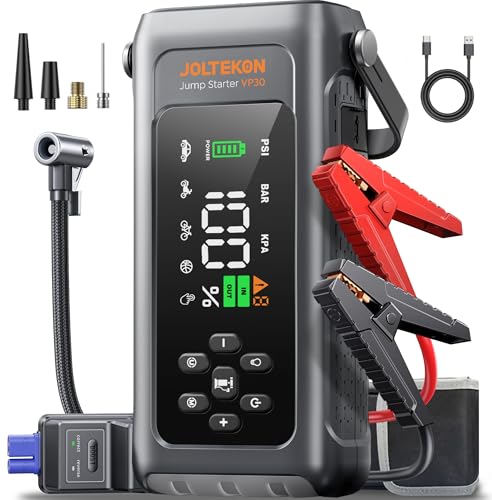
A NOCO Boost car battery charger, which is a jump starter and charger combined, lets you revive a dead 12-volt battery without a second vehicle. This guide walks through the setup, the connection order that keeps sparks and damage away, and how to tell when the battery is ready. Follow the steps in order and the process takes only a few minutes once the unit is charged.
Before You Connect Anything
Check the basics before you touch a clamp. Look at the battery terminals for heavy corrosion, cracked casings, or leaking fluid. Those signs point to a battery that may not hold a charge or may be unsafe to jump. Also confirm that the NOCO unit itself has a charge, since a depleted booster cannot start a car.
Shopping for one? See our guide: Car Battery Charger with Boost: 5 Best Picks for Every Need (2026).
- Safety glasses and insulated gloves
- A clean rag or wire brush for light corrosion
- The owner’s manual for the vehicle’s battery location and jump-start terminal
- The NOCO unit, fully charged, with its clamps and cable intact
How to Connect the NOCO Boost to a Dead Battery
Connection order matters more than anything else. Clamp the red (positive) cable to the dead battery’s positive terminal first. Then clamp the black (negative) cable to an unpainted metal ground point on the engine block or chassis, away from the battery. Keeping the final negative connection off the battery reduces the chance of a spark near hydrogen gas.
- Turn off the vehicle and all accessories.
- Attach the red clamp to the positive (+) battery terminal.
- Attach the black clamp to bare metal on the engine block or chassis.
- Make sure both clamps have firm, full-surface contact.
- Power on the NOCO unit and select the boost or start mode.
- Start the vehicle. If it does not turn over after a few seconds, wait a minute and try again.
Disconnecting and Checking the Battery
Once the engine runs, power off the NOCO unit first. Remove the black clamp from the ground point, then remove the red clamp from the battery. Let the vehicle run for at least 15 to 20 minutes so the alternator can replace the energy used in cranking. Then check the battery voltage with a multimeter. A reading of about 12.6 volts or higher with the engine off indicates a healthy charge, while readings well below that suggest the battery needs a full charge or replacement.
If the car will not start even after a boost, a battery that will not accept a charge or a failing starter or alternator may be the culprit. A professional should check these components, particularly if the battery is more than a few years old.
Recommended gear
A basic set of accessories makes the job cleaner and safer. A wire brush helps clear terminal corrosion so the clamps seat properly, and a digital multimeter lets you confirm the battery voltage before and after the boost.
- A terminal cleaning brush makes it easier to get firm clamp contact on corroded posts. View on Amazon
- A digital multimeter lets you check resting voltage and confirm the alternator is charging. View on Amazon
Common Mistakes to Avoid
- Clamping the negative cable directly to the dead battery’s negative terminal instead of a ground point.
- Letting the clamps touch each other while connected.
- Attempting to boost a frozen or visibly damaged battery.
- Leaving the vehicle off right after the boost, which can leave the battery undercharged.
- Cranking the engine for more than about 5 seconds at a time, which can overheat the starter.
For more on charging habits, see Using a Battery Charger for Car: Step-by-Step Safe Charging Guide and Will a Car Charger Drain Your Battery? What Really Happens (2026).
FAQ
Can I use a NOCO Boost on a battery that is completely dead?
Yes, in many cases. Some units can still send power to a deeply discharged battery, but if the battery shows no voltage at all or is swollen, it should be replaced rather than boosted.
How long should I leave the car running after a boost?
Run the engine for at least 15 to 20 minutes so the alternator restores some of the charge used during starting. Driving the vehicle is even better for recharging.
Is it safe to leave the NOCO connected to the battery after the car starts?
No. Disconnect the clamps in reverse order once the engine runs, and power off the unit before removing them to avoid sparks.
Conclusion
Using a NOCO Boost comes down to the right connection order, a firm clamp grip on bare metal ground, and a short run time after the start. Check the battery voltage afterward to confirm whether the battery is holding a charge. If the problem returns, the battery or charging system likely needs attention.
Related reading
Ready to choose one?
About Lauren Holland
Lauren Holland is part of our editorial team and reviews and edits our car care & garage supplies guides, checking product details against manufacturer specifications and owner feedback.