By Lauren Holland
Updated November 2026
An obd2 scanner for Chevy vehicles lets you read the trouble codes that set your check engine light, see live sensor data, and clear codes once the fault is repaired. Most Chevrolet cars, crossovers and light trucks sold from 1996 onward use the standard OBD2 port, so a basic code reader will work on them. This guide walks through choosing a tool, reading codes, and interpreting what you find.
Choosing an OBD2 Scanner for a Chevy
Any scanner that follows the SAE J1979 standard will communicate with a Chevy, but the features you need depend on what you plan to do. A basic code reader only pulls and clears generic powertrain codes (those beginning with P0). A mid-range scanner also reads live data, freeze frame data and readiness monitors, and many can display manufacturer-specific codes for GM vehicles. If you want to check ABS, airbag or transmission modules, look for a tool that lists those systems by name.
Shopping for one? See our guide: 3 Best OBD2 Scanners for Nissan Rogue Compared (2026).
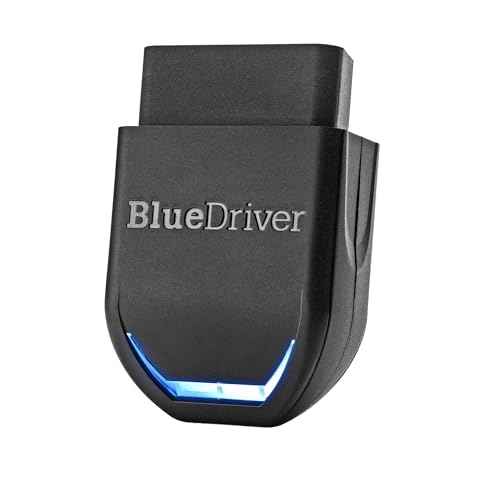
Bluetooth models that pair with a phone app are convenient for quick checks. Handheld units with their own screen are easier to use in a dark garage with greasy hands. Either type works, as long as it supports the protocols your model year uses.
Reading and Clearing Codes Step by Step
- Turn the ignition off. Locate the 16-pin OBD2 port, usually under the dash on the driver’s side, near the steering column.
- Plug the scanner in firmly. Turn the key to the ON position without starting the engine so the scanner powers up.
- Select “Read Codes” or the equivalent menu. Write down every code exactly as displayed, including the letter prefix and any suffix digits.
- Check freeze frame data if available. This snapshot shows engine speed, coolant temperature and load at the moment the fault was stored, which helps you tell whether the problem happens cold, at idle, or under acceleration.
- Look up each code for your specific year and engine. A P0300 random misfire on a 5.3L V8 calls for different checks than the same code on a 1.5L turbo four.
- Repair the cause before clearing anything. Clearing codes erases the freeze frame and resets the readiness monitors, which you will need if you are preparing for an emissions test.
Using Live Data to Confirm a Fault
Live data is where a scanner earns its keep on a Chevy. Watch short-term and long-term fuel trim, which GM displays as percentages. Readings consistently above roughly +10 percent or below -10 percent suggest the engine is compensating for a vacuum leak, a dirty mass airflow sensor, or weak fuel delivery. Also track oxygen sensor voltage, coolant temperature and throttle position to confirm what the computer is seeing.
| Symptom | Data to watch | Common cause to check |
|---|---|---|
| Rough idle | Long-term fuel trim, MAF reading | Vacuum leak, dirty MAF sensor |
| Slow warm-up | Coolant temperature | Stuck-open thermostat |
| Misfire code | Freeze frame RPM and load | Worn plugs, coil, or injector |
Common Mistakes to Avoid
- Clearing codes before writing them down, which removes the clues you need to diagnose the fault.
- Replacing parts based on a code alone. A code points to a circuit or system, not always a single failed part.
- Ignoring pending codes, which can show a problem that has not yet triggered the light.
- Assuming a cleared light means a fixed car. Check the readiness monitors before trusting the repair.
- Using a scanner with a weak connection. Wiggling the cable or a loose port can cause dropped data and false readings.
Recommended Gear
A scanner that supports GM enhanced data is the most useful upgrade for Chevy owners who want more than generic codes. View on Amazon is a handheld option with broad manufacturer coverage. For a simpler phone-based setup, View on Amazon pairs with an app and offers detailed code explanations.
FAQ
Will an OBD2 scanner work on every Chevy?
Most Chevrolet vehicles from 1996 onward use the OBD2 port, so a standard scanner will connect. Some GM-specific systems, such as certain body or chassis modules, may require a scanner with enhanced GM support.
Does clearing a code fix the problem?
No. Clearing a code only turns off the light and erases stored data. If the fault still exists, the code will return.
How do I know if a scanner is reading live data correctly?
Compare a few readings, such as coolant temperature and engine RPM, against what you see on the dashboard gauges. If the values match and update smoothly, the connection is working.
Conclusion
An obd2 scanner for Chevy vehicles gives you the codes, freeze frame data and live readings needed to diagnose many common faults yourself. Record every code before you clear anything, and confirm the repair with live data and readiness monitors. For complex or safety-related issues, consult a qualified technician.
Related reading
- Wireless Bluetooth OBD2 Scanner: How to Pick and Use One at Home
- Toyota Corolla OBD2 Scanner: How to Read and Clear Codes at Home
- Obd2 Scanner with Throttle Relearn: Step-by-Step Guide for Home Mechanics
- Obd2 Scanner with Crankshaft Relearn: Steps to Finish the Job
Ready to choose one?
About Lauren Holland
Lauren Holland is part of our editorial team and reviews and edits our car care & garage supplies guides, checking product details against manufacturer specifications and owner feedback.