By Lauren Holland
Updated November 2026
An OBD2 scanner for Honda vehicles lets you pull the diagnostic trouble codes stored in the engine computer, check live sensor readings, and decide whether a warning light is a simple fix or something that needs a shop. Most Hondas sold in the US from 1996 onward use the standard OBD2 port, so a basic code reader will connect to nearly any model you own. This guide walks through choosing the right tool, connecting it, interpreting codes, and avoiding the mistakes that send people chasing the wrong part.
What a Honda OBD2 Scanner Can and Cannot Do
A scanner reads what the powertrain control module (PCM) has already recorded. When a sensor reading falls outside its expected range, or a system fails a self-test, the PCM stores a code and often turns on the check engine light. The scanner translates that code, shows freeze frame data (the sensor values at the moment the fault was logged), and in better tools displays live data from sensors such as coolant temperature, fuel trims, and oxygen sensor voltage.
It cannot tell you which part has failed with certainty. A P0420 code, for example, means the catalytic converter efficiency is below threshold, but the cause could be the converter, an upstream or downstream oxygen sensor, or an exhaust leak. For a broader look at these limits, see OBD2 Scanners and Code Readers: What They Can and Cannot Tell You.
Choosing the Right Scanner for Your Honda
Honda’s OBD2 implementation follows the SAE J1979 standard, so any generic reader will pull codes. The differences show up in features and in how much detail you get. Consider these factors:
- Live data support: You need this to watch sensors in real time, which is essential for diagnosing intermittent faults.
- Freeze frame display: Shows operating conditions when the code was set, such as engine speed, load, and coolant temperature.
- Readiness monitors: Lets you see whether emissions tests have completed, which matters before a smog or emissions inspection.
- Enhanced or manufacturer-specific codes: Some Honda faults, particularly in transmission, ABS, airbag, and body control modules, need a scanner that reads beyond generic powertrain codes.
- Update support: Newer tools receive code library updates, which helps with recent model years.
For a budget option that covers basic reading and clearing, a simple handheld reader is enough. If you plan to work on several cars or want deeper system access, look for a mid-range tool with live data graphing. The Innova 5610 is a widely used example of a handheld reader with a simple interface, and the walkthrough at Innova 5610 Obd2 Scanner: How to Read and Clear Codes Step by Step shows how to use it.
Step-by-Step: Reading Codes on a Honda
Tools and Preparation
- OBD2 scanner with code reading capability
- Notepad or phone to record codes and freeze frame data
- Flashlight to locate the port
- Owner’s manual or service manual for your specific model and year
Connecting the Scanner
- Turn the ignition to the “Off” position. Do not start the engine yet.
- Locate the 16-pin OBD2 port. On most Hondas it sits under the dashboard on the driver’s side, near the steering column or above the pedals. A small cover may hide it.
- Plug the scanner firmly into the port. Its indicator light should power on.
- Turn the ignition to “On” (engine off). The scanner should establish communication with the vehicle. If it does not, check that the scanner supports the protocol your car uses, which for 1996 and later Hondas is almost always ISO 15765-4 (CAN).
Retrieving and Recording Codes
- Select “Read Codes” or “DTC” from the scanner menu.
- Record every code exactly as displayed, including the letter prefix. P codes are powertrain, B codes are body, C codes are chassis, and U codes are network communication faults.
- Check for pending codes separately. These are faults detected once but not yet confirmed.
- View freeze frame data for each stored code and write down the values.
- Look up each code in the scanner’s library or a repair database before deciding on any action.
Viewing Live Data
Start the engine and let it reach normal operating temperature. Then open the live data screen. Useful parameters to watch on a Honda include short-term and long-term fuel trims (values within roughly ±10 percent are generally considered normal), upstream oxygen sensor voltage cycling between about 0.1 and 0.9 volts when the engine is in closed loop, coolant temperature rising steadily to around 195 to 220°F, and engine idle speed holding steady. Compare what you see against the specifications in your service manual, since exact values vary by engine.
Clearing Codes and Checking Readiness
Clearing codes turns off the check engine light and erases stored data, but the underlying fault remains unless it was a one-time event. Clearing a code before fixing the problem removes your diagnostic evidence and can make the next repair harder.
After any repair or battery disconnection, the car needs to complete its readiness monitors. These self-tests for systems like the catalytic converter, EVAP leak detection, and oxygen sensors take a set number of drive cycles to finish. Honda owners often see a failed smog check simply because monitors reset after a battery change or code clear. Use your scanner’s readiness screen to confirm completion before testing.
Common Honda Codes and What They Often Point To
| Code | Typical Meaning | Common First Checks |
|---|---|---|
| P0300 | Random or multiple cylinder misfire | Spark plugs, ignition coils, vacuum leaks, fuel pressure |
| P0171 | System too lean (Bank 1) | Vacuum hoses, MAF sensor cleanliness, intake leaks |
| P0420 | Catalyst efficiency below threshold | Oxygen sensor readings, exhaust leaks, converter condition |
| P0455 | Large EVAP leak detected | Gas cap seal, purge valve, hoses |
| P0128 | Coolant below thermostat regulating temperature | Thermostat operation, coolant level, temperature sensor |
Treat this table as a starting point, not a diagnosis. Confirm each step with live data and a visual inspection.
Common Mistakes When Using an OBD2 Scanner on a Honda
- Replacing parts based on the code alone. A P0420 code has replaced many good catalytic converters that were actually suffering from a bad sensor or exhaust leak.
- Clearing codes before recording them. Always write down the codes and freeze frame data first.
- Ignoring pending codes. These can indicate developing problems before the check engine light comes on.
- Assuming a cleared light means a fixed car. Intermittent faults often return within a few drive cycles.
- Overlooking the gas cap. A loose or worn cap is a common cause of EVAP codes on Honda models.
- Using a scanner without checking protocol support. Some older or cheap tools fail to communicate with newer CAN-bus systems.
Tips for Better Diagnosis
- Check the battery voltage first. Low voltage can trigger misleading codes, so confirm it reads at least 12.4 volts with the engine off.
- Note whether the check engine light is steady or flashing. A flashing light usually signals an active misfire that can damage the catalytic converter, so reduce load and get it checked promptly.
- Take a short test drive while watching live data to catch problems that only appear under load or at operating temperature.
- Save freeze frame data from each session so you can compare results over time.
- Keep a log of codes and repairs to spot recurring patterns.
Recommended gear
- Innova 5610 OBD2 Scanner: A straightforward handheld reader that displays codes, freeze frame data, and readiness status, useful for owners who want a simple, dependable tool for routine checks. View on Amazon
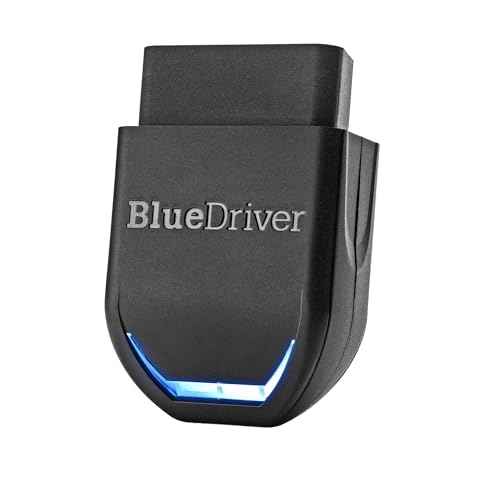
- BlueDriver Bluetooth OBD2 Scanner: Pairs with a smartphone app to provide enhanced diagnostics and live graphing, helpful when tracking intermittent faults. View on Amazon
- OBD2 Bluetooth Adapter with Torque Pro app: A low-profile adapter that lets you log live data to a phone, useful for capturing trends during a test drive. View on Amazon
FAQ
Will an OBD2 scanner work on every Honda?
Most Hondas built from 1996 onward use the standard OBD2 port and will communicate with a generic reader for powertrain codes. Some systems such as ABS, airbags, or the transmission may need a scanner with enhanced capability.
Does clearing the code fix the problem?
No. Clearing a code only resets the stored fault and turns off the light. If the underlying issue remains, the code will typically return.
How long does it take for the check engine light to come back after a repair?
It depends on the fault and the drive cycles needed to retest the system. Some codes return within a few days of normal driving, while others take several cycles.
What does a flashing check engine light mean on a Honda?
A flashing light usually indicates an active misfire. Reduce engine load and have the vehicle inspected soon, since prolonged misfires can damage the catalytic converter. Consult a qualified mechanic if the problem persists.
Can I pass an emissions test right after clearing codes?
Usually not. Readiness monitors reset when codes are cleared, and many state inspections require most monitors to show complete. Drive the car through several normal cycles before testing.
Do I need a Honda-specific scanner?
For basic engine codes, a generic OBD2 scanner is sufficient. Honda-specific or enhanced tools give deeper access to other modules and manufacturer-specific data.
Is it safe to use an OBD2 scanner while driving?
No. Watch live data only while the vehicle is parked or with a passenger operating the scanner. Never interact with a handheld tool while driving.
When should I stop diagnosing myself and see a mechanic?
If codes point to safety systems like brakes or airbags, if the engine runs rough or overheats, or if repeated attempts fail to resolve a fault, consult a professional technician. Complex repairs and safety-critical systems should be handled by a qualified shop.
Conclusion
A quality OBD2 scanner gives Honda owners a clear view of what the engine computer is reporting. Read and record codes before touching anything, use live data to confirm suspicions, and fix the root cause rather than just clearing the light. With a bit of practice, you can handle many common faults at home and know when to bring the car in.
Related reading
- Obd2 Scanner for Volkswagen: Read Codes and Fix Common Faults
- Obd2 Scanner for Bmw: How to Pick and Use One to Read BMW Codes
- OBD2 Scanner for Mercedes: How to Read and Clear Codes Yourself
- OBD2 Scanner for Mercedes-Benz: Read Codes and Fix Issues at Home
Ready to choose one?
About Lauren Holland
Lauren Holland is part of our editorial team and reviews and edits our car care & garage supplies guides, checking product details against manufacturer specifications and owner feedback.