When you drive with food or drinks for a long day, you have three ways to keep things cold: a passive cooler filled with ice, a thermoelectric 12V cooler, or a compressor fridge. Each works differently and draws a different amount of power, so the right choice depends on trip length, outside temperature, and whether you need real freezing. This guide explains the differences so you can match the cooler to your vehicle and your road trip.
The short answer
In simple terms, a passive cooler is just an insulated box; it keeps cold in but does not make cold. A thermoelectric cooler moves heat away from the interior using an electric fan and a solid-state heat pump, which makes it cooler than the surrounding air but unable to freeze. A compressor fridge uses the same refrigeration cycle as a kitchen refrigerator and can keep food at a set temperature, including well below freezing, no matter how hot the vehicle gets.
If you are not sure what is available, look over our guide to car coolers and 12V fridges to compare the basic styles before reading on.
How each option works
Passive coolers
Passive coolers include hard coolers, soft-sided cooler bags, and insulated totes. You load ice or frozen gel packs into the box, and the insulation slows the warming that comes from outside air and from opening the lid. They draw no power, make no noise, and can keep things cold for the length of time the ice lasts. The practical limits are meltwater, cold loss every time you open the lid, and the need to buy or refreeze ice during a long trip.
Thermoelectric 12V coolers
A thermoelectric cooler plugs into a 12V accessory socket and uses electricity to create a temperature difference between the inside and outside. There is no compressor and no refrigerant; instead, a small fan and thermoelectric module move heat out through the vent. The interior can only get a limited number of degrees colder than the air around the cooler; check the manufacturer’s stated cooling range. This means it cannot freeze food, and on a very hot day it may stay too warm to keep perishables safe.
The same unit often has a warming mode that reverses the airflow, though that is a bonus rather than a reason to buy one.
Compressor 12V fridges
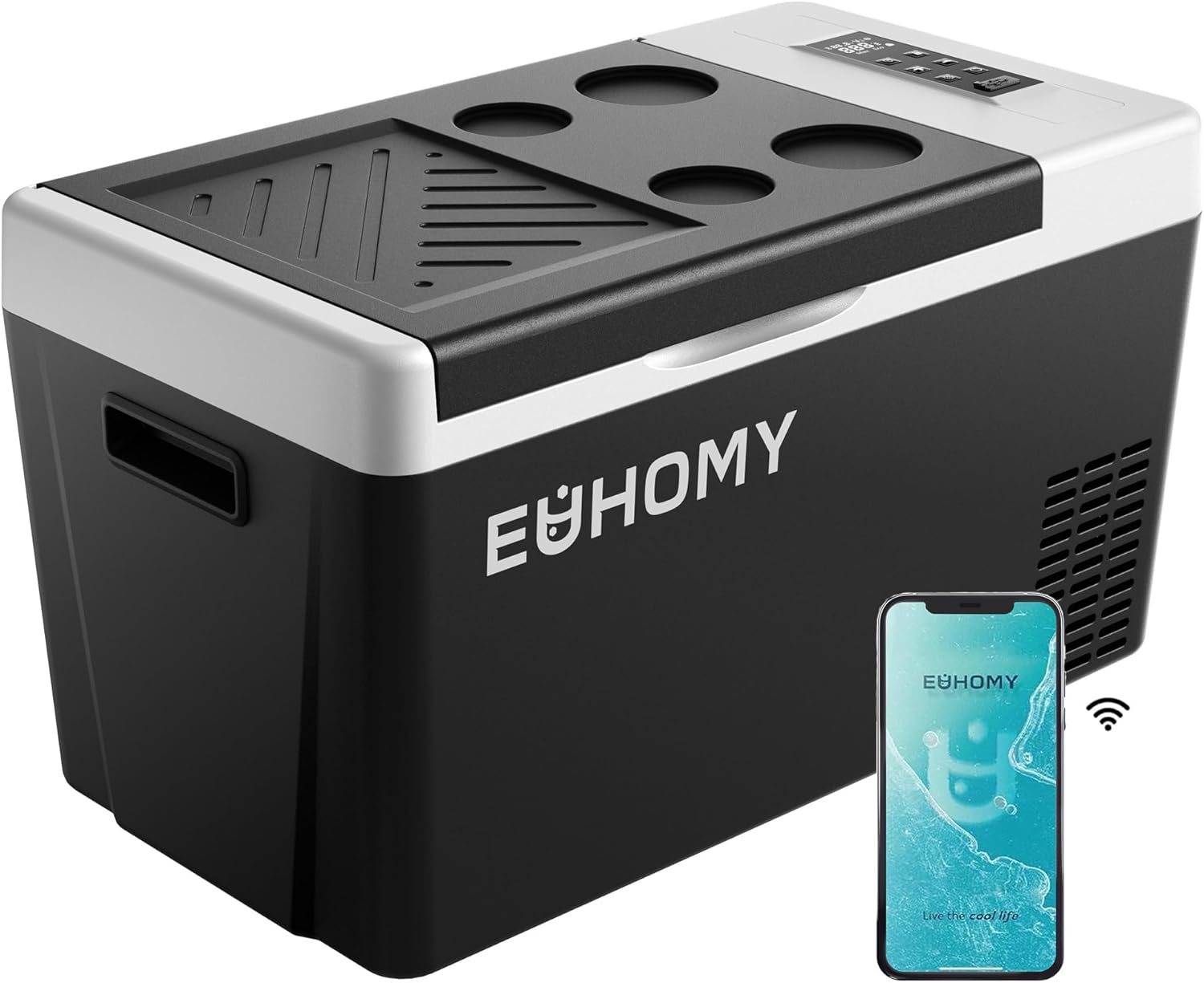
A compressor fridge is a small refrigerator built for vehicles. It contains a compressor, condenser, and evaporator, just like a house fridge, and it can cool the interior to a set temperature, whether that is 38°F for cold drinks or down to freezer temperatures for frozen food. Because the compressor works independently of outside heat, a good unit will hold cold food in a hot car, which is the big advantage over thermoelectric models.
These units tend to be heavier and use more battery power when running, but they offer the most reliable temperature control.
Side-by-side comparison table
| Feature | Passive cooler | Thermoelectric cooler | Compressor fridge |
|---|---|---|---|
| Cooling method | Insulation and ice | Electric heat pump with fan | Refrigeration compressor |
| Can freeze | No | No | Yes |
| Hot weather performance | Depends on ice supply | Cools only a set amount below outside air | Holds set temperature in most conditions |
| Power draw | None | Low to moderate | Higher, especially at startup |
| Battery impact | None | Can drain a socket left on | Usually has low-voltage cutoff |
| Temperature control | None | Basic; no exact set point | Adjustable set point |
| Best for | Day trips and picnics | Cooler drinks in mild weather | Long trips, camping, frozen food |
Power draw, battery protection, and the accessory socket
Before you buy any powered cooler, understand how your vehicle’s accessory socket behaves. Some sockets stay live whenever the battery is connected; others cut power when you remove the key. Your vehicle owner’s manual tells you which type you have. If the socket stays on, a thermoelectric or compressor cooler can keep running and may drain the battery down to a level where the engine will not start.
Thermoelectric coolers generally have no low-voltage cutoff, so you have to unplug them or use an external battery monitor. Compressor fridges more often include a low-voltage cutoff that stops the fridge before the battery is too low to start the vehicle. Even with that protection, follow the manufacturer’s guidance about which cutoff setting to use, and check the manual before running the unit with the engine off.
If you plan to leave a cooler running overnight, consider how the vehicle is wired, whether you have a second battery or a portable power station, and what the manufacturer recommends. Never assume the socket is protected just because the car is off.
Choosing by trip length and number of people
For a day trip to the beach or a picnic, a passive cooler is usually enough. You fill it with ice in the morning, and it keeps drinks cold for several hours without touching the battery. If you do not need to store leftovers, milk, or raw meat, this is the simplest choice.
A thermoelectric cooler makes sense for a few hours on the road in mild weather, when the outside temperature is not severe and you can plug it into a socket that is powered while you drive. It is not a great match for multi-day trips or very hot climates because it cannot guarantee safe cold-food temperatures.
A compressor fridge pulls ahead for weekend trips, cross-country drives, camping, van travel, or any time you need refrigeration or freezing for more than a day. It also handles more people better, because you can set a steady temperature and pack a range of fresh foods.
Sizing matters because more people and more days mean you need more capacity and more thought about access. Compare capacity on the spec sheet, and remember that if you open the cooler often, cold air escapes and the unit has to work harder. A practical approach is to choose a size that lets you separate drinks from perishable food and keeps the most-opened items on top.
Food safety at 40°F or below
Food safety guidance recommends keeping cold foods at or below 40°F. Above that, perishable foods like dairy, deli meat, cooked dishes, and leftovers enter the danger zone where bacteria can multiply quickly. A compressor fridge can hold a steady temperature in that range. A thermoelectric cooler may only do so when the outside air is cool enough, and a passive cooler only until the ice melts.
Use a small refrigerator thermometer inside the cooler to check the actual temperature, not the dial. If you are carrying raw meat, wrap it tightly and keep it separate from ready-to-eat food so juices do not touch anything you eat without cooking. When the outside temperature is high, put the cooler in the shade, keep the lid closed, and plan to replace melted ice in a passive cooler.
Do not use a thermoelectric cooler to store perishables unless you know the interior temperature stays at or below 40°F for the whole trip. If the unit cannot hold that temperature, treat it as a drink cooler instead.
Packing tips and ventilation
Pack the cooler before it has been sitting in the sun. Chill food and drinks in a house refrigerator beforehand so they start cold, and pre-cool the cooler itself for a short time if the manufacturer suggests it. For a passive cooler, use as much ice as you can fit; for a powered unit, do not block the interior air passages.
Organize with purpose: put drinks and frequently opened items where you can reach them without digging, and tuck perishable food where it will stay cold and undisturbed. Keep raw meat in leakproof packaging at the bottom. In a compressor fridge, leave some room for air to move around the contents, because a completely packed box slows the cooling cycle.
Ventilation matters outdoors too. Thermoelectric and compressor coolers need free air flow around their vents to reject heat. If you pile gear against the vents, tuck the cooler into a sealed cargo area, or leave it behind the seat with the vents blocked, the unit runs longer and cools worse. Keep the vents uncovered and follow the clearance distances in the manual. For more ideas that make long drives manageable, see our list of road trip comfort accessories for long drives.
When a thermoelectric cooler is the better choice
Choose a thermoelectric cooler when you want a quiet, light unit that brings drinks and snacks down to a cooler temperature for a short trip in moderate weather. It is convenient when the accessory socket is live while you drive and you can unplug when you stop. Skip it if you need to carry perishable food, if you will leave the car parked for hours, or if the outside temperature is high enough that a modest temperature drop will not keep things truly cold.
When a compressor fridge is the better choice
A compressor fridge is the better choice when you need reliable refrigeration in any weather, whether that is a long road trip, a summer camping trip, or carrying frozen goods. It is also the right tool when you want to leave the unit running overnight off a secondary power source, because its low-voltage cutoff protects the vehicle battery and you can set an exact temperature.
Think about the trade-offs: it takes more space, weighs more, and draws more current, especially at startup, so it suits drivers who plan ahead and have a wiring or power setup that can handle it. If those demands fit your travel style, a compressor fridge is the closest thing to carrying a kitchen refrigerator on the road.
Upkeep and long-term ownership
Passive coolers need the least care: rinse them with mild soap after trips, dry them fully, and leave the lid open a crack during storage to prevent mildew from taking hold of the interior.
Thermoelectric units have fans and vents that collect dust and road grime. Wipe the exterior, clean the fan openings with a soft brush when they look dirty, and keep the plug contacts clean. There is no refrigerant, so there is no pressurized system to service.
Compressor fridges contain a sealed refrigeration system and generally need no maintenance inside that system. The owner’s manual is the source for anything else; common-sense steps include cleaning the condenser vent, checking the door seal, and storing the unit with the lid or door slightly open so the seal does not stick.
FAQ
Can a thermoelectric cooler freeze food?
No. A thermoelectric cooler only cools to a set amount below the surrounding air, so it cannot reach freezing temperatures, let alone keep food frozen. If you need a freezer, use a compressor fridge.
Will a 12V cooler drain the car battery?
It can if the accessory socket stays powered with the engine off and the cooler keeps running. Check the owner’s manual, use a unit with low-voltage cutoff, or unplug when parked.
What temperature should I set a car fridge to?
For cold food, set it at or below 40°F. If you need frozen food, set it below 32°F. Confirm the actual temperature with a thermometer and follow the manufacturer’s instructions.
Can I use a passive cooler instead of a powered one?
Yes, for short trips and drinks, as long as you have enough ice and can keep the cooler in the shade. It does not refrigerate, though, so perishables stay safe only until the ice melts.
The right 12V cooler or fridge has less to do with brand and more to do with how you drive, how hot it gets, and what you are storing. For quick trips and light loads, a passive cooler is simple and dependable; for mild-weather day trips, a thermoelectric cooler may be enough; and for real refrigeration on the road, a compressor fridge is the capable choice. Before buying, check the vehicle owner’s manual and the product’s instructions, especially for power draw, vent clearance, and battery protection. If you are still comparing styles, start with our overview of road trip accessories for a fuller picture of what fits your travel setup.