A road trip with kids goes smoother when the backseat is set up before you leave. The right accessories keep little ones comfortable, fed, and entertained, but every addition has to pass a simple test: it must not interfere with the car seat, the seat belt, or the driver’s view. This guide walks through the backseat items that actually help, plus the safety steps to follow with each one.
Before You Start: Safety Rules for Backseat Gear
Start with the car seat. A car seat is a safety device, and anything placed between the child and the seat, or between the car seat and the vehicle seat, can change how it performs in a crash. Many car seat manufacturers offer their own seat protectors; some allow a thin, flat protector, and others forbid any material under the base. Check the car seat manual and the vehicle owner’s manual before you put anything under a car seat. If the manufacturer does not approve a seat protector, use nothing and protect the upholstery in other ways.
The second rule applies to every item in the cabin: keep loose objects out of the backseat. On a sharp turn or sudden stop, an unsecured toy, tablet, or snack bag becomes a projectile. Anything heavier than a small stuffed toy belongs in the trunk or tied down. Coolers, bags, and boxes placed on the rear floor can slide under seats, so anchor them with a cargo net or store them in the trunk. Check the owner’s manual for tie-down locations.
Never leave a child alone in a parked car, even for a minute, even with the windows cracked or the engine running with air conditioning. This rule is not negotiable. Make it a routine: every time you stop, open your door, get the child out, and take everyone with you.
The Backseat Checklist
The accessories below earn their space on a family road trip. They are grouped by the job they do, from protecting the upholstery to keeping kids fed, entertained, and comfortable.
Seat Protection and Kick Mats
Seat protectors under car seats should be used only if the car seat maker allows it. Some manufacturers sell a protector designed for their own seats, and some state clearly that nothing may go under the seat. When a protector is approved, choose a flat, low-profile version, install it exactly as directed, and re-check the car seat installation afterward. If no protector is approved, skip it; a rubber or vinyl mat that sits in front of the seat, not under it, can still catch crumbs and spills.
Kick mats hang from the back of the front seats and catch shoe marks, crumbs, and drips. Look for a stiff, waterproof mat with a strap system that holds it tight against the seatback. Some add small pockets for crayons and tissues. Keep the mat clear of the front seat’s movement, and do not hang anything from a headrest that could come loose.
Light Control and Window Shades
Rear window shades reduce glare and keep the cabin cooler on sunny days. The first rule is that a shade must never block the driver’s view. Use shades on the side windows and rear window only in positions that stay behind the driver’s line of sight, and remove or roll them down when they are not needed. Because rules for window coverings and tint vary by state, check your state law before relying on a full-coverage shade.
Choose shades that attach securely: static-cling film, suction cups, or a shade that slides into the window frame. A shade that falls mid-drive is a distraction, and a popped suction cup becomes a flying object. If your vehicle has factory sun curtains, use those first, because the automaker designed them to stay out of the driver’s sightline.
Tablet Holders and Screen Mounts
A headrest-mounted tablet holder keeps a screen at a comfortable angle and stops the device from sliding to the floor. Look for a holder with soft padding and a strap that wraps around the headrest posts rather than a hard clamp. It should hold the tablet tightly with nothing loose a child can grab. Follow the manufacturer’s instructions for tightening and positioning.
Mount the screen for the passenger to watch, never for the driver to see. Do not mount a screen on the dashboard, windshield, or any surface that could block the driver’s view or interfere with an airbag. Take the holder and tablet inside when you leave the car; electronics left in the backseat can overheat and tempt thieves.
Headphones for Quiet
Headphones let one child watch a movie without everyone listening to it. For young children, choose volume-limiting headphones that keep the output at a safer level; read the package to confirm the limit. If you use wired headphones, keep the cord short and tucked under the child’s shirt so it cannot wrap around the headrest or the child’s neck. Over-ear models tend to stay put better than earbuds for younger kids and are easier to find when dropped.
If two children share one screen, a headphone splitter works, but the extra cord can be a hazard. A wireless pair for each child avoids the tangle.
Snack Containers and Drinks
Snack containers for the car should be spill-resistant, easy for small hands to open, and quiet. Compartment-style hard plastic containers work well for crackers, fruit, and dry cereal. Avoid glass, avoid containers so large they eat up legroom, and avoid packages a child needs help opening at every stop. For drinks, use a cup with a tight lid and a spout or straw that seals when tipped.
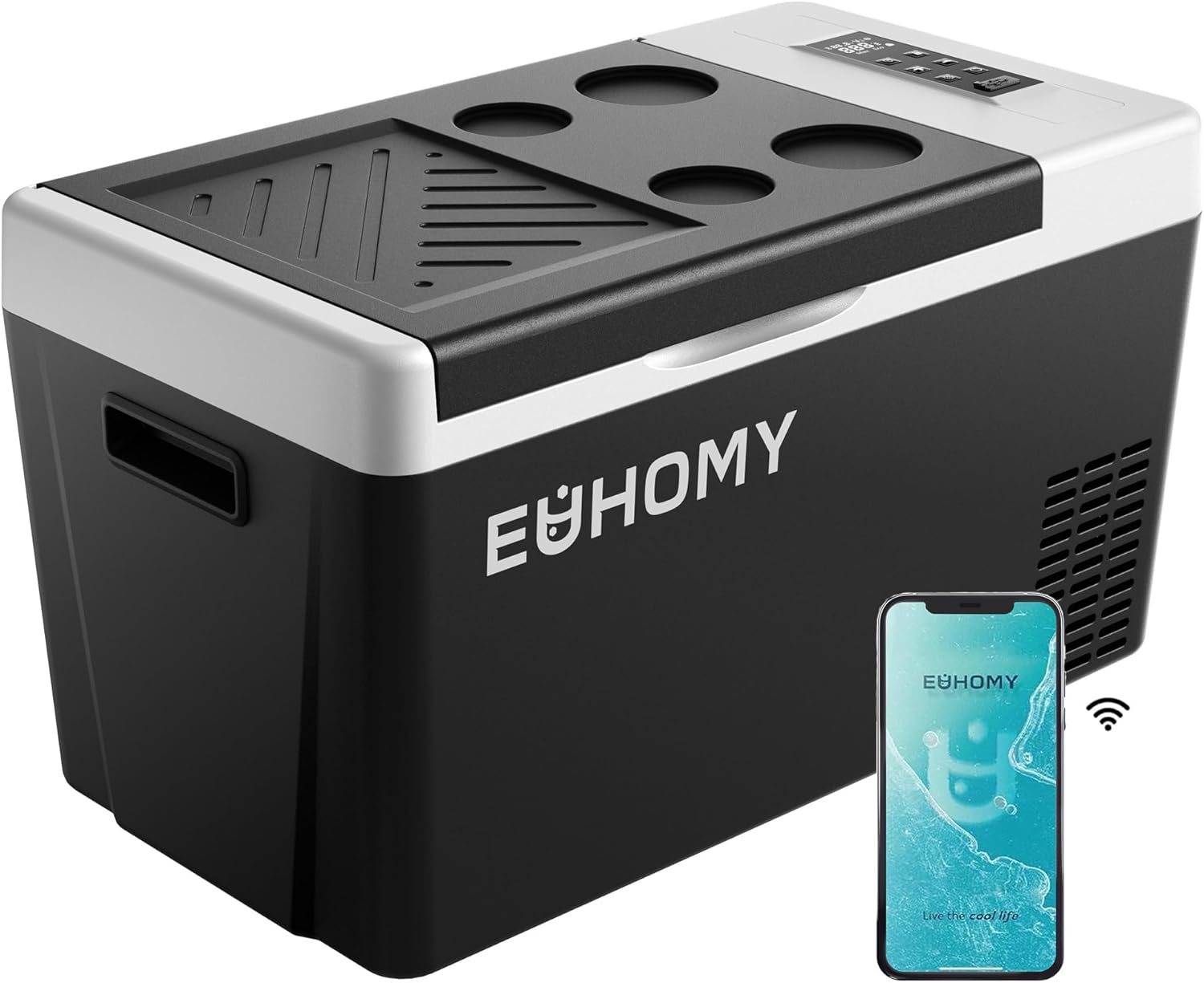
Choose snacks that do not melt or crumble. Hard, round foods are a choking hazard for young children, so follow the age guidance on the package and cut items into small pieces. If you want to keep drinks and yogurt cold, a 12-volt cooler or an insulated bag works, but remember that a full cooler is heavy: secure it in the trunk or tie it down so it cannot slide into the front row. For sizing and power tips, see the 12-volt cooler guide.
Spill Kits and Trash
Spills happen, so build a small spill kit and keep it within reach. A paper-towel roll, a pack of wet wipes, and a plastic bag for wet trash fit in a side pocket or under the seat. Add a small absorbent cloth if you have room. When a drink tips over, you want to reach the kit without hunting, but keep it small enough that it stays in place and does not clutter the floor.
Trash bags belong in every backseat. Hook a small paper bag or a tissue-style dispenser behind a front seat or in a door pocket so kids have a place for wrappers and napkins. Use paper bags rather than loose plastic bags, which are a suffocation risk around small children. Empty the bag at every fuel stop so it does not overflow.
Motion Sickness Supplies
If your child gets carsick, pack a dedicated kit with a small bag for emergencies, wet wipes, paper towels, a change of clothes, and the motion sickness medicine your pediatrician recommends. Read the dosing instructions and give the first dose before the trip starts, as directed. When unsure, ask the pediatrician.
To reduce motion sickness, keep the car cool, offer sips of water, and let the child look out the window instead of at a screen. A heavy meal right before driving makes it worse. If a child feels sick, pull over at a safe place and take a break; never try to hand a child a bag while you are driving on a highway.
Heavy Items and Cargo
Heavy items need to be secured before anyone gets in the car. Coolers, tool boxes, luggage, and strollers belong in the trunk, or in the cargo area of a wagon or SUV with a net or straps attached to the vehicle’s tie-down points. Keep the load below the seatback line so nothing can fly forward in a crash. Never place heavy objects on the rear parcel shelf, and never stack cargo in the footwell behind the front seats where it could slide under the pedals or trap a passenger.
What You Can Skip
Not every backseat product is worth buying. Skip any organizer or hammock that hangs across the backseat and covers the seat belt or the area around a car seat; these can interfere with a proper car seat installation and with getting the child in and out. Skip tall seatback organizers that hide the rear view from the driver. A slim pocket is fine, but a bulky organizer can block a pedestrian or a passing car.
Skip dangling toys and hard objects near a child’s face. A toy bar may be fine for an infant seat outside the car, but in the car, swinging objects become projectiles in a crash. Skip glass bottles, full coolers on a seat, and any accessory that requires changing the vehicle’s seat belts or seat anchors. If a product’s instructions say it affects airbags, seat belts, or car seats, choose something else.
Quick-Reference Table
| Accessory | What to check | Safety reminder |
|---|---|---|
| Seat protector | Approved by the car seat maker; flat and low-profile | Never add material between the child and the car seat |
| Kick mat | Waterproof face, secure attachment | Keep clear of front seat movement and airbags |
| Window shades | Fit the window, attach firmly | Never block the driver’s view; check state rules |
| Tablet holder | Headrest mount, soft padding, tight strap | Mount for the passenger, not the driver; remove at end of trip |
| Headphones | Volume-limiting for kids, comfortable fit | Keep cords short; no loose earpieces |
| Snack containers | Spill-resistant, easy to open | Avoid glass and choking hazards |
| Spill kit | Compact, within reach | Store under the seat or in a door pocket |
| Motion sickness supplies | Medicine per doctor’s directions | Pull over safely if a child feels sick |
| Trash bags | Paper bags or a small dispenser | Keep bags away from small children |
| Cargo organizer | Fits in the trunk or ties down | Secure all heavy items before driving |
FAQ
Can I put a seat protector under my child’s car seat?
Only if the car seat manufacturer allows it. Many manufacturers forbid anything between the car seat and the vehicle seat because it changes how the seat sits. Check the car seat manual; if it does not mention a protector, do not use one.
Are headrest tablet holders safe in a crash?
No aftermarket accessory can guarantee crash performance. A soft, padded holder that is strapped tightly to the headrest is a common choice, but it must stay out of any airbag’s deployment path and must not block the driver’s view. Follow the holder’s instructions and remove it when the trip is over.
What is the safest way to handle motion sickness on a trip?
Prevention works best: keep the car cool, avoid heavy meals before driving, and encourage looking out the window rather than at a screen. Keep children in the car seat position their car seat and age call for. Give any motion sickness medicine according to the package or your pediatrician. If the child becomes sick, pull over at a safe place, clean up, and take a short break before continuing.
Why should I never leave a child alone in a parked car?
Inside a parked car, temperatures can become dangerous quickly, even on mild days. There are also risks of the child shifting the vehicle into gear, becoming trapped, or being taken. The only safe habit is to take the child with you whenever you leave the vehicle.
A well-planned backseat keeps kids comfortable, fed, and entertained while the driver focuses on the road. Start with the safety rules, choose accessories that attach firmly and stay out of the way, and remove anything that does not work after a short test drive. For more packing ideas, browse the family road trip gear guide or the full road trip accessories collection before your next trip.