Long drives test your patience, your posture, and your endurance. The right accessories can turn a cramped, restless ride into a relaxed one for everyone in the vehicle. This guide covers the key items that improve comfort on the road, from neck pillows and lumbar support to organizers, sunshades, chargers, and storage solutions, along with essential safety rules that every driver should follow.
Planning Ahead for Comfort
Before you load up the car, take a moment to think about what each passenger actually needs. A comfortable road trip depends on more than just gear: it depends on the driver staying alert and everyone having enough room to settle in. Plan regular stops so that the driver can stretch, and never rely on accessories to keep you comfortable enough to skip a break. No pillow or support device can replace the need to pull over, walk around, and rest.
When you choose accessories, look for items that fit your vehicle and your body. A neck pillow that is too large may push your head forward, and a lumbar cushion that does not align with your seat’s curve can cause more strain than it prevents. Test each item at home before a long trip so you know it works for you. Also, remember that any accessory mounted to the seat or the interior should not interfere with the operation of the vehicle or the deployment of safety systems such as side airbags. Check your owner’s manual for guidance on what you can safely attach to the seats.
Comfort Accessories Grouped by Category
Support for Sitting Still: Neck Pillows and Lumbar Support
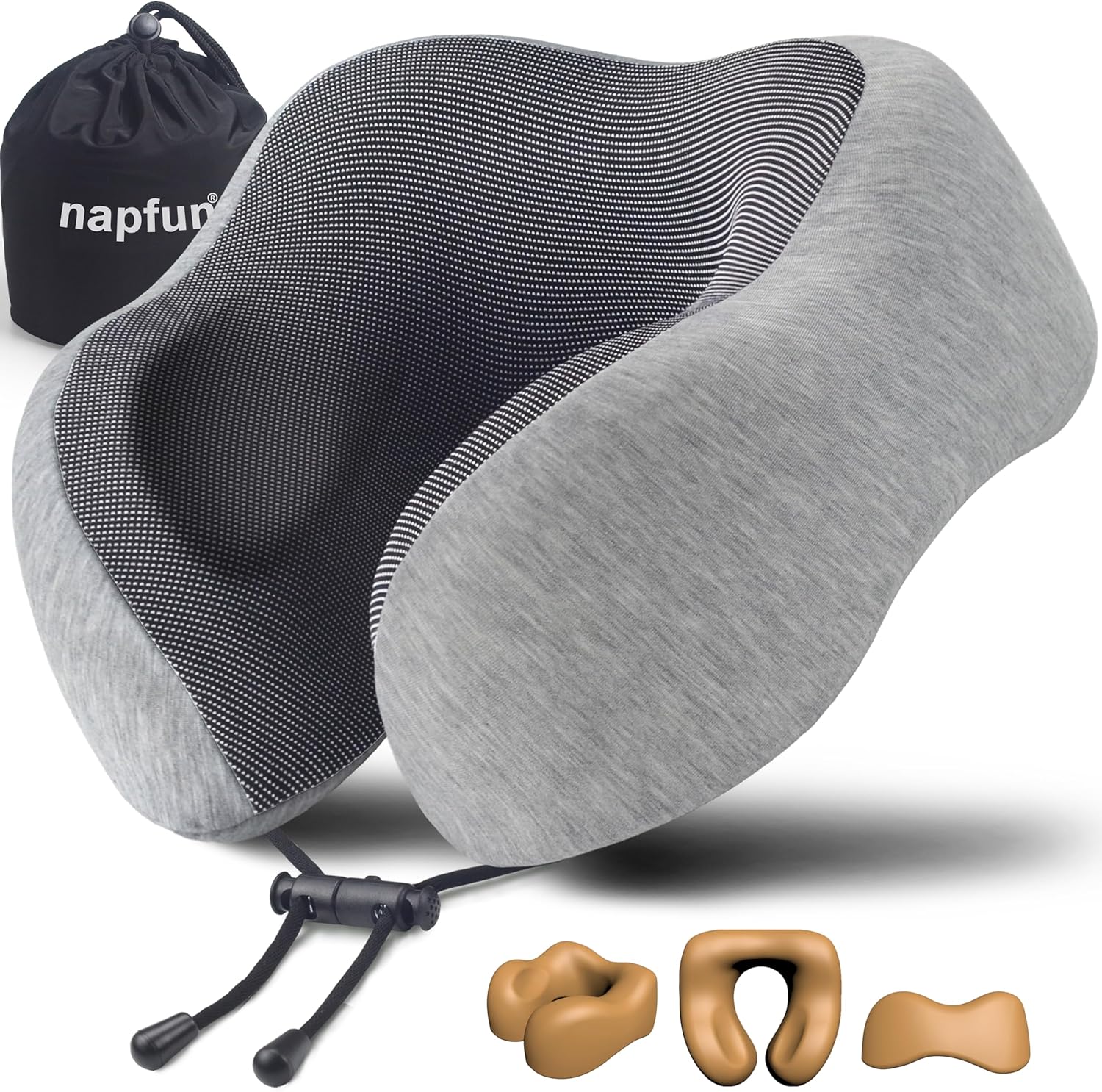
Passengers who want to rest or sleep during a long drive benefit from a neck pillow that wraps around the back of the neck and supports the head. Look for a pillow with a secure closure or an ergonomic shape that stays in place when the passenger leans against the window or the seat. Some designs are filled with foam beads or soft fiber, while others use a memory foam type material that conforms to the shape of the neck. Choose one that feels firm enough to provide support without pushing the head forward.
For the lower back, a lumbar support cushion helps maintain the natural curve of the spine during hours of sitting. This is useful for both the driver and front passenger, though the driver should take care not to add so much support that it shifts the seating position away from the pedals and steering wheel. Lumbar cushions come in different thicknesses, and some have adjustable straps to secure them to the seat. A common approach is to start with a thin cushion and add more thickness only if needed. If you share the vehicle with another driver, choose a cushion that is easy to move or adjust.
Organizing Your Space: Seat-Back Organizers and Trash Solutions
A seat-back organizer hangs on the back of the front seats and gives rear passengers a place to store tablets, books, snacks, water bottles, and small toys. This keeps items off the floor and within easy reach, which reduces the number of times passengers ask the driver to grab something. Look for an organizer with deep pockets and a clear pocket for a phone or tablet so that passengers can watch media without holding the device.
A dedicated trash bag or a small container with a lid keeps the cabin clean during a long drive. Wrappers, napkins, and empty cups can pile up quickly, and a car that is cluttered with trash is less comfortable for everyone. A waterproof or leak-resistant bag that hangs from the back of a seat or the center console works well. Some organizers include a built-in trash pocket, which is a convenient two-in-one solution. Empty the bag at every fuel stop to prevent odors from building up.
Climate and Convenience: Sunshades, Insulated Bottles, and Blankets
Rear-window sunshades block direct sunlight from reaching passengers in the back seat. This is especially helpful for children or anyone who is sensitive to heat or glare. Some shades are static-cling films that attach directly to the glass, while others are foldable panels that you slide into the window frame or secure with suction cups. Retractable shades that roll up when not in use offer a clean look and can be stored out of the way. Keep in mind that some states have rules about how much tint or shading is allowed on windows, so check your local regulations before installing any shade that reduces visibility for the driver.
Insulated bottles keep drinks cold or hot for many hours, which is a simple but effective comfort upgrade. Having water or a hot beverage ready at any time means fewer stops at convenience stores. Choose a bottle with a leakproof lid and a wide mouth for easy cleaning. For a family trip, consider bringing one bottle per person to avoid sharing and to reduce the number of times someone needs to reach for a drink.
A compact blanket is useful for passengers who get cold from the air conditioning or during nighttime driving. Fold it small enough to tuck into a seat-back pocket or a door bin. A fleece or microfiber blanket is warm without being bulky. Keep one blanket in the car for emergencies as well, such as a breakdown in cold weather.
Power and Entertainment: Chargers, Cable Management, and Steering Wheel Trays
Staying charged is essential for navigation, music, and entertainment. A multi-port charger that plugs into the vehicle’s power outlet lets you charge several devices at the same time. Look for a charger with both standard and high-power output ports so that tablets and phones charge at a reasonable speed. To keep cords from tangling, use a short cable for each device and store them in a small pouch or a cable organizer. Some seat-back organizers have a cord pass-through that lets you route a cable from the charger to a tablet in the pocket without leaving the cord draped across the seat.
A steering wheel tray is a flat surface that rests on the steering wheel, intended for eating meals or using a laptop. This accessory must be used only when the vehicle is parked. Never drive with a tray on the steering wheel because it blocks your access to the controls and interferes with the steering wheel itself. When the vehicle is stopped at a rest area or a scenic overlook, a steering wheel tray can make eating a meal more comfortable than balancing food on your lap. Remove the tray and store it before driving again.
What You Can Skip
Some accessories sound useful but often add clutter without real benefit. Seat covers that are not designed for long drives can make the seats feel hotter or more slippery. Fancy organizers that take up footwell space or block the driver’s reach to pedals are a hazard. Oversized pillows that take up an entire seat reduce passenger capacity and are hard to store. Any accessory that requires permanent modification to the vehicle, such as drilling holes or replacing seat hardware, is not worth the trouble for a temporary comfort upgrade.
Before buying any accessory, ask yourself whether it will still feel useful after the first hour of driving. If the answer is no, leave it at home.
Quick Comparison Table
| Accessory Category | Primary Benefit | Best For |
|---|---|---|
| Neck pillow | Supports the head during rest | Passengers sleeping or relaxing |
| Lumbar support cushion | Maintains lower back posture | Driver and front passenger on long hauls |
| Seat-back organizer | Keeps items within reach | Rear passengers, especially children |
| Rear-window sunshade | Blocks heat and glare | Back-seat passengers in sunny weather |
| Insulated water bottle | Keeps drinks at temperature | Everyone, reduces stops |
| Compact blanket | Provides warmth when needed | Passengers sensitive to cold |
| Multi-port charger | Charges multiple devices | Any trip with phones or tablets |
| Cable organizer | Prevents cord tangles | Any electronic setup in the car |
| Steering wheel tray | Flat surface for eating or working | Use only when parked |
| Trash bag | Contains wrappers and debris | Keeps the cabin clean on long drives |
FAQ
Should the driver use a neck pillow while driving?
No. Neck pillows are designed for passengers who are resting or sleeping. A driver should never use a neck pillow while the vehicle is in motion because it can restrict head movement and delay reaction time. Save neck pillows for passengers who are not driving.
Can I use a steering wheel tray while the car is moving?
No. Steering wheel trays are for parked use only. Driving with a tray on the steering wheel blocks your grip and access to controls such as turn signals, wipers, and the horn. Always remove the tray and stow it before you start driving.
How often should the driver take a break on a long trip?
A common rule of thumb is to stop every few hours or whenever you feel fatigued, stiff, or distracted. No accessory can keep you alert enough to skip a break. Plan your route with rest stops where you can walk around, hydrate, and rest your eyes.
Are sunshades for rear windows legal everywhere?
Laws vary by state regarding the amount of shading allowed on vehicle windows. Some states restrict how dark a shade can be on the rear side windows. Check your state’s regulations before installing any window shade that reduces light transmission or visibility. For the most part, removable shades that you take down when not needed are a safe option.
Comfort on a long drive comes down to choosing a few well-made accessories that fit your vehicle and your habits, and knowing how to use them safely. Focus on support for the neck and back, organization for the cabin, and the basics of staying fed, hydrated, and charged. For more ideas on what to bring, see our full list of road trip accessories and the specific guide to road trip comfort accessories. If you are traveling with children, check the recommendations for road trip accessories for kids. Pack smart, drive safely, and enjoy the miles ahead.