Basic car work comes down to turning fasteners, removing trim, and finishing a few jobs that need a specific torque. A practical automotive tool kit covers those tasks without filling a rolling chest. The core is a 3/8-inch drive socket set, metric and SAE sockets, combination wrenches, screwdrivers, pliers, trim tools, a torque wrench, and gear for a safe tire change.
Before You Start
List the jobs you expect to do: checking a battery, replacing wiper blades, swapping an air filter, rotating tires, or working on brakes. Then look in the owner’s manual for the tools and torque values those jobs require. The manufacturer’s instructions should guide every task; work on level ground and never support a vehicle with only a jack. If you already own some tools, compare them against the checklist below before buying more, and review related garage and car tools for lifting and lighting ideas.
The Checklist, Grouped by Category
Metric and SAE Sockets
Most current cars, including domestic models, use metric fasteners almost everywhere. Older American vehicles and some chassis parts use SAE fractional-inch sizes, so a kit that includes both covers more territory. For basic tasks, common metric sizes are 10, 12, 14, 17, and 19 millimeters; the occasional SAE sizes are 3/8, 7/16, 1/2, 9/16, and 3/4 inch. Choose six-point sockets over twelve-point for ordinary work because the six-point shape grips the fastener head and resists rounding.
3/8-Inch Drive Socket Set
3/8-inch drive is the balance between access and strength. It reaches into engine bays and interior spaces while still delivering enough force for nearly all basic tasks. Look for a set with shallow sockets in the common sizes, a ratchet, and both a short and a medium extension. The ratchet should feel solid, switch direction easily, and have a fine-tooth mechanism so it works in tight spaces; a quick-release button helps when swapping sockets. Skip the giant assortment and buy a set you will actually carry to the car.
Deep Sockets
Deep sockets fit over long studs, spark plugs, and fasteners with threaded rod sticking out. When a shallow socket bottoms out, the deep version finishes the job. A set that includes both shallow and deep sockets in the common metric sizes covers most basic tasks. For spark plug service, add a dedicated spark plug socket with a rubber insert that holds the plug as you pull it out.
Combination Wrenches
A combination wrench has an open end on one side and a box end on the other, giving you two ways to work the same fastener. Keep the sizes aligned with your socket set so you can break a bolt loose with the wrench and spin it off with the ratchet. Ratcheting box-end wrenches are convenient in tight areas, but a plain combination set from 10 to 19 millimeters covers nearly every basic job. You do not need a full range of tiny sizes.
Screwdrivers and Bits
Phillips and flathead screwdrivers still matter for clamps, interior panels, and electrical connectors. A multi-bit driver with onboard bit storage is easy to keep in a trunk kit. A long, slim bit driver reaches recessed screws, and a stubby screwdriver fits cramped spaces. Hex bits also let you turn an ordinary ratchet into a flexible driver with the right adapter.
Pliers
Needle-nose pliers grab clips, hoses, and small objects in tight spots. Slip-joint or adjustable pliers hold larger parts, and diagonal cutting pliers handle zip ties and small wires. One quality pair of each is enough for basic work; look for comfortable grips and jaws that meet cleanly.
Trim Removal Tools
Interior panels, door cards, and trim clips should not be pried with a metal screwdriver. Plastic trim removal tools lift clips and anchors without scratching paint or upholstery. A basic set includes a flat pry end, a forked clip remover, and an angled tool. These tools are also useful for popping access covers under the hood.
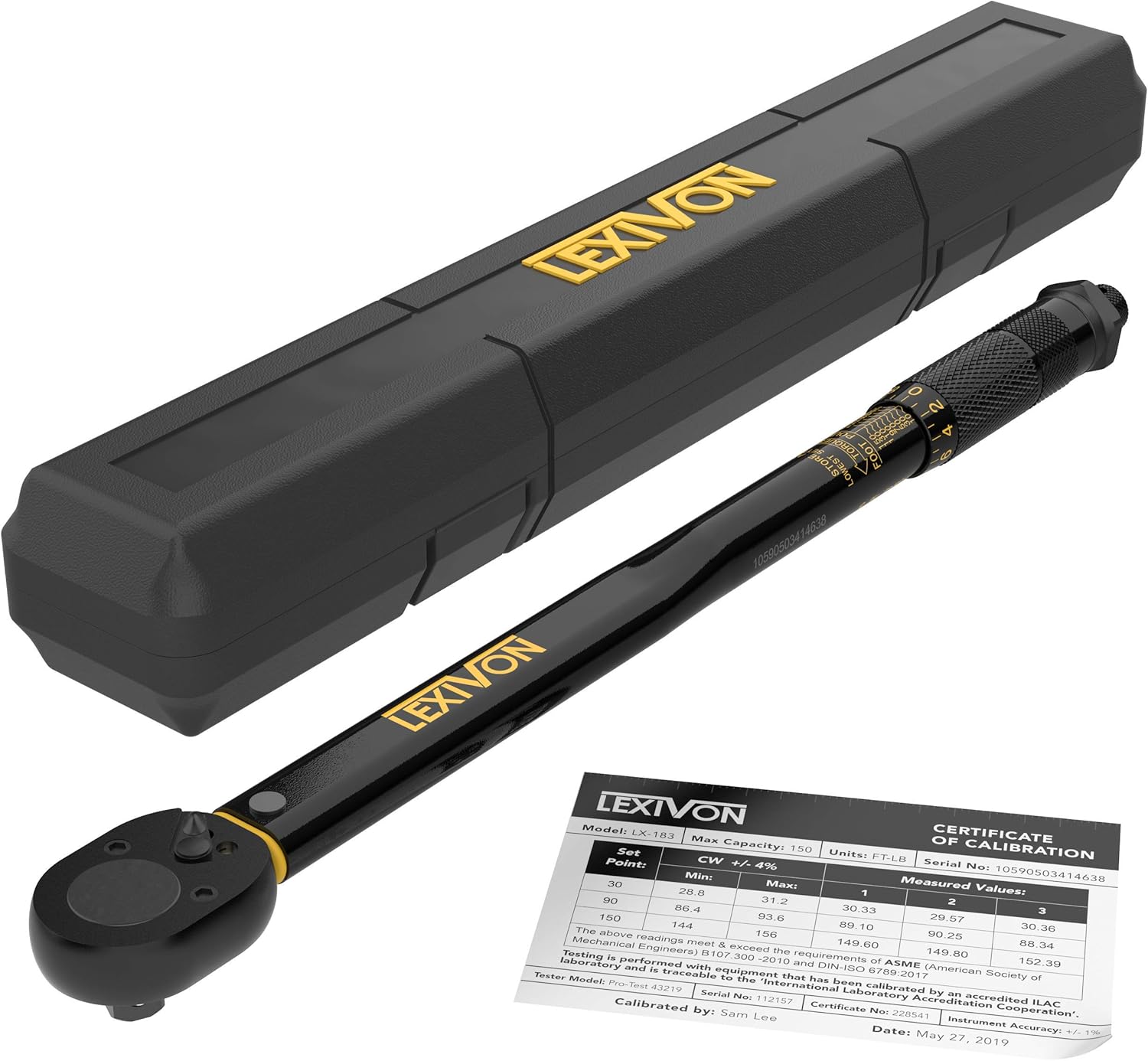
Torque Wrench
Some fasteners need a specific clamping force, not just “really tight.” Wheel lug nuts, brake caliper brackets, suspension bolts, and many engine parts have torque values in the owner’s manual. A click-style torque wrench in 3/8-inch drive covers the range for most basic jobs; if you work on large bolts, a 1/2-inch drive version reaches higher values. Treat the torque wrench as a measuring tool: release the tension after each use, follow the manufacturer’s storage instructions, and check the manual before tightening.
Tire Tools
A tire change calls for a lug wrench or a breaker bar with the correct socket, and the factory scissors jack is only for roadside emergencies. For home work such as tire rotation, use a floor jack and jack stands and follow the safe procedures in using jack stands safely. A tire gauge lets you verify pressure, and a pair of gloves keeps road grime off your hands.
Gloves and a Light
Mechanics gloves protect your knuckles from sharp edges, while nitrile gloves keep oil, coolant, and grease off your skin. Add a flashlight or a rechargeable work light for dim garages and evening roadside stops. An under-hood work light that hangs or stands is especially useful above the engine bay; see the under-hood work light guide for what to consider. Choose a spot-and-flood pattern so it works close up and at a distance, and add safety glasses whenever the job creates dust or debris.
Trunk Kit Versus Garage Kit
Think of a trunk kit as a small roadside set. It should let you change a tire, see in the dark, protect your hands, and handle simple checks. A practical trunk kit holds a lug wrench, a compact combination wrench or socket set, a multi-bit screwdriver, pliers, gloves, and a light. Trim tools and a torque wrench belong in the garage, where the actual work happens.
The garage kit is the deeper set. It adds the full socket assortment, deep sockets, a complete combination wrench range, trim removal tools, a torque wrench, extensions, and spare bits. Some drivers keep a duplicate ratchet and socket set in the trunk so the garage kit stays complete. The right split depends on where you park and what you fix at home. For a broader view of assembled sets, see the automotive tool kits guide.
Quality Signals
Finish and feel tell you a lot. Sockets and wrenches marked as chrome vanadium are generally stronger than low-cost stamped steel. Size markings should be legible and permanent. A ratchet should feel solid, without sloppy play, and its direction lever should click cleanly. Avoid sets with odd attachment types or obvious gaps in the common sizes.
A case that keeps sockets organized is worth having; loose sockets get lost quickly. Also check the manufacturer’s warranty. Many tool makers stand behind their hand tools, but a warranty only helps if you understand the terms, so read what the maker says before you buy.
Quick Reference Table
The table summarizes what to look for and the jobs each tool supports.
| Tool | What to Look For | Typical Uses |
|---|---|---|
| Metric and SAE sockets | Six-point, clear size marks, common metric range with a few SAE sizes | General disassembly, interior and engine bay access |
| 3/8-inch drive set | Ratchet, short and medium extensions, shallow sockets | Most basic repair fasteners |
| Deep sockets | Match the drive and size of the main set | Spark plugs, long studs, recessed fasteners |
| Combination wrenches | Open and box end, sizes aligned with sockets | Breaking fasteners loose, hard-to-reach bolts |
| Screwdrivers and bits | Phillips, flathead, multi-bit driver | Clamps, interior screws, electrical connectors |
| Pliers | Needle-nose, slip-joint, diagonal cutters | Clips, hoses, zip ties, small parts |
| Trim removal tools | Plastic, non-marring, several pry profiles | Door panels, trim clips, access covers |
| Torque wrench | Click-style, proper drive size, release after use | Wheel lugs, brakes, suspension, engine parts |
| Tire tools | Lug wrench or breaker bar, tire gauge, gloves | Roadside changes, tire rotation, pressure checks |
| Gloves and work light | Mechanics and nitrile gloves, rechargeable light | Visibility, hand protection, cleanliness |
FAQ
Do I need both metric and SAE sockets?
Most modern cars are almost entirely metric, so metric sockets come first. If you drive an older domestic vehicle or work on trailers, lawn equipment, or accessories, keep an SAE set around. When a fastener does not match a metric size cleanly, switch to the SAE size that fits snugly; never force a loose socket onto a fastener.
Can I use a 1/4-inch drive set instead of 3/8-inch?
1/4-inch drive is useful for small fasteners and tight spaces, but it lacks the leverage for wheel lugs, suspension bolts, and many engine brackets. 3/8-inch drive is the practical middle ground, and 1/2-inch drive becomes useful for larger work like suspension jobs. For a single basic kit, 3/8-inch drive is the right starting point.
When should I use a torque wrench?
Whenever the owner’s manual gives a torque value. Common examples are wheel lug nuts, brake caliper and bracket bolts, and suspension fasteners. Tightening by feel can leave fasteners loose or overstressed, so follow the procedure in the manual and use the specified torque.
Should I buy a preassembled kit or choose tools individually?
Preassembled kits are convenient and usually cost less than buying every piece separately. The tradeoff is that you may inherit tools you never use. A good middle path is to buy a small quality set that covers the common metric sockets, wrenches, and a ratchet, then add a torque wrench, trim tools, and specialized pieces as jobs come up.
Start with a modest kit and add tools only when a job requires them. You will quickly learn which pieces you reach for. With the core tools described here, most basic car tasks become a matter of reading the manual, getting the right torque, and taking your time.