By Lauren Holland
Updated November 2026
A car battery charger USB model lets you top up phones, tablets and small gadgets from your vehicle’s 12V outlet, and some units also include a clamp or alligator-style output for keeping a battery healthy. This guide explains the difference between a true battery charger and a USB car charger, how to match one to your needs, and how to use it without stranding yourself with a dead battery.
Know What a Car Battery Charger USB Unit Actually Does
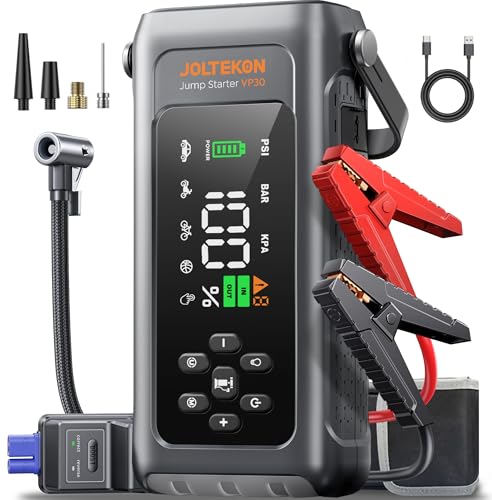
Most products sold under this name fall into two groups. The first is a USB car charger that plugs into the 12V socket and outputs 5V USB power for phones and accessories. The second is a battery charger or maintainer with USB ports added for convenience. Only the second group is meant to charge the car’s battery itself, and only when connected directly to the battery terminals.
Shopping for one? See our guide: Car Battery Charger vs Jump Start (2026): Which Is Better for Your Dead Battery?.
Check the label before you buy. A unit that lists output in amps and a battery voltage range (usually 6V, 12V or both) is built for the battery. A unit that lists only watts or USB output is a charger for devices.
Match the Charger to Your Battery and Use Case
Battery chargers are rated by the battery type they support. Standard lead-acid batteries, AGM batteries and lithium iron phosphate (LiFePO4) batteries each need a different charging profile. Using the wrong profile can undercharge or damage the battery. Confirm your battery type on its label or in your owner’s manual before choosing. We also found Car Battery Charger System: How It Works and How to Use It Safely useful on this point.
Output current also matters. A low-amp maintainer (around 1 amp or less) suits cars that sit for long periods. A higher-amp charger (4 to 10 amps) brings a discharged battery back faster, but you should not leave it unattended for long stretches.
Step-by-Step: Using a Battery Charger With USB Ports
- Turn off the vehicle, all accessories and the ignition.
- Confirm the charger is set to the correct battery voltage and chemistry.
- Connect the red clamp to the positive terminal and the black clamp to a bare metal ground point on the chassis, away from the battery.
- Plug the charger into a grounded wall outlet, then select the charge mode.
- Wait for the indicator to show full charge or float mode before disconnecting.
- Disconnect in reverse order: black clamp first, then red.
- Use the USB ports only for devices, and only after the battery connection is secure.
Checking Your Battery Before You Charge
A charger cannot fix a dead or failing battery. Measure resting voltage with a multimeter after the car has sat for a few hours. The table below gives typical readings for a 12V lead-acid battery at about 77°F (25°C), as commonly published by battery makers. For a deeper look, Car Battery Charger and Tire Pump: Can One Unit Do Both? (2026) covers this in detail.
| Resting voltage | Approximate state of charge |
|---|---|
| 12.6V or higher | Fully charged |
| 12.4V | About 75% |
| 12.2V | About 50% |
| 12.0V or lower | Discharged; charge before use |
If a battery will not hold charge after a full cycle, have it load-tested at a parts store or shop. A related read: Snap-on Car Battery Charger: How to Choose and Use One Safely.
Common Mistakes to Avoid
- Connecting the ground clamp to the negative battery post, which can cause sparks near hydrogen gas.
- Charging a frozen or visibly damaged battery.
- Assuming a USB car charger will recharge the starting battery. It will not.
- Leaving a high-amp charger connected overnight without an automatic float mode.
- Running a plug-in USB charger for long periods with the engine off, which can drain the battery.
Recommended Gear
- Smart battery maintainer: Automatically switches to float mode, which helps when a car sits for weeks. View on Amazon
- Digital multimeter: Lets you check resting voltage before and after charging. View on Amazon
- 12V USB car charger adapter: Powers phones and small devices from the cigarette lighter socket without touching the battery. View on Amazon
For more background, see What Is a Battery Charger for a Car? A Beginner's Guide (2026) and Using a Battery Charger for Car: Step-by-Step Safe Charging Guide. If you are weighing a USB car charger against a battery charger, Will a Car Charger Drain Your Battery? What Really Happens (2026) covers that question directly.
FAQ
Can a car battery charger USB port charge my car battery?
The USB ports only charge devices like phones. Battery charging happens through the clamp connection, so use the clamps for the battery itself.
Is it safe to leave a battery charger connected overnight? Worth reading next: Battery Tender Car Battery Charger: How to Use One Safely (Step-by-Step).
Only if it has an automatic float or maintenance mode. Chargers without one should be disconnected once the battery is full. Worth reading next: NOCO Boost Car Battery Charger: How to Use It Safely in 6 Steps.
Will a 12V USB car charger drain my battery?
It can, if the engine is off for a long time. Limit use with the engine off, and check the manufacturer’s guidance for your vehicle. We also found Car Battery Charger Reconditioner: How to Revive a Weak Battery Step by Step useful on this point.
Conclusion
A car battery charger USB model works best when you know whether you need a device charger or a true battery maintainer. Match the battery chemistry and output to your vehicle, follow the connection order carefully, and verify the battery voltage before and after charging. If you are unsure about electrical work on your car, consult a qualified mechanic.
Related reading
- iPhone Car Battery Charger: Will It Drain Your Battery? (2026)
- XS Car Battery Charger: 5 Best Picks for Every Need (2026)
- Will Phone Charger Kill Car Battery? Short Answer and Safe Habits
Ready to choose one?
About Lauren Holland
Lauren Holland is part of our editorial team and reviews and edits our car care & garage supplies guides, checking product details against manufacturer specifications and owner feedback.