 By Lauren Holland
Updated November 2026
A snap-on car battery charger is a bench-style or portable charger that clamps onto your battery terminals and restores a dead or weak battery over several hours. This guide walks you through what the charger does, how to connect it in the right order, and how to tell when the battery is actually full. Most of the work is simple, but skipping one step can cause sparks or damage to the charger. A related read: Battery Tender Car Battery Charger: How to Use One Safely (Step-by-Step).
What a Snap-On Charger Does Differently
Snap-on chargers are known for their heavy-duty clamps and a steady, regulated output. Many models offer multiple charge rates, typically 2, 10, and 50 amps, so you can match the charge speed to how much time you have. A slow rate is gentler on the battery and suits most overnight charges. A higher rate helps when you need the car running sooner. We also found Car Battery Charger System: How It Works and How to Use It Safely useful on this point.
Shopping for one? See our guide: Car Battery Charger vs Jump Start (2026): Which Is Better for Your Dead Battery?.
Before you connect anything, check the battery type. Standard flooded lead-acid, AGM, and gel batteries accept charge differently. Set the charger to the battery type if it has that setting, and never charge a sealed battery at a higher rate than the manufacturer allows.
How to Connect and Charge a Car Battery Safely
- Turn off the vehicle, remove the key, and make sure the charger is unplugged from the wall.
- Clean any corrosion from the terminals with a wire brush or baking soda solution. Let the area dry.
- Clip the red (positive) charger lead to the positive terminal first.
- Clip the black (negative) lead to a bare metal ground point on the chassis, away from the battery. This keeps any spark away from battery gases.
- Select the battery type and charge rate, then plug the charger into a grounded outlet.
- Check the charger display after about 15 minutes to confirm it is reading voltage and charging.
Charging a battery can release hydrogen gas, so keep sparks, flames, and smoking away from the area. Work in a ventilated space. If you want more background, see Car Battery Charger USB: How to Choose and Use One Safely (2026).
Knowing When the Battery Is Full
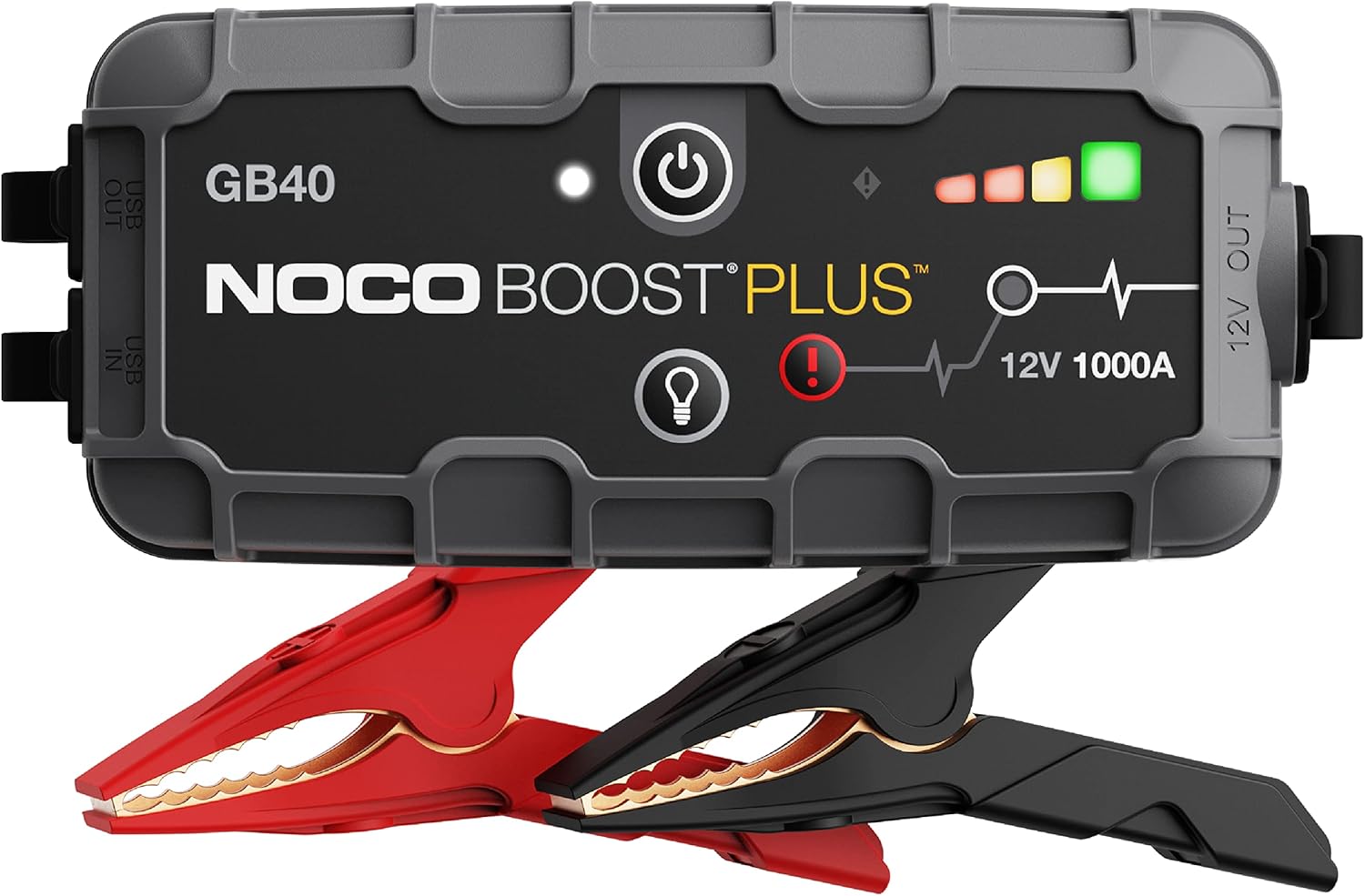
Most snap-on chargers switch to a float or maintenance mode once the battery reaches full charge. A fully charged 12-volt battery typically reads around 12.6 to 12.8 volts at rest, after the car has sat for a few hours. If the reading stays well below that after a full charge cycle, the battery may be failing rather than simply discharged. A load test at an auto parts store can confirm this. For a deeper look, NOCO Boost Car Battery Charger: How to Use It Safely in 6 Steps covers this in detail.
If you are unsure about a battery that will not hold a charge, or you notice swelling, leaking, or a rotten-egg smell, stop charging and have a qualified technician inspect it.
Common Mistakes
- Connecting the negative lead directly to the negative battery post, which can spark near gas.
- Using a high charge rate on a small or sealed battery.
- Leaving the charger connected for days after it has finished charging.
- Charging a frozen battery, which can crack the case.
- Skipping terminal cleaning, which leads to poor contact and a charger that appears to do nothing.
Recommended Gear
A wire terminal brush helps you clean corrosion before clipping on the charger, which improves contact and charge accuracy. View on Amazon
A digital multimeter lets you check resting voltage before and after charging, so you know whether the battery actually recovered. View on Amazon
Insulated gloves and safety glasses protect your hands and eyes when working around battery terminals. View on Amazon
FAQ
Can I leave a snap-on car battery charger connected overnight?
Many chargers have an automatic shutoff or float mode that makes overnight use safe. Check your model’s manual to confirm, and avoid leaving an older or non-automatic charger connected unattended.
Which charge rate should I use?
A low rate, around 2 amps, is best for a slow, gentle charge. Use a higher rate only when you need a faster result and the battery size and type allow it. You may also like Craftsman Battery Charger Car: How to Choose and Use One Safely (2026).
Why does my battery not seem to charge?
Corroded terminals, a loose clamp, or a battery that cannot hold charge are the usual causes. Clean the terminals, check the connection, and test the battery voltage. If it still will not charge, consult a professional.
Conclusion
A snap-on car battery charger is a practical tool for bringing a weak battery back to life when you follow the right connection order and keep an eye on the charge level. Clean terminals, correct rate settings, and a quick voltage check will cover most situations. When a battery fails to hold charge, a load test or professional inspection will tell you whether to replace it.
Related reading
- XS Car Battery Charger: 5 Best Picks for Every Need (2026)
- Will a Car Charger Drain Your Battery? What Really Happens (2026)
- Will Phone Charger Kill Car Battery? Short Answer and Safe Habits
- Why Won't My Car Battery Charger O'Reilly Work? 6 Causes and Fixes
- What Is a Trickle Charger for Car Battery? Uses and Safe Use
- What Is a Battery Charger for a Car? A Beginner's Guide (2026)
Ready to choose one?
About Lauren Holland
Lauren Holland is part of our editorial team and reviews and edits our car care & garage supplies guides, checking product details against manufacturer specifications and owner feedback.