When you need a flashlight beside a dark highway or in a snowy ditch, the one in your glove box has to work after months of sitting in a parked car. Heat and cold are the two forces that kill ordinary lights fastest, so choosing the right type of emergency light for your car means thinking about battery chemistry, storage location, and how often you check it. This guide explains the main flashlight categories, which battery choices handle temperature extremes, and what you should do to keep your light ready.
Why a car flashlight is different from a home flashlight
Most household flashlights live in a closet where temperatures stay mild. A car flashlight lives inside a metal box that bakes in summer sun and freezes overnight in winter. That changes everything about battery selection. Ordinary alkaline batteries are prone to leaking when they get hot, and their performance drops sharply in cold weather. Rechargeable batteries lose charge while sitting, and a light that needs a cable to recharge is useless if the car battery is dead. The best car emergency light is one that you can trust after months of neglect, in both extreme heat and extreme cold.
Beyond the light itself, you also need to think about where it is stored. A light in the passenger compartment stays closer to a moderate temperature than one in the trunk, but even the cabin can see extremes. Check the temperature range printed on the battery package or the light’s manual, and store the light somewhere that stays within that range whenever possible.
Main types of emergency lights for the car
Different roadside situations call for different kinds of light. A single flashlight can handle many jobs, but hands-free options and warning lights are worth considering depending on how you use your vehicle.
LED flashlights
LED flashlights are the standard choice because they are durable, bright, and use power efficiently. A basic LED flashlight with a focused beam is useful for walking around the car, checking under the hood, and inspecting a tire. Look for a light with a simple switch that is easy to operate while wearing gloves. Complicated modes and multi-click switches can be frustrating in an emergency, so a model with a straightforward on-off action is often more practical than one packed with features.
Headlamps
A headlamp is the most useful hands-free option for changing a tire, because it keeps the light pointed where you are looking while both hands work on lug nuts and the jack. Choose a headlamp that uses the same battery type as your primary flashlight, so you only need to stock one battery format. Many headlamps angle downward, which helps when you are working close to the ground. A headlamp with a red light mode is also helpful if you need to see a map or read a phone without destroying your night vision.
Magnetic work lights
Magnetic work lights attach to the car body, the hood, or a steel bumper, which frees up both hands and positions the light exactly where you need it. These are especially useful for nighttime repairs or for lighting up the area around a flat tire. Look for a light with a strong magnet and a hinge or pivoting head so you can aim it. Some magnetic lights also include a hook for hanging from a raised hood or a trunk lid. Keep in mind that a magnetic light will not stick to aluminum body panels or plastic bumpers, so check what your vehicle is made of before relying on one.
Rechargeable lights and power banks
Rechargeable flashlights and work lights are convenient because they never need battery replacements, but they introduce a maintenance task: they need to be recharged periodically. A rechargeable light that sits in a hot car for months can lose capacity even when it is turned off. If you choose a rechargeable light, set a reminder to top it up on a regular schedule. Some rechargeable work lights double as power banks, which can charge a phone in an emergency. That is a useful bonus, but it also means the light’s battery may be drained by someone charging a phone, leaving you without light. A dedicated emergency light that does not share its battery with other devices is simpler to rely on.
Crank and solar lights
Hand-crank and solar-powered lights are appealing because they do not depend on stored batteries or an external power source. A crank light can generate enough power for a short burst of light, but it is not practical as a primary light for long tasks like changing a tire. Solar lights need direct sunlight to charge, and a car parked in a garage or under heavy cloud cover will not provide that. Treat crank and solar lights as backups, not as your main emergency illumination. They can extend your light supply if your primary light dies or if you are stranded for a long period.
Battery choices for heat and cold
The battery chemistry matters more than almost any other feature when you are choosing a light that will live in a car. Each common battery type has strengths and weaknesses in extreme temperatures.
Alkaline batteries and the leak risk
Alkaline batteries are cheap and widely available, but they are the worst choice for a car emergency light that sits for long periods. Heat accelerates the chemical reactions inside an alkaline battery, and this can cause the battery to vent and leak corrosive fluid. Leaked battery fluid can ruin the contacts inside a flashlight, turning a supposedly ready light into scrap metal. Even a small amount of heat over time can shorten the life of an alkaline battery and increase the leak risk. If you use an alkaline battery in a car light, check it often and replace it at the first sign of corrosion or leakage. Many manufacturers recommend against using alkaline batteries in devices that will be stored in extreme heat for extended periods.
Lithium primary batteries for temperature extremes
Lithium primary batteries, often labeled as lithium iron disulfide, are the recommended choice for car emergency lights. They perform well in both extreme cold and extreme heat, hold their charge for years while sitting, and are far less likely to leak than alkaline batteries. A lithium primary battery can operate in temperatures that would cripple an alkaline or standard rechargeable battery. The upfront cost is higher, but for a light you may only use a few times a year, the reliability is worth it. Check that the flashlight or headlamp you choose is compatible with lithium primary batteries; most modern LED lights are, but the manual should state it clearly.
Rechargeable batteries in the car
Standard rechargeable batteries, such as nickel-metal hydride, do not hold their charge as well as lithium primary batteries when stored at high temperatures. They also self-discharge over time, so a rechargeable light left in a car for a few months may be nearly empty when you need it. Lithium-ion rechargeable batteries inside a flashlight have similar issues. If you prefer rechargeable lights, plan to check and recharge them with the rest of your seasonal vehicle maintenance. Some rechargeable lights have a standby drain that is small but not zero, meaning the battery slowly depletes even when the light is off. Do not assume a rechargeable light that worked last spring will still have power in the winter.
Features that actually matter for emergency use
Battery choice is the most important decision, but several other features determine whether a light is genuinely useful on the roadside or simply a gadget that stays in the glove box.
Red flashing modes and warning function
A light with a red flashing mode is valuable for signaling and for making your car more visible to other drivers. Red light is less likely to wash out your night vision than white light, and a flashing red beacon can be seen from a greater distance in some conditions. Many emergency lights include a red strobe or a red LED array that can sit on the roadside or attach to the car. If a light has a red mode, make sure it is easy to activate without cycling through several bright white modes first. Some lights have a dedicated red button, which is much easier to use in the dark.
Beam type and brightness
For roadside work, a broad flood beam is often more useful than a narrow spotlight. A spot beam reaches a long distance, but it does not illuminate the area around your hands when you are working under the hood or beside a tire. Many lights offer multiple brightness levels, and the lowest level is often the most useful for close-up work because it preserves battery and does not blind you with glare off the car’s paint. Do not chase the highest lumen number; a mid-range light with a good flood pattern and a lower setting is typically more practical than a tiny spotlight that drains batteries quickly.
Ease of operation with gloves
Winter emergency use means you will likely be wearing gloves or mittens. A light with a tiny recessed button is nearly impossible to operate with heavy gloves. Look for a switch that is large, easy to find by touch, and requires little pressure. A twist-head light can also be a good choice because it does not rely on a small button. Test the light with your work gloves on before you commit to carrying it in the car.
Durability and water resistance
An emergency light will get dropped on pavement, kicked into snow, or left on a wet roadside. Choose a light that is impact-resistant and has at least a basic water-resistance rating. A light that survives a drop onto concrete is worth more than one with a slightly longer runtime. Check the manufacturer’s specifications rather than assuming a metal body means it is durable; the switch and the lens are often the weakest points.
Where to store the light in the car
Storage location affects both temperature exposure and whether you can reach the light when you need it. The glove box is the classic location, but it is not always the best one.
Glove box
The glove box is convenient and keeps the light within reach of the driver, but it can become very hot in summer and very cold in winter. It is also small, so a large flashlight or headlamp may crowd out other essentials. If you store a light in the glove box, choose a compact model and check it whenever you do other seasonal maintenance. Battery manufacturers often list a storage temperature range on the package, and a glove box in a closed car in summer can exceed that range.
Trunk
The trunk keeps a light out of sight and secures it in a crash, but it exposes the light to even more extreme temperatures than the cabin. A trunk light is also impossible to reach if you cannot open the trunk after a collision or if the trunk release is powered. If you store a light in the trunk, keep it in the same place every time, ideally in a dedicated case or pouch so it does not roll around. You should also keep a smaller light in the cabin, so you have illumination to get to the trunk in the first place.
Door pockets and center console
A door pocket or center console puts the light within easy reach, but these locations share the same temperature issues as the glove box. A door pocket can also let a light slide out when the door opens, so choose a storage pouch that holds it securely. The center console is often a good middle ground because it keeps the light hidden and relatively protected, though it is still exposed to cabin temperature extremes. Whatever location you choose, make sure the light is not lying loose where it could become a projectile in a sudden stop.
Seasonal checks and maintenance
A car emergency light is not a set-it-and-forget-it item. Heat and cold degrade batteries even when the light is never switched on. Checking your lights on a regular schedule is the single most effective way to ensure they work when you need them.
Check at the change of seasons
A good habit is to test every light in your car when the season changes, such as at the start of summer and again before winter. Operate every mode, confirm that the battery contacts are clean, and replace any battery that shows signs of corrosion. For rechargeable lights, top them up fully at these checks and confirm that the light holds a charge. Make this part of the same routine you use for checking the spare tire pressure or the expiration date in a roadside emergency kit checklist.
Clean contacts and inspect for corrosion
Battery corrosion can appear as a white or bluish powder around the contacts, and it can interrupt the electrical connection even if the battery still has power. If you see corrosion, remove the batteries, clean the contacts with a dry cloth or a small brush, and replace the batteries. Do not use water near battery contacts, and wash your hands after handling corroded batteries. If corrosion has already damaged the light, it is safer to replace the light than to trust it in an emergency.
Protect the lens and switch
A scratched lens reduces light output, and dirt or sand inside the switch can keep it from working. Wipe the lens with a soft cloth and check that the switch moves freely. If the light has a rubber cover over the charging port or a waterproof cap, make sure it is seated properly so moisture does not get inside. A light that looks fine on the outside can still fail if the switch has been damaged by grit.
Ready for blackout: light as part of your car emergency kit
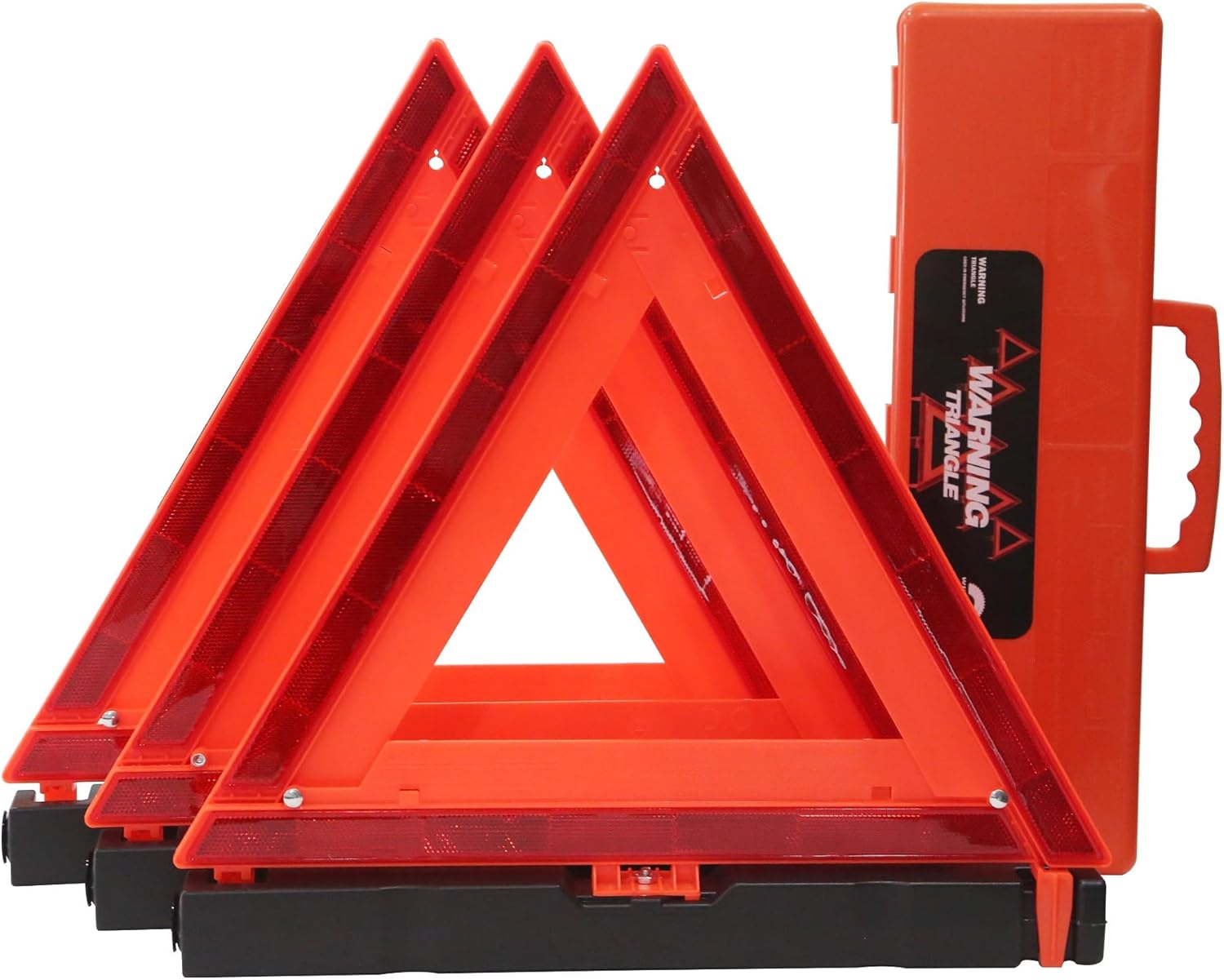
An emergency flashlight is a foundation piece of any roadside kit, but it works best when the rest of your gear supports it. Pair your light with reflective gear so other drivers can see you while you work. A roadside warning triangle or reflective vest is much more visible than a flashlight beam to approaching traffic, and it keeps you safer while you set up the light. If you drive in cold regions, store the light alongside other winter car emergency supplies such as a blanket, gloves, and a shovel. The full emergency and roadside equipment collection can help you build out a complete kit, but the flashlight is always the first item to get right.
Choosing a light for your specific driving situation
Your driving environment changes which features deserve the most weight. A commuter who drives only in a mild coastal city can reasonably choose a rechargeable light and charge it every few weeks. A driver who crosses mountain passes in winter or deserts in summer should choose a lithium primary battery light, accept the higher battery cost, and store spares. A person with limited hand strength may prefer a twist-head light or a headlamp with a wide elastic band. Think about the actual conditions you face, not the features that sound most impressive in a product description.
Common buying mistakes
The most common mistake is buying a light based on maximum brightness and ignoring the battery type. A very bright light that uses alkaline batteries is a poor choice for a car because it will likely leak in heat and fade quickly in cold. The second mistake is buying a rechargeable light and assuming it will hold its charge for months; it will not, and it needs a planned charging schedule. The third mistake is choosing a light that is too large to store conveniently, because a light left at home in a drawer is useless. Keep the light small enough that it stays in the car full time, and confirm that it fits in the location you selected before you commit to it.
FAQ
What type of battery is best for a car flashlight?
Lithium primary batteries are the best choice for car flashlights because they operate well in extreme heat and cold, hold their charge for years, and are unlikely to leak. Alkaline batteries are cheaper but can leak in hot conditions and lose power quickly in freezing temperatures. Rechargeable batteries are convenient but require regular charging, so they are only a good choice if you commit to checking them.
Should I use a headlamp or a flashlight in the car?
A headlamp is better for hands-free tasks like changing a tire, while a flashlight is more flexible for general use and can be aimed precisely. The best setup is to carry both: a compact headlamp for work and a flashlight or magnetic work light for broader illumination. If you only carry one, choose the type that matches the most likely emergency you will face.
How often should I check my car emergency flashlight?
Check the light at least twice a year, ideally when the season changes. Operate every mode, inspect for corrosion, and recharge or replace batteries as needed. If your car is exposed to extreme heat or cold, check it more often, because temperature extremes accelerate battery degradation even when the light is off.
Can I store a rechargeable flashlight in my car?
You can, but you should not leave it unattended for months without checking it. Rechargeable lights lose charge over time, and high temperatures in a parked car can shorten battery life. If you rely on a rechargeable light, charge it regularly with a calendar reminder and store it in the cabin rather than the trunk to reduce temperature swings. Follow the manufacturer’s guidance about storage temperature ranges.
Are crank and solar lights reliable enough for car emergencies?
Crank and solar lights are useful backup options, but they cannot replace a quality battery-powered light. A crank light provides only short bursts of light, and a solar light needs strong sun to charge. Keep one in the car as a secondary light or share it with another driver, but let a good battery-powered LED light be your primary source of illumination.
Selecting an emergency flashlight for your car comes down to thinking like someone who will need it once a year, in the worst conditions, with cold hands. Choose a light that uses lithium primary batteries for reliability across temperatures, or plan a strict charging habit for a rechargeable model. Store it somewhere you can reach it, check it with the seasons, and keep a headlamp or magnetic work light for hands-free tasks. A little advance attention to battery chemistry and placement means the difference between stepping out into the dark with confidence or fumbling with a dead light in a roadside emergency.